Conference agenda template: a sample programme to copy, with breakout sessions
A conference agenda template to copy, slot by slot, for a one- or two-day event with breakout sessions, what each line must say and how to keep it current.
By Moultaka team
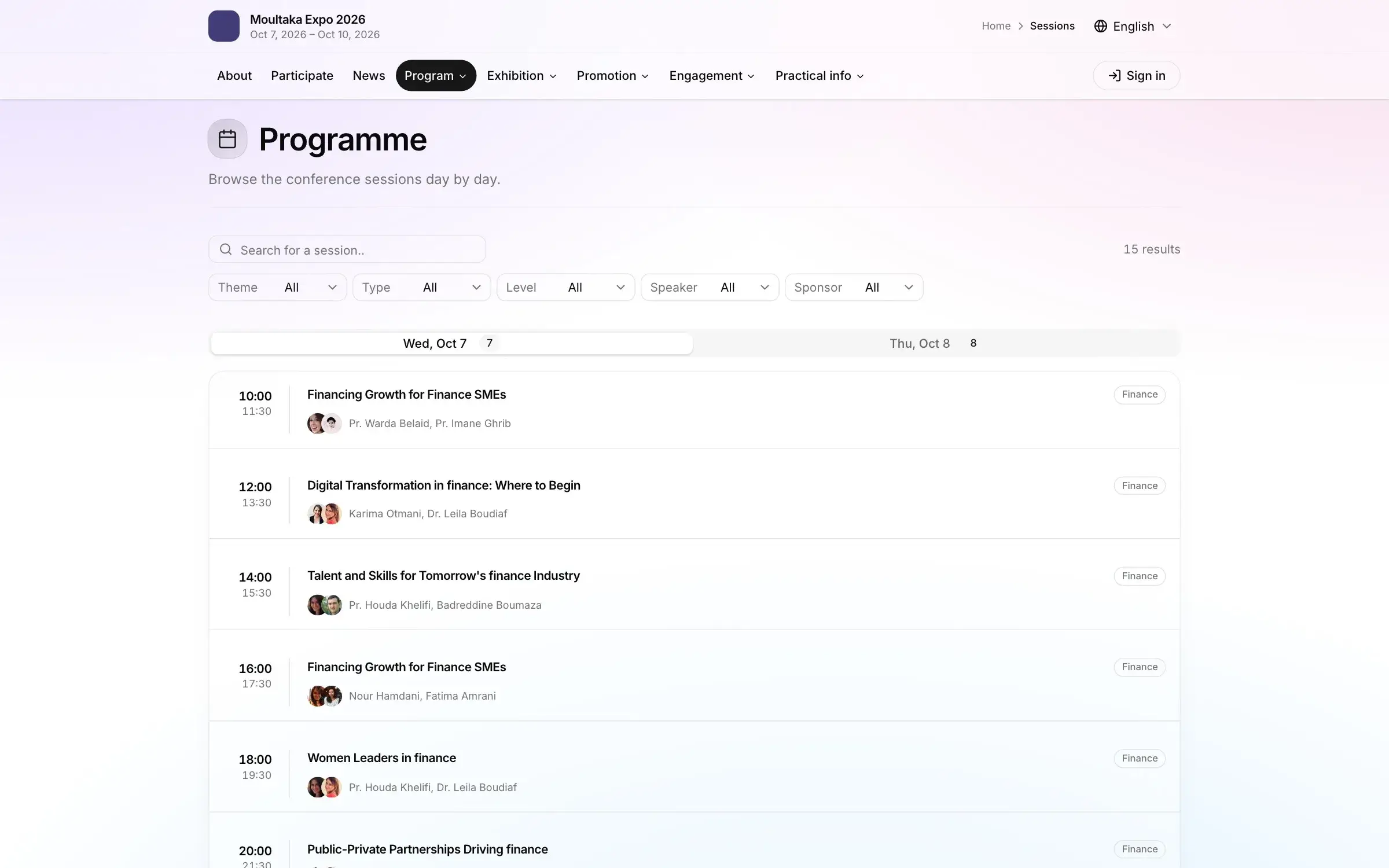
A conference agenda lists, for every slot, the start and end time, the session format, its title, the speakers and their organisations, the moderator and the room. Below is a conference agenda template you can copy for a one-day event with a plenary morning and breakout sessions in the afternoon, a second day if you need one, and the rules that keep the timings honest once the doors open. The template is the easy part. What makes an agenda work is fixed speaking times, buffers between sessions, and one current version that everyone reads in the same place.
What a conference agenda should include
At the top, once:
- the event name and its theme, then the tracks if you have them;
- the dates, the city and the exact venue, down to the hall or the floor;
- the organiser and the partners;
- a small “last updated” date in the footer.
For every session:
- start and end time, never the start alone;
- the format: keynote, panel, presentations, workshop, fireside chat, roundtable;
- the session title, then the title of each talk;
- each speaker’s name, job title and organisation, spelt the way they spell them;
- the moderator or chair;
- the room, as soon as there is more than one.
Breaks, lunch, networking and the closing remarks belong on the agenda too. Anything that is not written down has not been planned, and will eat into the next session.
Conference agenda template (one day, with breakout sessions)
Here is a sample agenda for a one-day industry conference held alongside a trade show: a plenary morning, two breakout tracks after lunch, a closing panel. Replace the brackets with your own names.
| Time | Session | Speakers | Room |
|---|---|---|---|
| 08:00 – 09:00 | Registration, badge pick-up and coffee | Registration team | Foyer |
| 09:00 – 09:15 | Welcome and opening remarks | [Organiser], [host partner] | Main hall |
| 09:15 – 10:00 | Keynote: [title] | [Name, title, organisation] | Main hall |
| 10:00 – 10:45 | Panel: [question the panel answers] | Moderator: [name]; three panellists | Main hall |
| 10:45 – 11:15 | Coffee break and exhibition | — | Exhibition floor |
| 11:15 – 12:30 | Presentations: three talks of 20 minutes, then Q&A | Chair: [name] | Main hall |
| 12:30 – 13:45 | Lunch and networking | — | Exhibition floor |
| 13:45 – 15:00 | Breakout A, [track 1]: workshop | [Speaker], [co-host] | Room A |
| 13:45 – 15:00 | Breakout B, [track 2]: case studies | Chair: [name]; three speakers | Room B |
| 15:00 – 15:30 | Break, B2B meetings | — | Meeting area |
| 15:30 – 16:15 | Closing panel: [what changes next year] | Moderator: [name] | Main hall |
| 16:15 – 16:30 | Closing remarks | [Organiser] | Main hall |
A few choices behind it:
- Breakouts run in parallel, in rooms of the right size. Put tracks side by side that attract different people, or one room overflows while the other stays half empty.
- The panel comes early. Panels are usually the liveliest slot of the day; at 17:00 they play to the organisers.
- Breaks happen on the exhibition floor. At a show, every coffee break is traffic for exhibitors, and they will notice whether the agenda sends people their way.
On two days, keep the same frame: a second keynote opens day two, the breakouts take the late morning, and the closing panel ends before mid-afternoon, when international guests start leaving for the airport.
Speaking times: the rule that keeps the agenda on time
Agendas rarely collapse in one go. They slip ten minutes at a time.
- Put the speaking time in the speaker’s confirmation. Twenty minutes plus Q&A, written down before the event, is not renegotiated on stage.
- Cap a session at four or five talks. The last one otherwise plays to a room checking its watch.
- Build in buffer. Fifteen spare minutes in the morning, as a longer Q&A or break, absorbs a late opening.
- Give the clock to the chair. They state the rule, signal at two minutes and close the talk if needed. More on the role in how to moderate a panel discussion.
- Group talks by topic, so the Q&A at the end of a session makes sense.
When officials open the event, the welcome slot is the one that overruns. Agree the order of speeches and a length for each in advance, and decide what the room does if a guest is late; our guide to VIP protocol for official delegations covers that morning.
Draft agenda, final agenda, last-minute changes
- The draft agenda goes out with the call for speakers or the early registration: theme, tracks, dates, confirmed keynotes, the shape of each day.
- The final agenda follows speaker confirmations, two to three weeks before the event, early enough for attendees to plan travel and pick sessions.
- Changes still happen: a speaker cancels, a room swaps, a session moves. Date every version and say what changed.
The trap is the PDF sent by email. Every attendee keeps the version they received, and the room fills with different agendas. Print the booklet as late as you can and give one address where the current version always lives.
Common agenda mistakes
- A misspelt name or a missing organisation. It is the first thing a speaker checks. Ask each one to approve their line.
- No room on the line. With two rooms or more, every session says which one, and the signage uses the same names.
- Ten-minute breaks for three hundred people. That is not a break, it is a delay.
- Session titles that say nothing. “Panel 2” helps no one choose; the question the panel answers does.
If the conference runs inside a show, cross its agenda with the floor: keep the headline session clear of the official opening, and use trade show gamification to send visitors to the afternoon sessions. For the whole event, from committee to certificates, see how to organize a conference step by step.
Publishing the agenda online and keeping it current
The PDF still has a place in the printed booklet. But the agenda attendees use on the day should live online, at one address, always current.
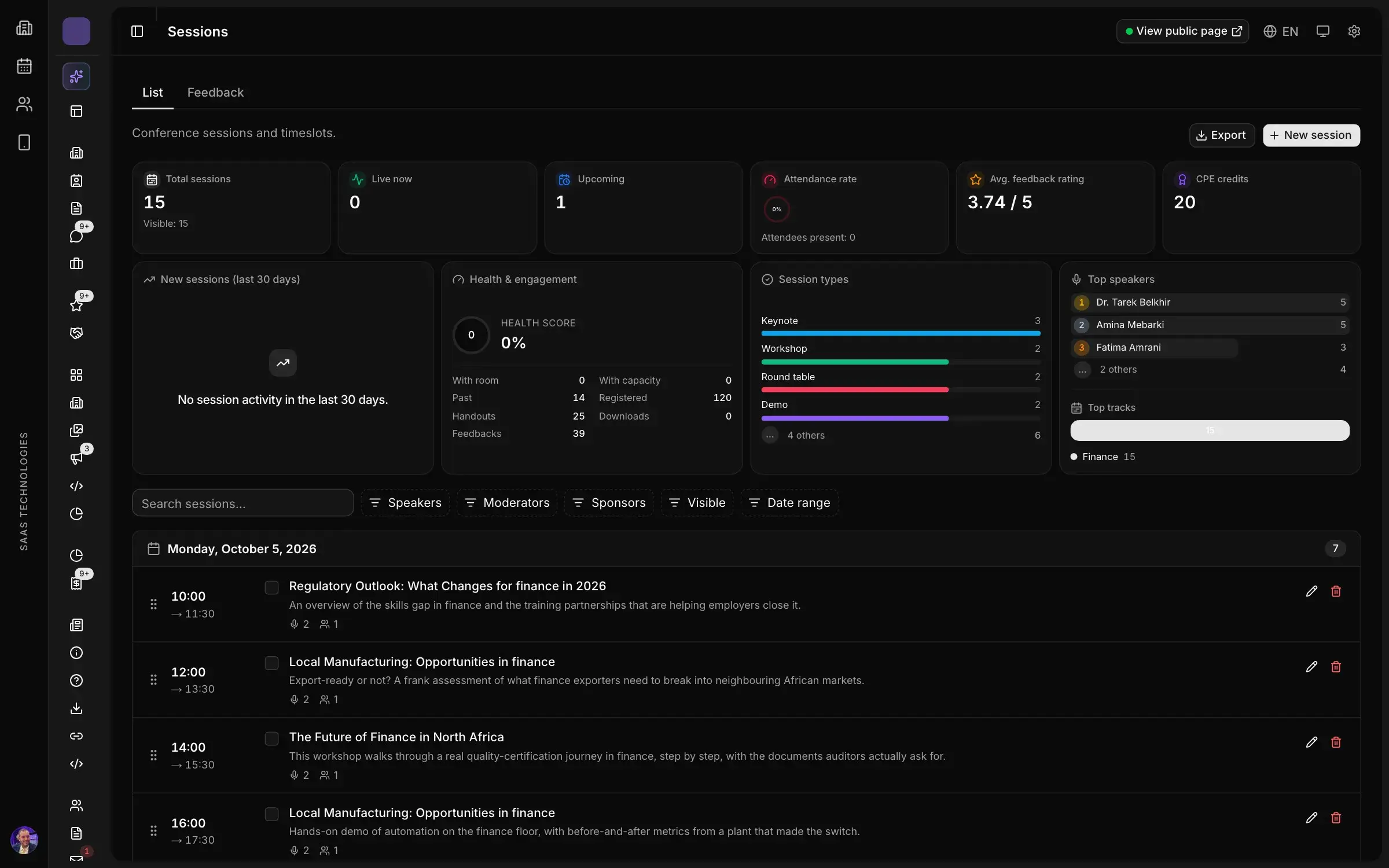
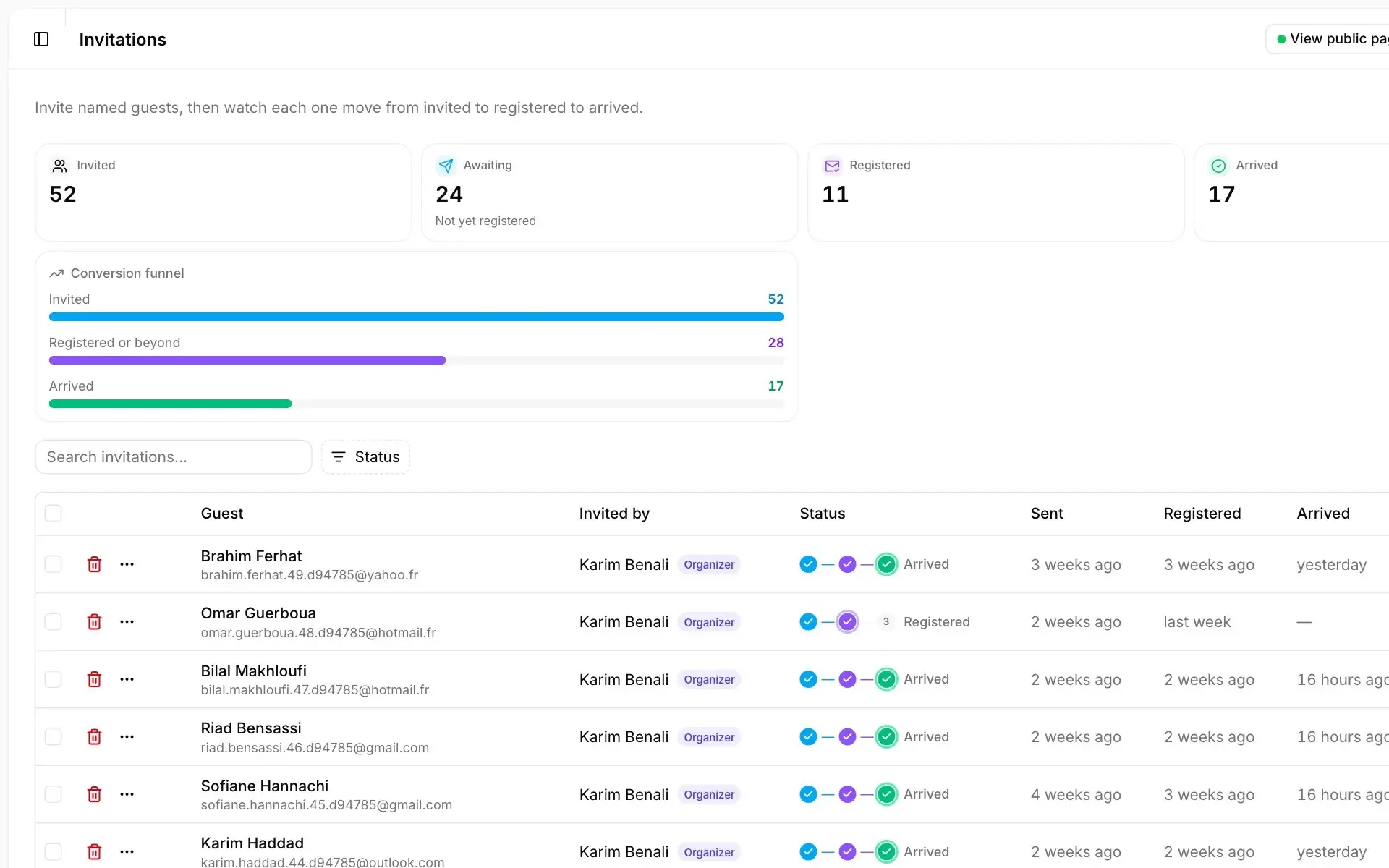
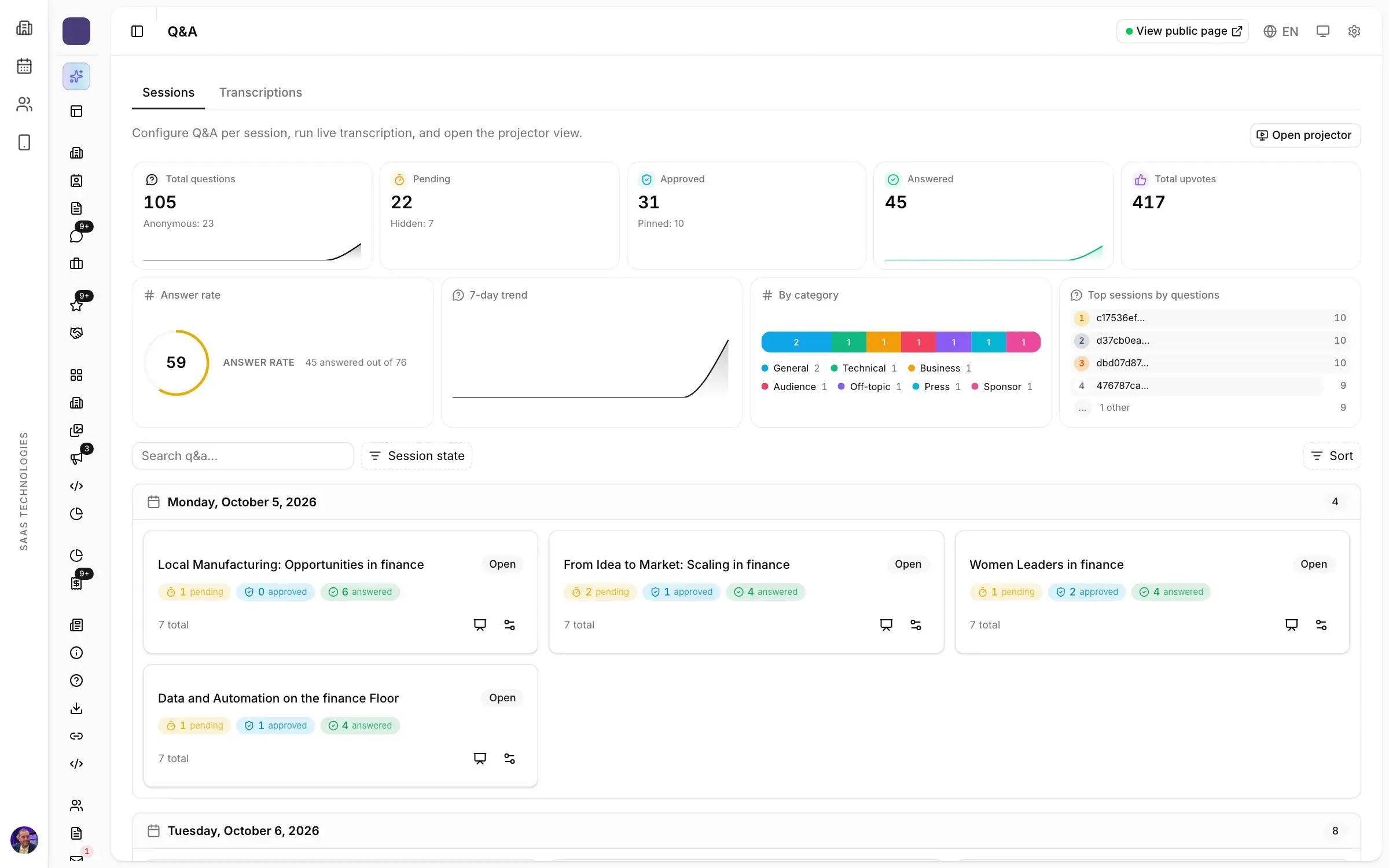
In Moultaka, the Conferences & engagement module holds sessions, rooms, speakers and formats in one schedule, published to the website and the app as soon as you save. A cancelled speaker or a swapped room is fixed in one place. Tracks group the sessions, attendees sign up for sessions with waiting lists, and attendance is counted per session. Session chairs see their sessions, their instructions and the questions waiting for them, and every session gets its ratings afterwards.
To see your next agenda published day by day, book a demo.