VIP protocol at a trade show: hosting ministers, official delegations and VIP guests
VIP protocol for trade shows and events: the guest list, named invitations, the visit route, a host per VIP, and official delegations from abroad.
By Moultaka team
VIP protocol at a trade show comes down to four things: a named list of every dignitary you expect, an invitation tracked until the guest walks in, a visit route prepared stand by stand, and a host for each VIP who knows the moment they arrive. Everything else is agreed with the protocol office of the visiting authority. In much of the Middle East and North Africa, a show is opened by a minister, a governor or their representative, and often runs under a ministry’s patronage. That opening lasts an hour; it is the hour the press reports and the exhibitors remember. Here is how to prepare it, from the first invitation to the thank-you letter.
What VIP protocol covers at a trade show
Not every important guest is an “official delegation”, but none of them should be welcomed on the fly. Sort them from the start:
- Officials: the minister or governor, their representatives, the sponsoring ministry, ambassadors and commercial attachés.
- Foreign delegations: government missions, chambers of commerce, sometimes a whole national pavilion.
- Industry VIPs: heads of trade associations, hosted buyers, sponsors’ representatives.
- The press following the visit, on a route of its own.
Give each group its own registration type and its own badge, so the person at the gate knows who is in front of them without asking. Second rule: the organiser does not decide alone. The protocol office of the ministry or the governorate sets the time, the order of precedence and the length of the visit, and often changes them the day before. Keep one person in contact with that office, and one version of the programme the whole team works from.
Before the show: the VIP list and named invitations
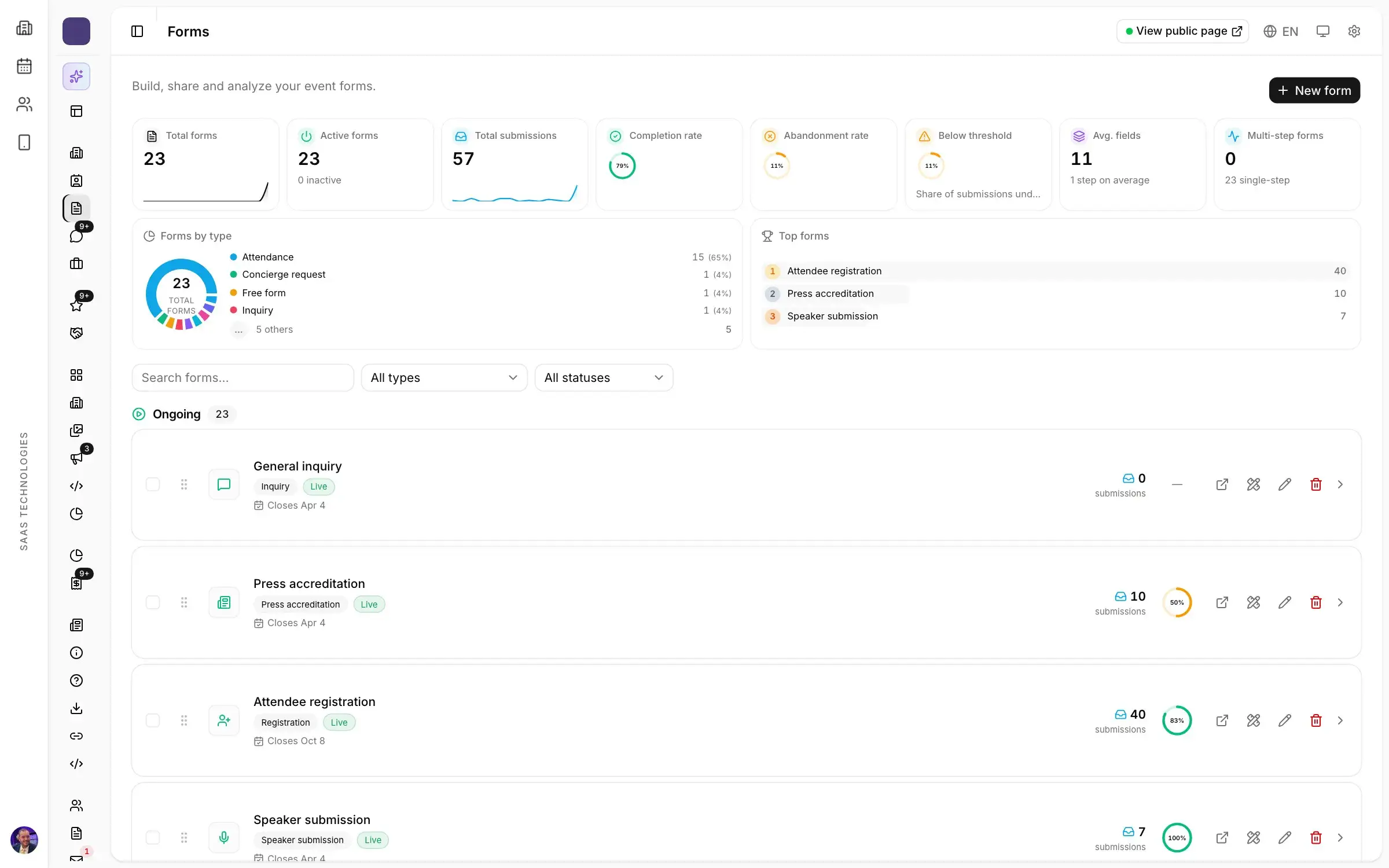
Start from a list of names, never from a headcount. For each name: title, institution, who invited them (you or an exhibitor), whether they confirmed, and who will meet them.
Then send named invitations and follow each one: sent, registered, arrived. That tracking is what tells you, a week out, that an important guest has not answered, and that the call should happen now rather than on opening morning. For the wording, see our guide to the trade show invitation email.
Ask ahead for what you need to know: dietary needs if there is a lunch, who travels with them, how they arrive. Delegations from abroad often need an invitation letter for their visa, and that starts months before, not weeks: see hosted buyer programmes and visa invitation letters.
The visit route: stands, timing and speeches
An official visit is a short route you walk twice: once on the floor plan, once in the aisles the day before opening.
- Choose the stands where the delegation stops, and brief those exhibitors: who speaks, about what, for how many minutes. An exhibitor who finds a minister at the stand unannounced wastes the moment.
- Fix the stops: the ribbon, the speeches, the group photo, the press point. Settle the order of speakers with the protocol office; precedence is not a matter of taste.
- Plan a shorter fallback route. Official visits run late or get cut far more often than they run long.
- Keep the press route apart from the delegation’s, with a clear press point at the end. Journalists’ accreditation is prepared weeks earlier: see trade show press accreditation.
Agree security with the venue and the team travelling with the dignitary. They decide which entrance closes and when; your job is to keep the rest of the show running while they do.
Opening day: the VIP entrance, the host, the badge
On opening morning, no VIP should queue, and none should have to look for a familiar face.
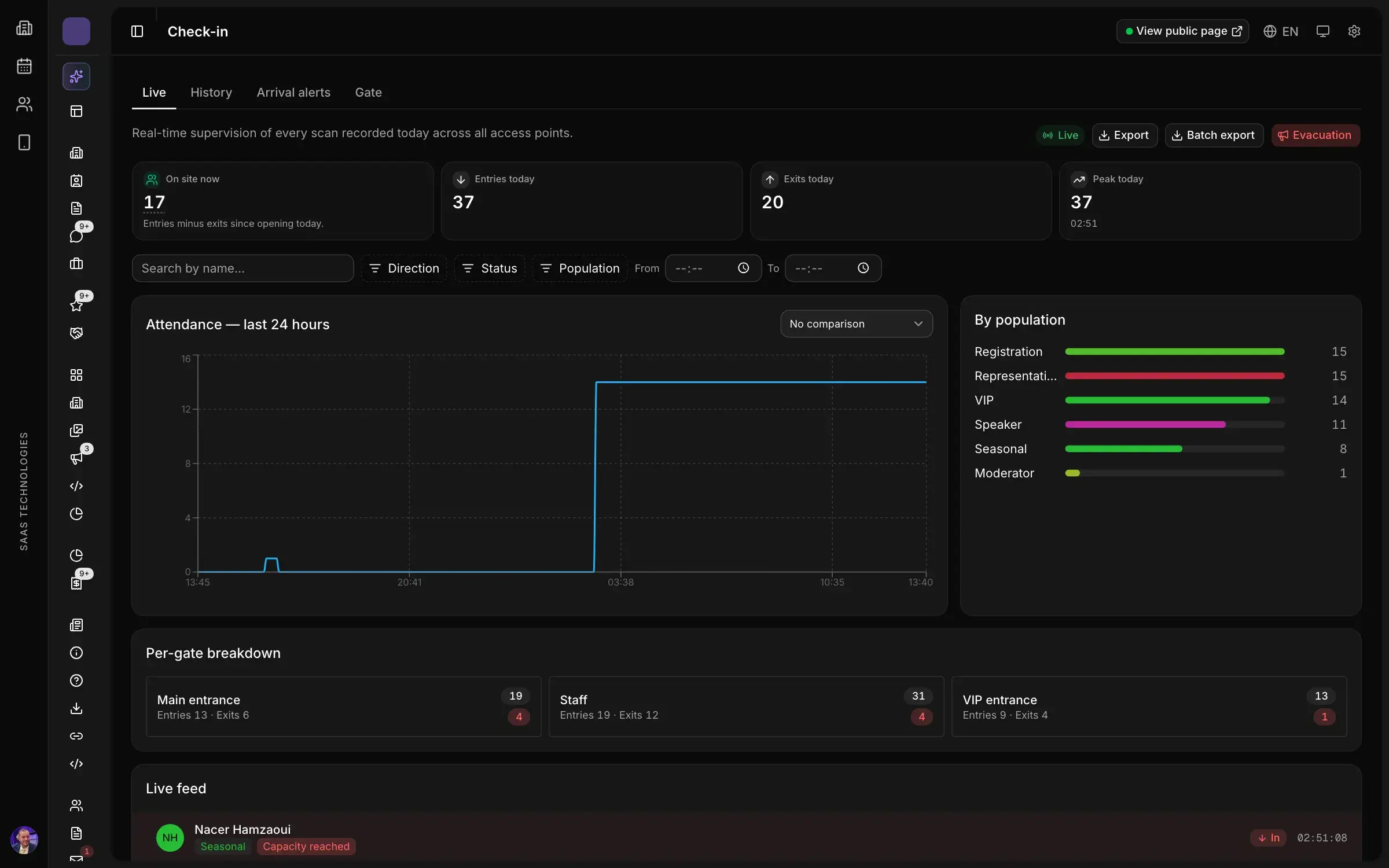
- A VIP entrance or a reserved lane, staffed by someone who knows the list, with badges ready in advance. Everyone else prints their own badge at a kiosk in seconds, so the main entrance does not jam at the same hour: see badges and access without a queue.
- A host for each VIP, alerted the moment their guest reaches the gate, so they are there before the guest starts looking around.
- Zones by profile: the VIP lounge, the speech hall, the stage, open only to the badges allowed in.
- For foreign delegations: airport shuttle, interpreter and a nearby hotel, booked before they land and delivered by your providers.
Trade delegations: from protocol to business meetings
A foreign delegation does not travel for the photo. After the welcome, its members want to meet specific exhibitors. Set up B2B meetings before they arrive, with confirmed slots and a known room, rather than a general walk through the halls. That is how an official visit turns into contracts, and how a delegation comes back next edition.
After the show: thank, measure, keep the record
- Thank-you letters within the week, with photos of the visit, to each official and their office.
- Compare invited with arrived: how many invitations went out, how many registered, how many actually came. That gap is what you improve next year.
- Keep the list with its notes: who came, who sent apologies, who needs an earlier invitation next time.
In short: the VIP protocol checklist
- A named list by group: officials, foreign delegations, industry VIPs, press.
- Named invitations, tracked from sent to arrived.
- Visa letters for foreign delegations, months ahead.
- A visit route walked in the aisles, and a shorter fallback.
- Exhibitors briefed, speeches ordered with the protocol office.
- A VIP entrance, a host per guest, badges ready.
- Business meetings booked for trade delegations.
- Thanks and a short review in the week after the show.
In Moultaka, every visitor category has its own registration type and badge, VIPs and press included. You invite named guests and watch each one move from invited to registered to arrived, with who invited them. Each VIP has a host, alerted at the entrance on arrival, along with their dietary needs and the benefits they receive, and every gate checks the badge against the visitor’s profile and counts entries and exits, zone by zone. See registration, badges and access and exhibitors, then book a demo.