Event no-show rate: the average, how to calculate it and how to reduce it
The average event no-show rate is about 20%, 28% for free events. How to calculate yours, what to expect at a trade show and how to reduce no-shows.
By Moultaka team
The average event no-show rate is about 20%, and about 28% when entry is free, according to the largest public dataset we could find. To calculate yours, divide unique people checked in by unique people registered and subtract the result from one. Trade shows can run higher: the one exhibition figure we found is 43%, and it is old. So treat the published numbers as a reference, and your own last edition as the real benchmark.
How to calculate your no-show rate
No-show rate = 1 − (unique check-ins ÷ unique registrations).
An example with made-up numbers: 4,000 people registered, 2,800 of them scanned in at least once. That is 1 − (2,800 ÷ 4,000), a 30% no-show rate. The event attendance rate is the other side of the same coin: 70%.
The arithmetic is the easy part. The two inputs are where the number goes wrong:
- People registered twice. They inflate the base and create a phantom no-show. One record per person, matched on email, fixes it.
- Scans counted as people. A visitor who comes back on three days made three entries and is one person.
- Registrations taken at the door. Someone who registers on arrival cannot be absent. Leave them out, or the rate flatters you.
Then split it. One overall rate tells you nothing about what to fix. Calculate it by registration type (trade visitors, VIPs, press, exhibitors’ guests) and by source (your email campaign, an exhibitor’s invitation link, a partner association). A few sources usually produce most of the empty badges.
What is a normal no-show rate?
The most useful public numbers we found come from PheedLoop’s Event Data Lab, published by an event software vendor: more than 1,070 live events with real check-in data (report of 29 April 2026, read on 4 November 2026).
| Event type | Median no-show rate |
|---|---|
| All events | about 20% |
| Free | about 28% |
| Paid | about 17% |
| 1,000+ attendees | about 19% |
| 500+ attendees, free | about 24% |
| 500+ attendees, paid | about 18% |
The spread matters as much as the median: 17% of events lost more than half of their expected attendance, and 22% of free events did.
These numbers cover all live events, not trade shows alone. For exhibitions, Exhibition News referred in 2013 to a 43% attrition rate for pre-registrations to UK shows, without giving a source. It is old, so read it as an order of magnitude. If you want a firm benchmark for your own sector and market, the honest answer is that it rarely exists in public. Measure two editions and you will have one.
Should you charge for entry to bring the rate down? Probably not for that reason. In a follow-up report, updated in September 2026, PheedLoop corrected its own earlier reading: within the same event, paying attendees showed up only about 2 to 4 points more reliably than comped ones at the median event. It also found that a harder registration form does not predict better attendance, so there is no point making people work to sign up.
How to reduce no-shows before the show
Most absent registrants did not change their minds. They forgot, or the visit slipped out of a busy week. So the work happens between registration and opening day, in a sequence of messages each with one job:
- On registration: the confirmation, with the personal QR badge. The ticket is already on the phone.
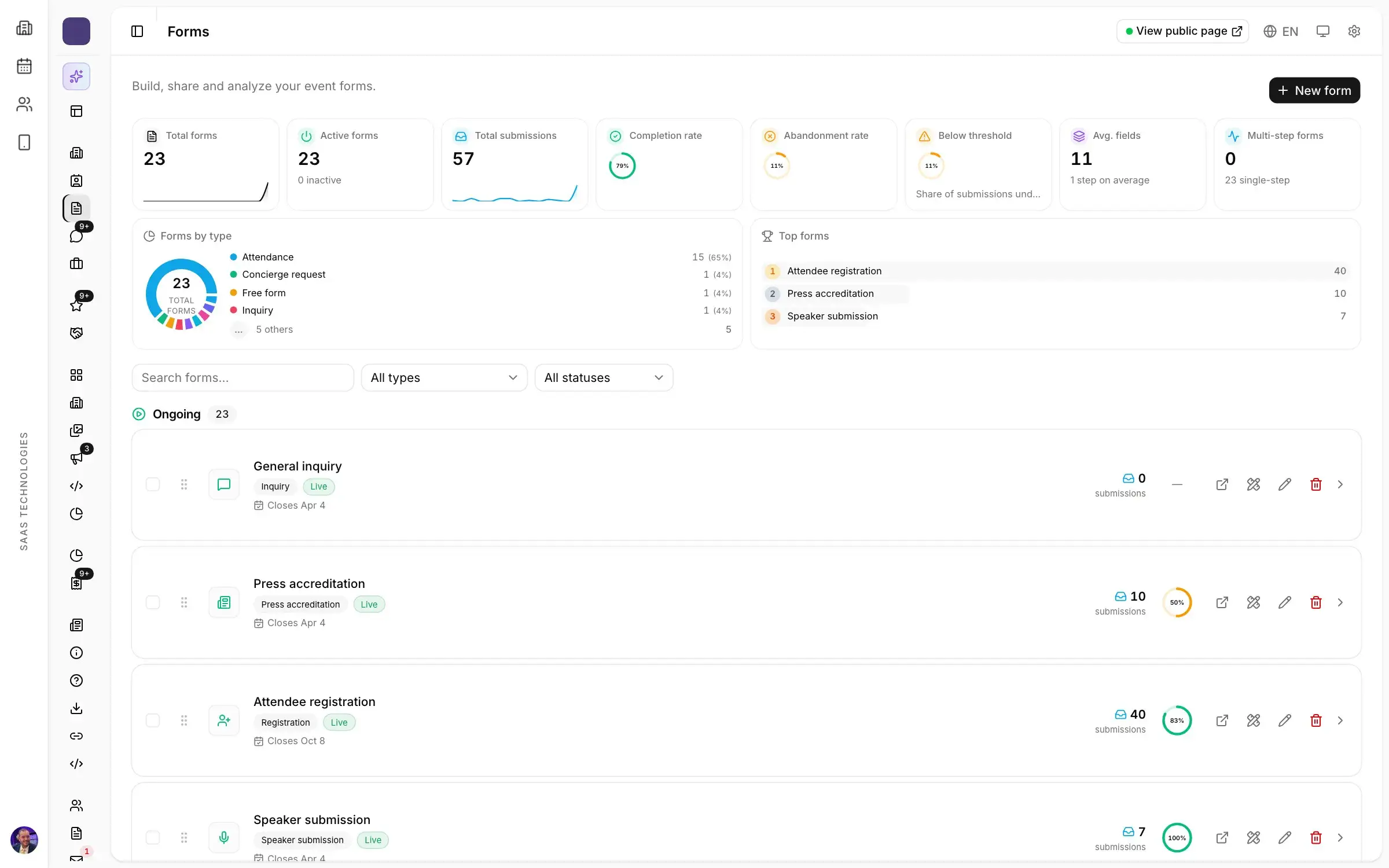
- Abandoned form: a nudge a few days later. This person came halfway.
- One week out: an event reminder email that says what they will find: exhibitors in their sector, sessions, meetings.
- Three days out: the app and the floor plan, so they can plan the visit.
- The day before: opening hours, which gate, parking, and the badge again.
- Opening morning: a short message to registrants nearby, on WhatsApp if they agreed to it.
- After the show: thanks to those who came, and a different message to those who did not.
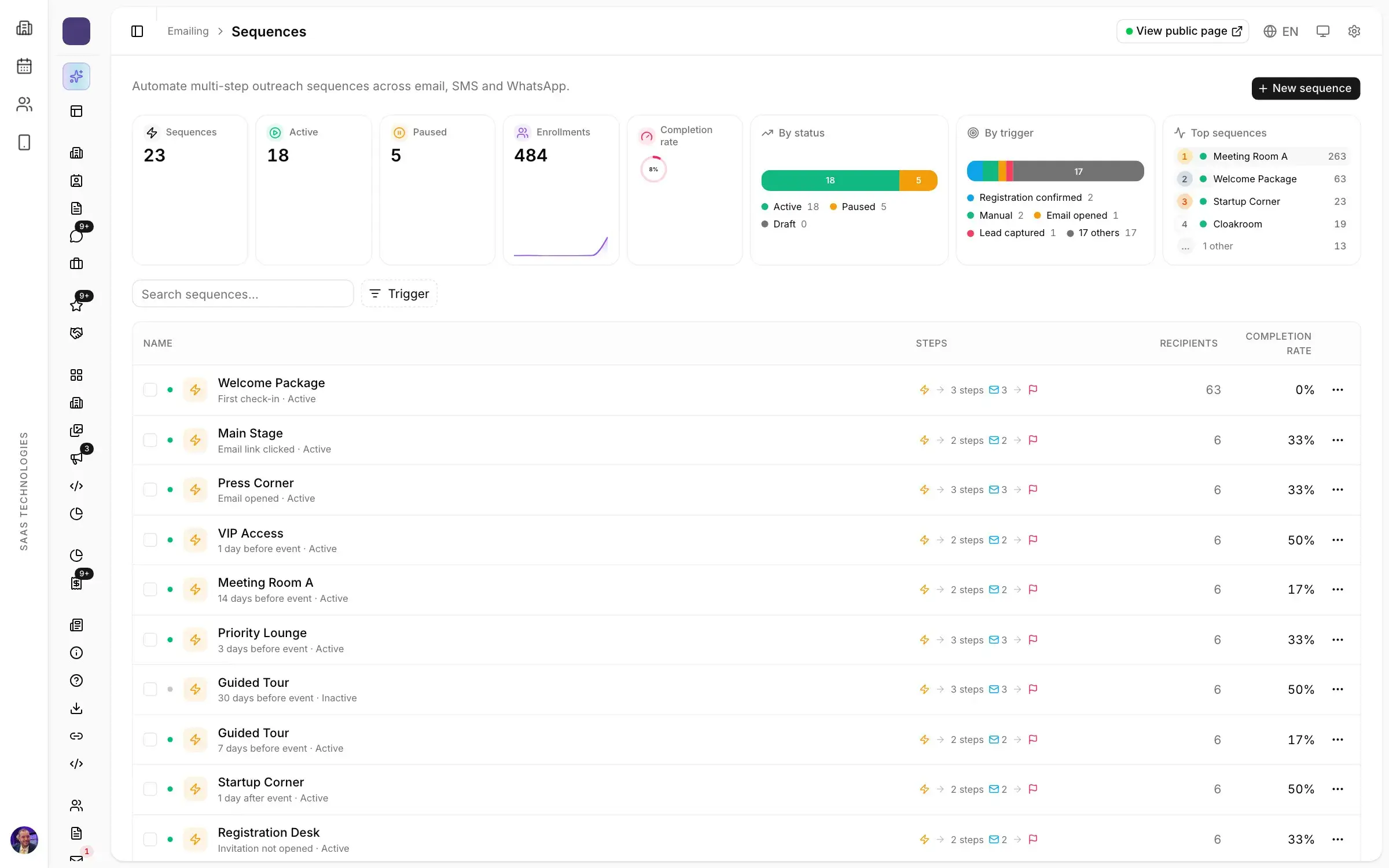
The trade show invitation email sets out when each send goes. The point is not to send them by hand. Campaigns and sequences trigger on a registration, a check-in or a date, by email, WhatsApp and push, so abandoned forms and no-shows are followed up without anyone pressing send.
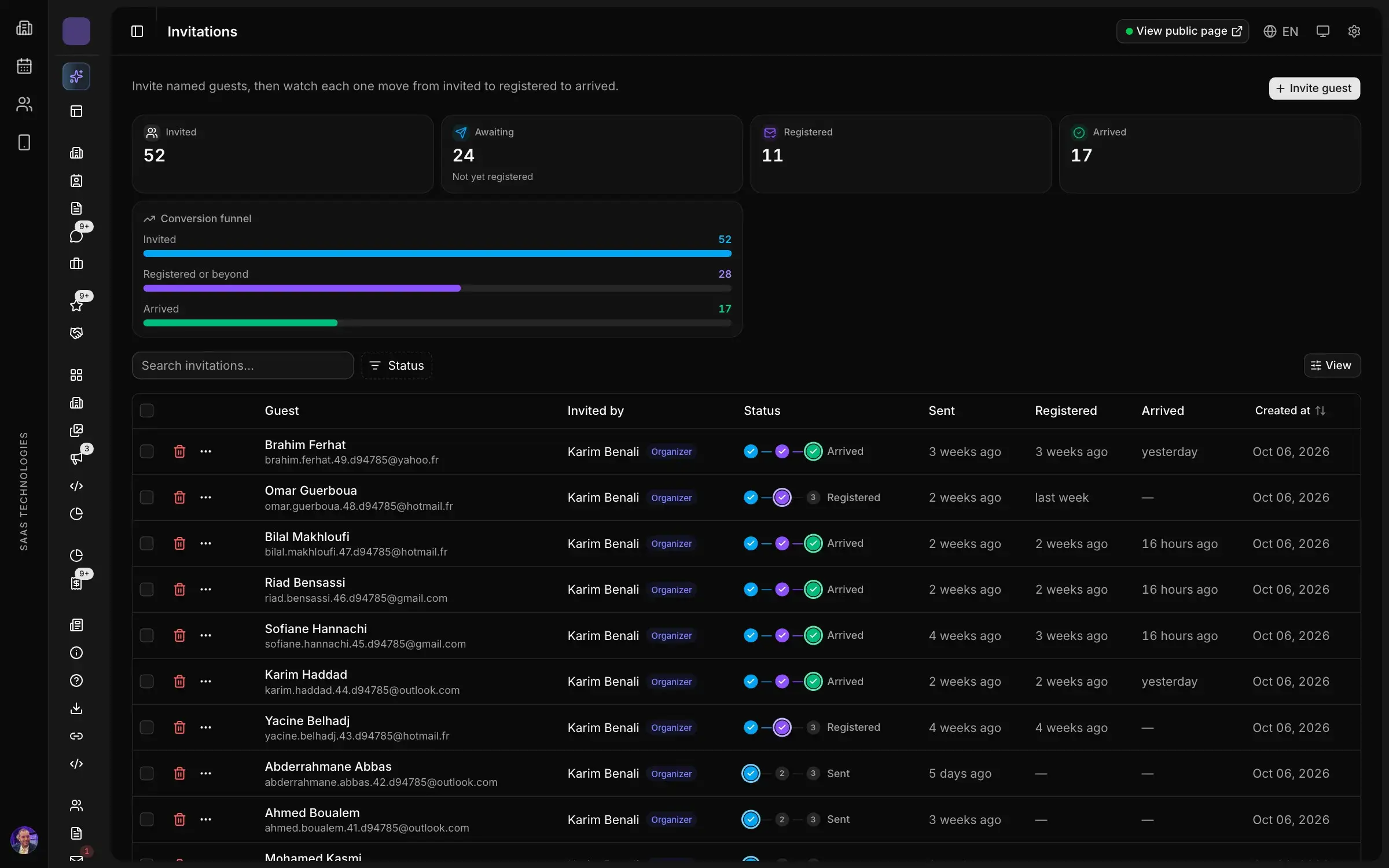
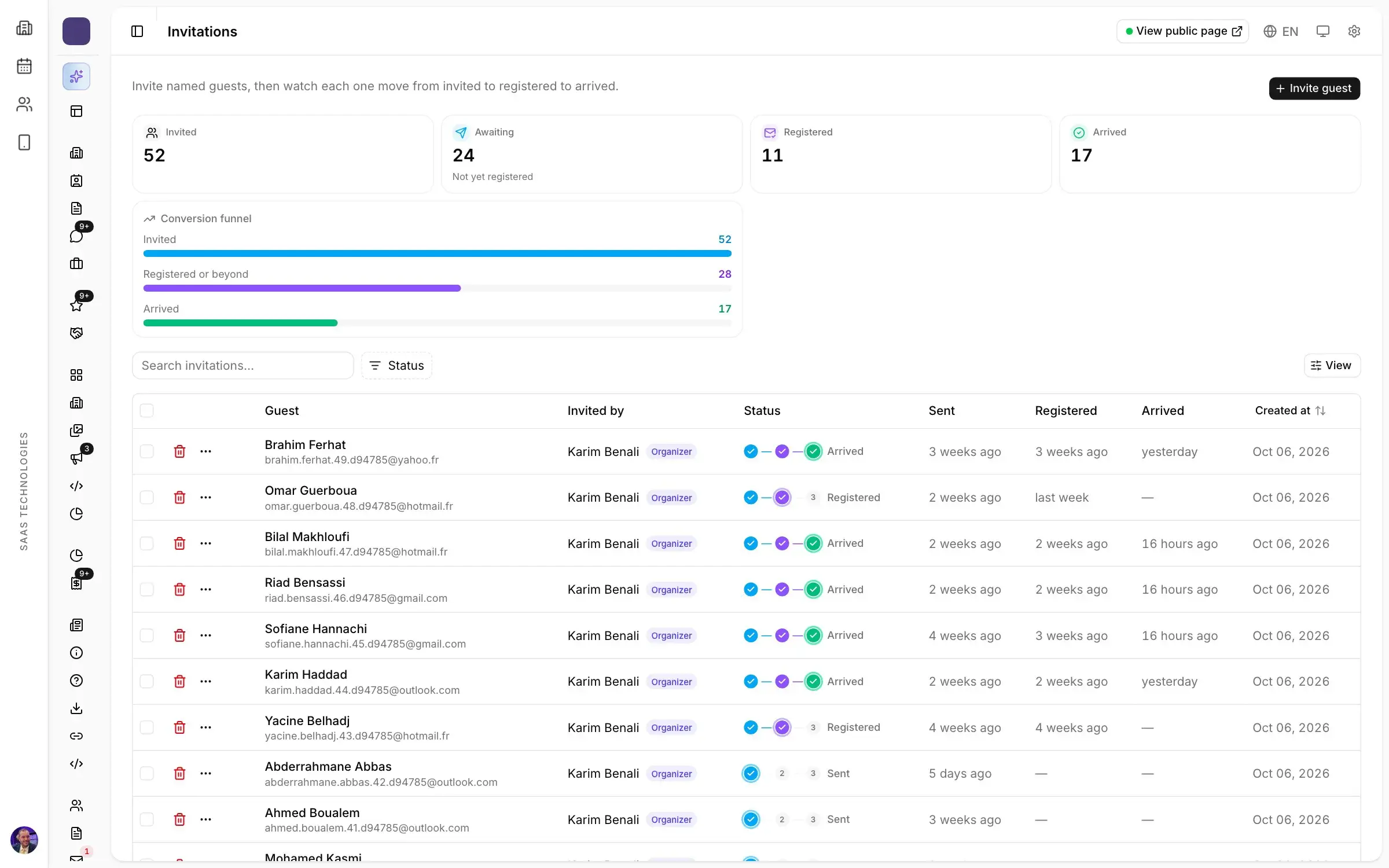
For named guests, add a phone call. Someone on your team rings each VIP and hosted buyer, and asks which day they are coming. Registration tracks each invited guest from invited to registered to arrived, with who invited them, so you know exactly who to call.
B2B meetings: where an empty chair costs the most
An absent visitor is a number on a report. A missed meeting is an exhibitor sitting alone at a table they planned their day around. It is also where follow-up weighs most on the team running the programme: encouraging people to take part, getting requests confirmed, making sure the meetings actually happen.
Four habits keep the chairs filled:
- Cap bookings per person and per day. Nobody keeps twenty meetings.
- Require both sides to confirm. A request that has not been accepted is not a meeting.
- Remind before each slot, with the room or table number, not just the other person’s name.
- Keep the phone for what matters. Meetings for the largest exhibitors and hosted buyers deserve a call the day before. Software cannot replace that call, and a good programme manager knows which ten to make.
Track three rates separately: confirmation, no-show and completion. B2B meetings in Moultaka show all three for the whole programme, and give each participant a risk score from past no-shows and late cancellations, with a reminder sent above the threshold you set. A first-time participant has no history yet, which is one more reason to keep the call.
Plan the show around people who will come
The no-show rate is also a planning number. Once you know yours, staffing, badge kiosks, session rooms and catering are sized on expected attendance, not on registrations. PheedLoop suggests planning for 80% of registrants at paid events and 70% at free ones. Without data of your own, that is a reasonable starting point, to correct after the first edition.
Look at the hour too. If most visitors come on the first morning, that is when you need people at the door, whatever the rate says. Badge printing kiosks only help if there are enough of them at that moment.
Report the real number
Quoting registrations as if they were visitors is tempting. The first exhibitor who counts the badges scanned on their stand will see the gap. Put both figures, registered and unique attendees, in your post-show report. A plain figure with a clear method will serve you better when you sell next year’s stands.
Then keep the list of absentees. These people cared enough to register. A post-show message with the highlights and the next dates makes them your first registrations for the next edition.
In short
Count people, not scans. Split by audience and source. Compare yourself with your last edition before anyone else. Let the sequence run on its own and keep the phone for the guests who matter. To see how one team follows these numbers on one screen, from registration to the gate, book a 30-minute demo built around your show.