Hosted buyer program: how trade shows bring in foreign buyers, delegations and their visa letters
What a hosted buyer program is, who to invite, what buyers commit to, and how to handle visa invitation letters for exhibitors and delegations.
By Moultaka team
A hosted buyer program is a trade show’s invitation to qualified buyers from other countries: the organiser selects them, often covers part of their stay, and in return they commit to meeting exhibitors through scheduled B2B meetings. It is one of the strongest reasons an exhibitor has to come back, because it puts customers in front of them that they would not reach on their own. It also brings a practical file every international show ends up handling: visa invitation letters, for buyers, delegations and the exhibitors themselves.
What a hosted buyer program is, and why exhibitors care
Exhibitors judge a show by the people they meet. A hall full of visitors is not the same as a hall where the right distributor, importer or procurement manager has a meeting in the diary. A hosted buyer program closes that gap on purpose: the organiser recruits the buyers, checks that they fit, and arranges their meetings before the doors open.
For the organiser, the program is a selling argument for stands. “Last year, our hosted buyers held meetings with exhibitors in your sector” is a stronger sentence in a sales email than any visitor total. It only works if the buyers are real and the meetings happen, which is why the program needs rules.
Who to invite: selection criteria written in advance
Decide before the first application:
- the sectors and product categories that matter to your exhibitors;
- the buying power or role you expect: importer, distributor, procurement lead, decision-maker;
- the target countries, matched to where your exhibitors want to sell;
- the number of places, and what each place includes.
Ask applicants to register like any professional visitor, then add the questions that let you decide: what they buy, in what volumes, from which countries today. Approve, ask for more, or decline, and keep the reason. A buyer who did not fit this year may fit next year.
What hosted buyers commit to
The deal has two sides. What the show offers varies: accommodation, airport transfers, an interpreter, sometimes travel. What the buyer gives back should be written down:
- a minimum number of B2B meetings, booked before arrival;
- attendance on the days agreed, with the meetings honoured or cancelled in time;
- feedback after each meeting, so that you can show exhibitors what the program produced.
Build the meeting programme first, then the travel around it. A hosted buyer with an empty diary on day two is a cost; one with six meetings is a reason for six exhibitors to rebook.
Exhibition invitation letter for visa: who needs one and what it says
As soon as a show welcomes participants from abroad, some of them need a visa, and their consulate will usually ask for a letter from the organiser. Three profiles ask for one: foreign exhibitors bringing a stand team, professional visitors and hosted buyers, and delegations sent by a chamber of commerce, a trade promotion agency or an embassy, often around a national pavilion.
Requirements differ by consulate, and each participant should check theirs. A useful letter states at least:
- the organiser’s letterhead, address, contact details and the name of the signatory;
- the guest’s identity exactly as on the passport: full name, nationality, date of birth, passport number;
- their company, their role, and their status at the show: exhibitor, visitor, delegation member;
- the show’s name, dates and venue, and the stand number for an exhibitor;
- the dates of the stay, including build-up and breakdown for a stand team;
- what the organiser covers, and what it does not.
Keep one template per profile, in the languages of your participants. The letter is not the trade show invitation email that makes people want to come: it supports an administrative file, and every word in it is checked.
When to send it, and what to check before signing
Visa processing times vary by country and by season, so the only safe rule is to open requests early: offer the letter as soon as a stand contract is signed or a hosted buyer is approved, send a reminder two to three months before opening, and publish a deadline about six weeks out in the exhibitor manual. After the deadline, handle cases one by one, without promises.
Before the organiser’s signature goes on a letter:
- check the passport’s validity against the show dates;
- copy the name from the passport, not from the registration form;
- tie every request to a real participation: a booked stand, an approved buyer, an announced delegation;
- track each request through clear steps: received, incomplete, approved, letter issued.
Passport details and scans are sensitive data. Collect them only from people who need a letter, keep them in one tool rather than in email attachments, and limit access to the people who process the requests.
On site: delegations are treated like VIPs
When a delegation or a group of hosted buyers arrives, the welcome is already arranged: a host who is alerted when they reach the entrance, a route through the halls, meetings in a room that is not double-booked, and an interpreter where needed. Afterwards, the numbers that matter go into the post-show report: who came, which meetings took place, how they were rated, and which exhibitors want the program again.
In short
- A hosted buyer program trades a supported stay for scheduled meetings with exhibitors.
- Written selection criteria, a written commitment, and the meeting programme built before the travel.
- Visa invitation letters handled as a step of registration, opened early, checked against the passport.
- Delegations welcomed like VIPs, and the results measured for the next sales campaign.
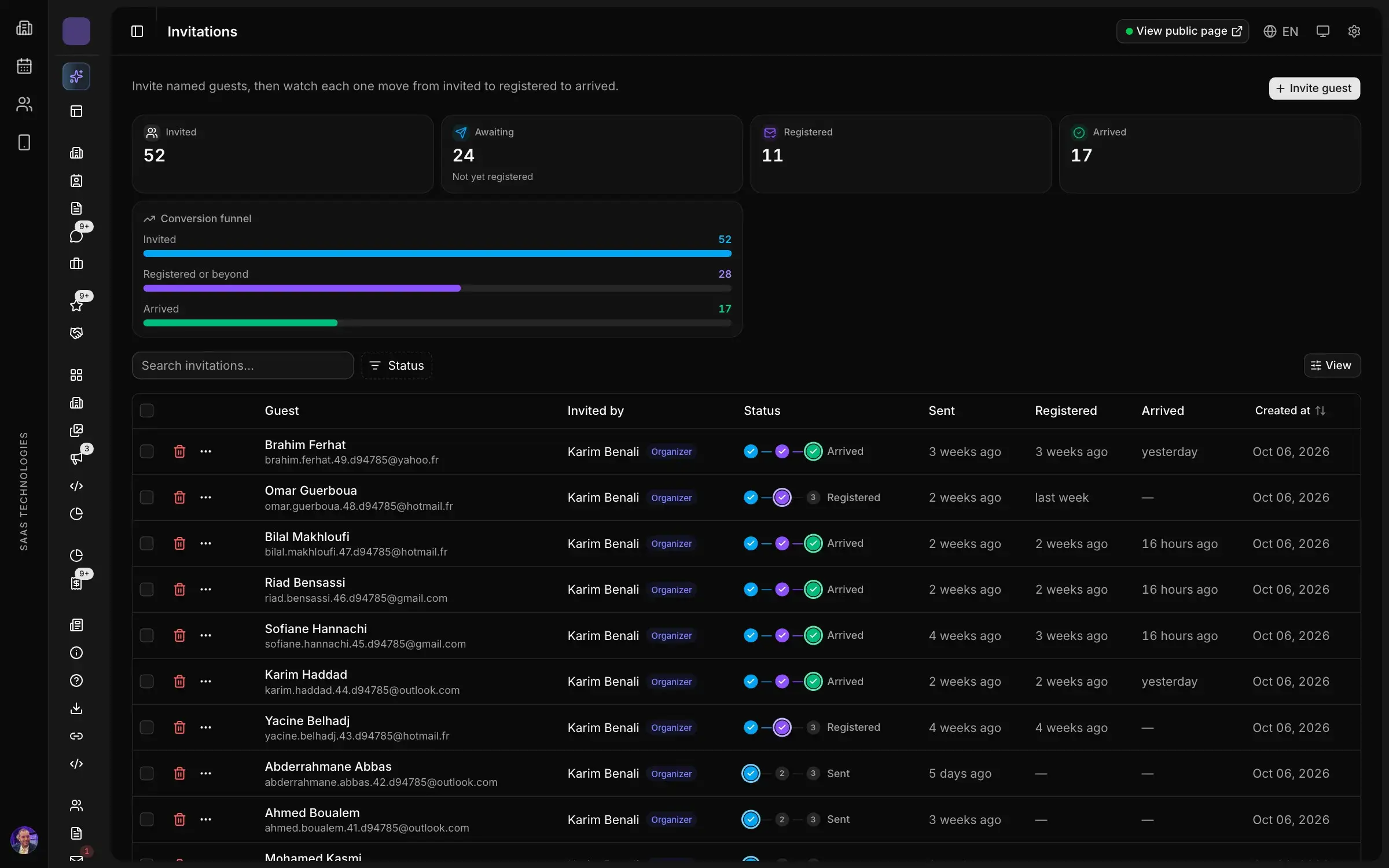
In Moultaka, visa requests from foreign exhibitors are reviewed step by step, invitation letters issued and passport dates checked, in the Exhibitors module. For visitors and delegations travelling from abroad, visa requests and invitation letters are followed in Registration, where every VIP has a host who is alerted when they arrive. Airport shuttles, interpreters and partner hotels are booked by participants and fulfilled by your providers, and visitors and exhibitors book their B2B meetings with each other, with ratings after each one. To see it on your own show, book a demo.