The exhibitor manual: what to put in it, and how to get exhibitors to act on it
Build-up, deadlines, services, fascia boards, staff badges: what an exhibitor manual must cover, and how each chapter becomes a dated task.
By Moultaka team
An exhibitor manual is the document a trade show organizer sends every exhibitor once the contract is signed: build-up and breakdown times, stand rules, the services on offer and how to order them, staff badges, the fascia text, and the deadlines that will not move. A good exhibitor manual is short and dated, and every chapter ends with something the exhibitor must do by a given day. The 60-page PDF sent once and never opened again is the main reason your phone rings all through build-up week.
What an exhibitor manual should include
Order it the way the exhibitor will need it, not the way your team wrote it:
- Practical information: venue, hall, visitor opening hours, exhibitor access hours, and one contact per subject.
- The deadline calendar, on one page, at the front: catalogue logo and description, fascia text, staff list, service orders, stand builder registration.
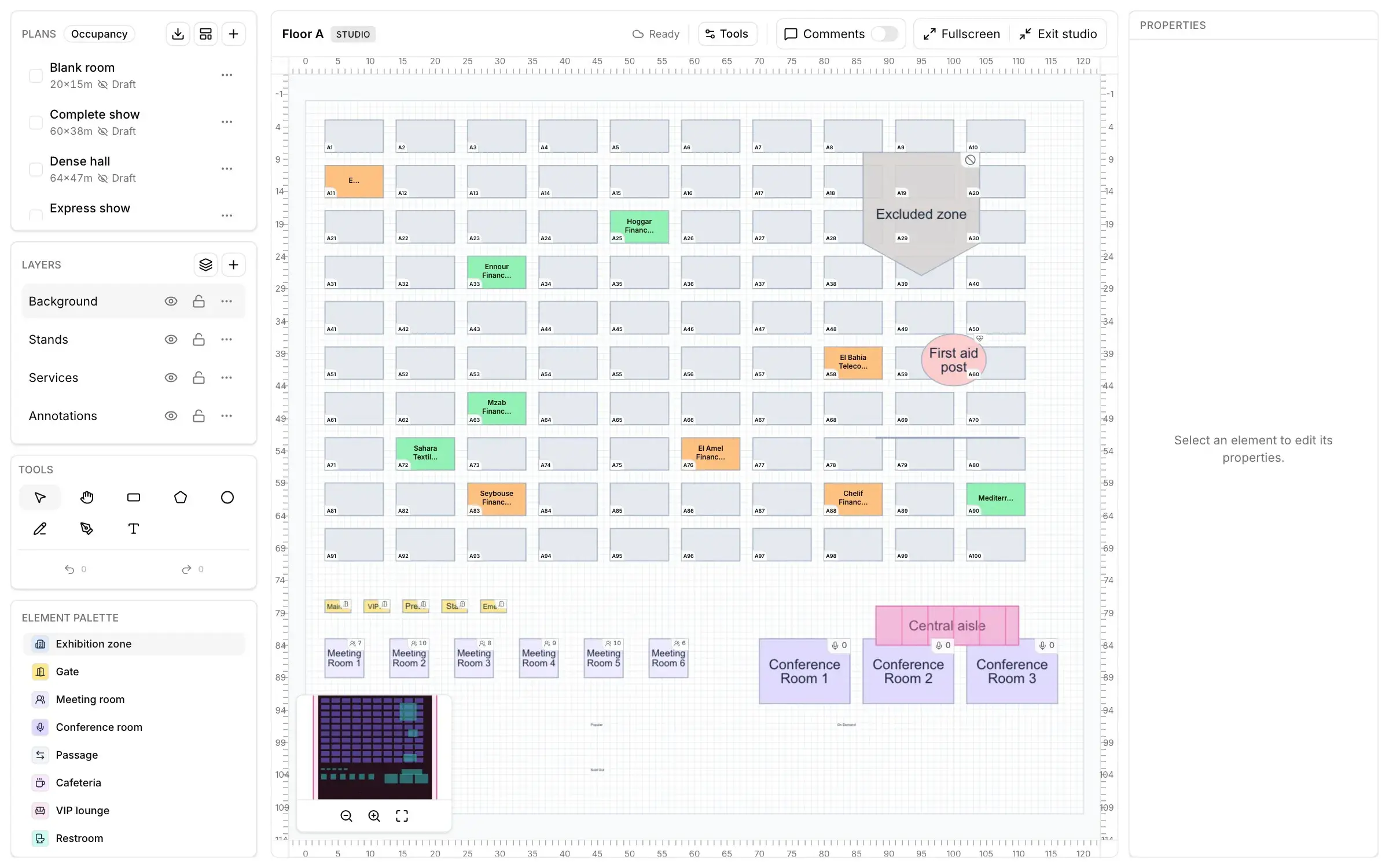
- The stand: what the package the exhibitor bought includes, and what has to be ordered separately.
- Build-up and breakdown: time slots, hall rules, and what the stand builder must provide before coming in.
- Services: furniture, power, lighting and screens, with prices and how to order.
- The fascia board: size, character limit, deadline.
- Staff badges: who is entitled to one, and how to register them.
- Deliveries: when goods may arrive, where, and who signs for them.
- Health and safety: the venue’s own rules, as the venue sets them.
- International exhibitors: visa invitation letters, and when to request them.
- During the show: who to call when a stand loses power or an order has not arrived.
Most exhibition centres publish their own technical and safety regulations. Quote them as they are, with their source, instead of rewriting them: if there is a dispute on the floor during build-up, the venue’s wording is the one that counts.
Deadlines are the heart of the manual
If an exhibitor reads one page, make it the deadline page. Write every date in full, “Thursday 14 January”, never “three weeks before opening”: someone who opens the manual late will not do the arithmetic.
Set them on the show’s overall plan: the fascia text before the printer’s proof, the staff list before badge printing, the power orders before the electrical contractor sizes the distribution boards. If that plan is not written down yet, start there: how to plan a trade show, a 180-day timeline.
From PDF to exhibitor portal: every chapter becomes a task
The trouble is rarely what the manual says. It is what happens next: the exhibitor reads it, then replies by email. The fascia text arrives in one message, the staff list in another, the power order over the phone. The fix is to send each chapter to the place where the task gets done:
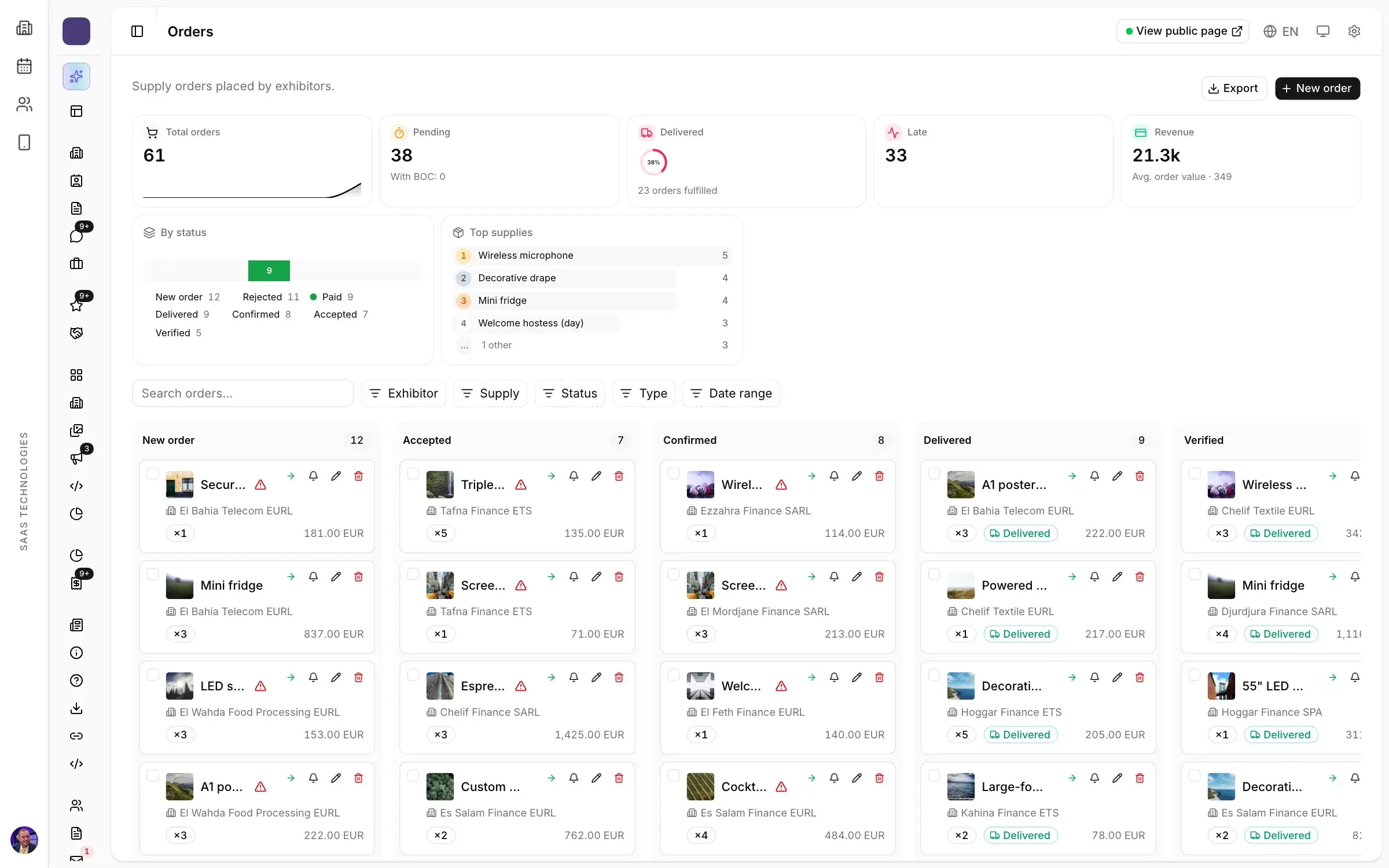
- Services: exhibitors order from your catalogue in their portal, and each order is tracked from request to delivery on the stand, with its amount and its status. The catalogue is cloned from the previous edition in one click, and orders are exported for suppliers.
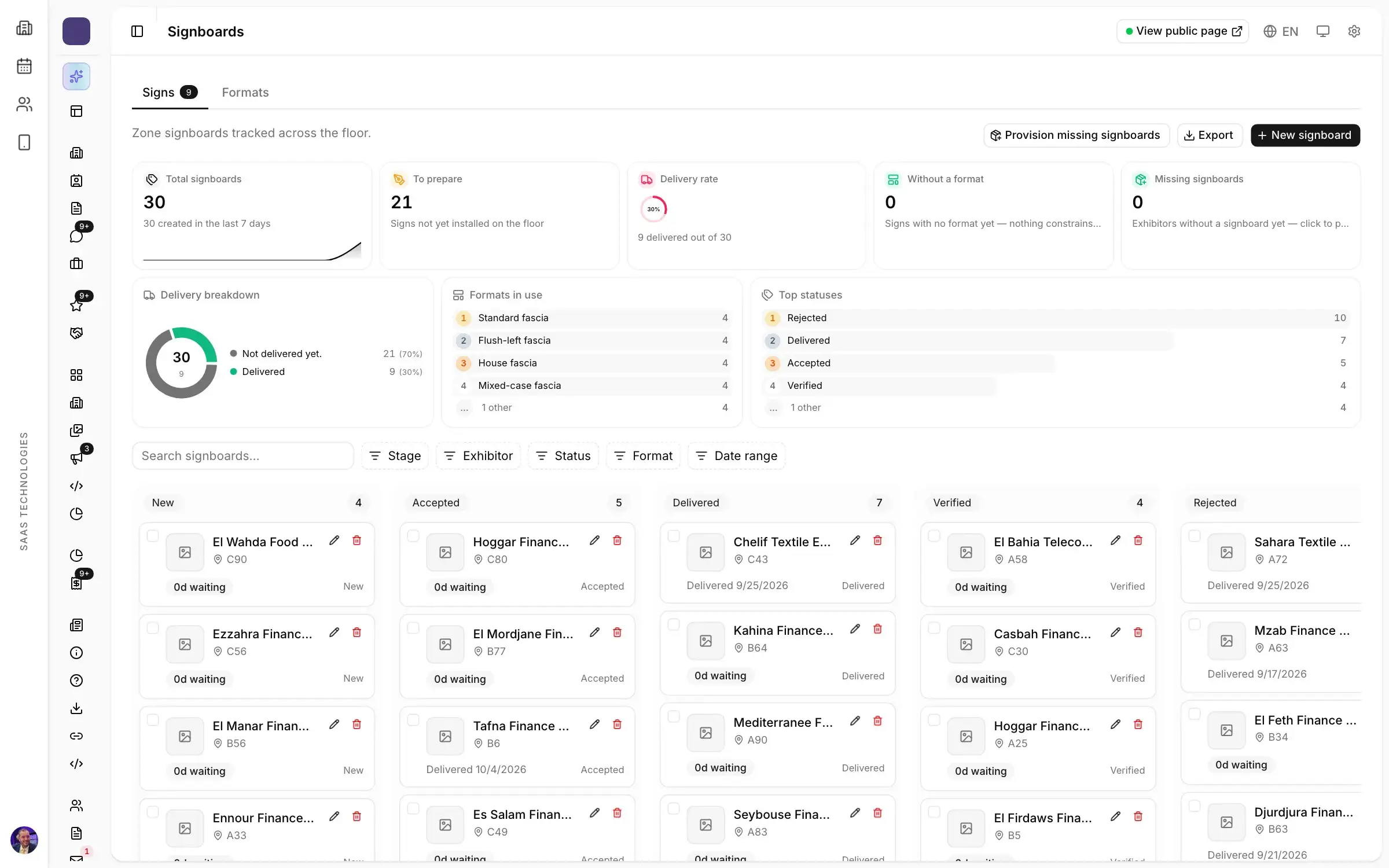
- Fascia board: exhibitors type their trading name once, you validate it, and the printer receives a clean list. Since fascia sizes and text limits are defined up front, nothing reaches the printer that will not fit.
- Staff: exhibitors declare their team, or import it from a spreadsheet, and credentials, photos and check-ins are tracked per company.
- Stand builders: insurance, clearance to build and setup windows are checked for every builder before they reach the hall.
- Visas: requests are reviewed step by step, invitation letters are issued and passport dates are checked.
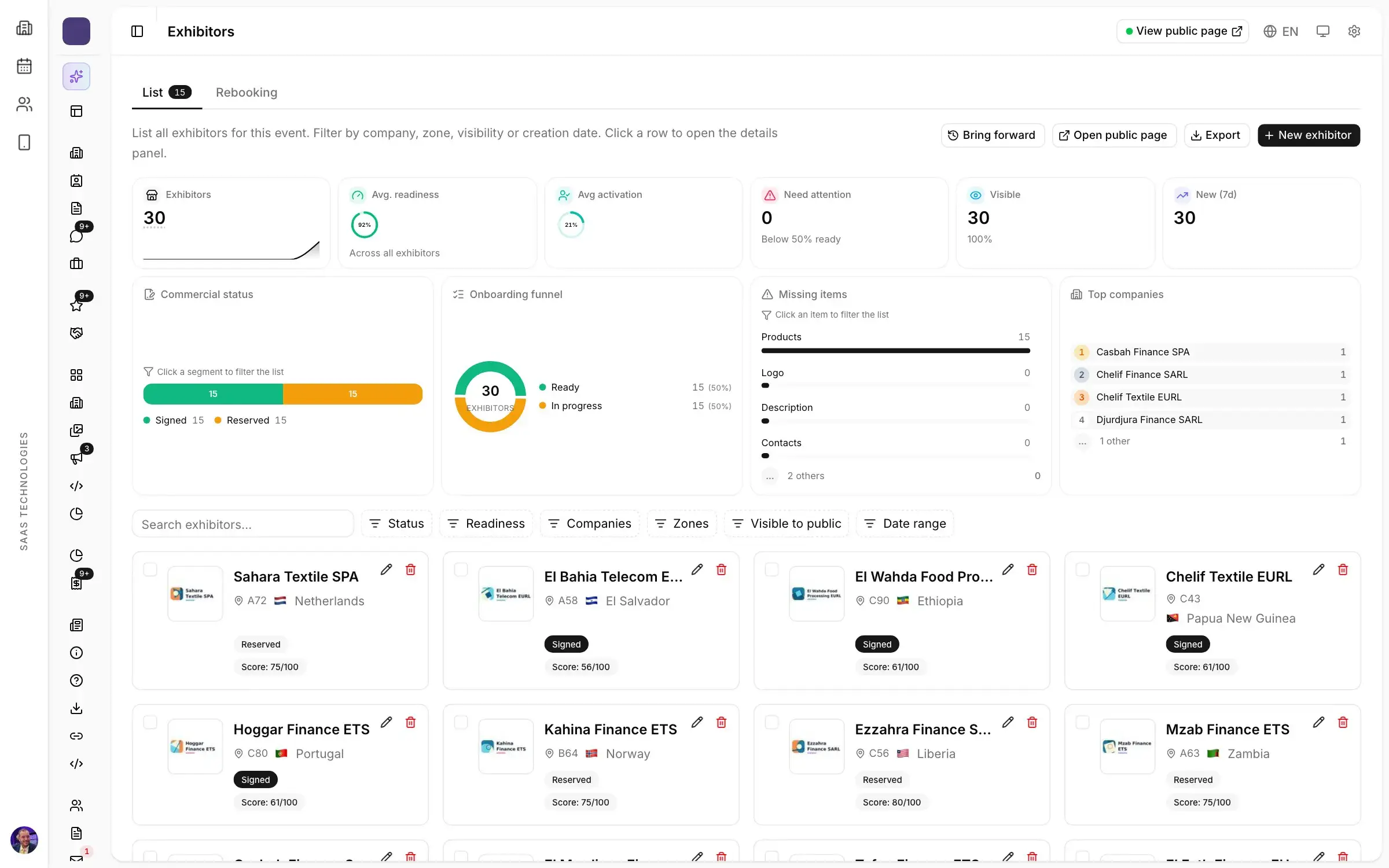
In Moultaka, each exhibitor finds all of this in their own portal, open all year, and one record holds their stand, contract, logo, team, orders and documents. Completion is measured, so you chase only what is really missing. We cover that side in more detail in exhibitor management: from the registration file to a finished stand.
Send the manual when the exhibitor needs it
A manual sent once, on signing day, is forgotten. One that comes back at the right moment gets read:
- the exhibitor manual, visitor information and access maps are published, and pushed at check-in when needed;
- automated sequences send the right message at the right moment, by email, WhatsApp and push, without anyone pressing send;
- an FAQ organised by category, on the public page and in the app, answers before the exhibitor picks up the phone;
- one media library shares logos, banners, e-cards and brand guidelines with your exhibitors and partners.
Mistakes that come back every edition
- Last year’s manual with last year’s dates. One wrong date and the exhibitor stops trusting the rest. Check every date before sending.
- One inbox for everything. Give a contact per subject: services, fascia boards, badges, security.
- Rules without a reason. “No build-up after 10 pm” is better respected when exhibitors know the hall is handed over to cleaning and security at that time.
- One language only. A show with international exhibitors needs its manual in more than one language, each version proofread by someone who writes that language rather than machine-translated.
- Nobody knows who read it. An attachment does not tell you who opened it. When each chapter leads to the portal, you can see who has done what.
Before you send your exhibitor manual
Five checks: the deadline calendar on the first page, with full dates; one contact per subject; the venue’s rules quoted as they are; a link to the exhibitor portal in every chapter that asks for an action; the date of the last update on the cover.
To see how an exhibitor manual turns into a portal exhibitors complete themselves, look at exhibitor management and operations, or book a demo.