How to plan a trade show: a 180-day timeline from first decision to opening day
Six months before opening, every week counts. The key stages of preparing a trade show, from selling stands to welcoming the first visitor.
By Moultaka team
A trade show is rarely won on opening day. It is won six months earlier, when the dates are set, and then week after week, as stands sell, exhibitors send their files and visitors register. Here is a realistic countdown for a mid-sized show, drawn from how shows are run in Algeria and across the region. Adjust the intervals to the size of your event.
Day -180 to -120: set the frame
Everything starts with three decisions that shape the rest: the dates, the venue and the scope of the show.
- The dates. Check the calendar of other events in your sector and at your target venue. In Algiers, the national exhibition centre hosts several shows a month in high season: overlapping with a neighbouring show can cost you exhibitors and visitors alike.
- The venue. Book the hall or rooms as early as possible, and ask for the technical plan: floor areas, delivery access, power points, emergency exits.
- The scope. Sectors covered, the exhibitors you are looking for, the audience you expect (trade only or open to the public), conferences or not. This framing guides all your communication.
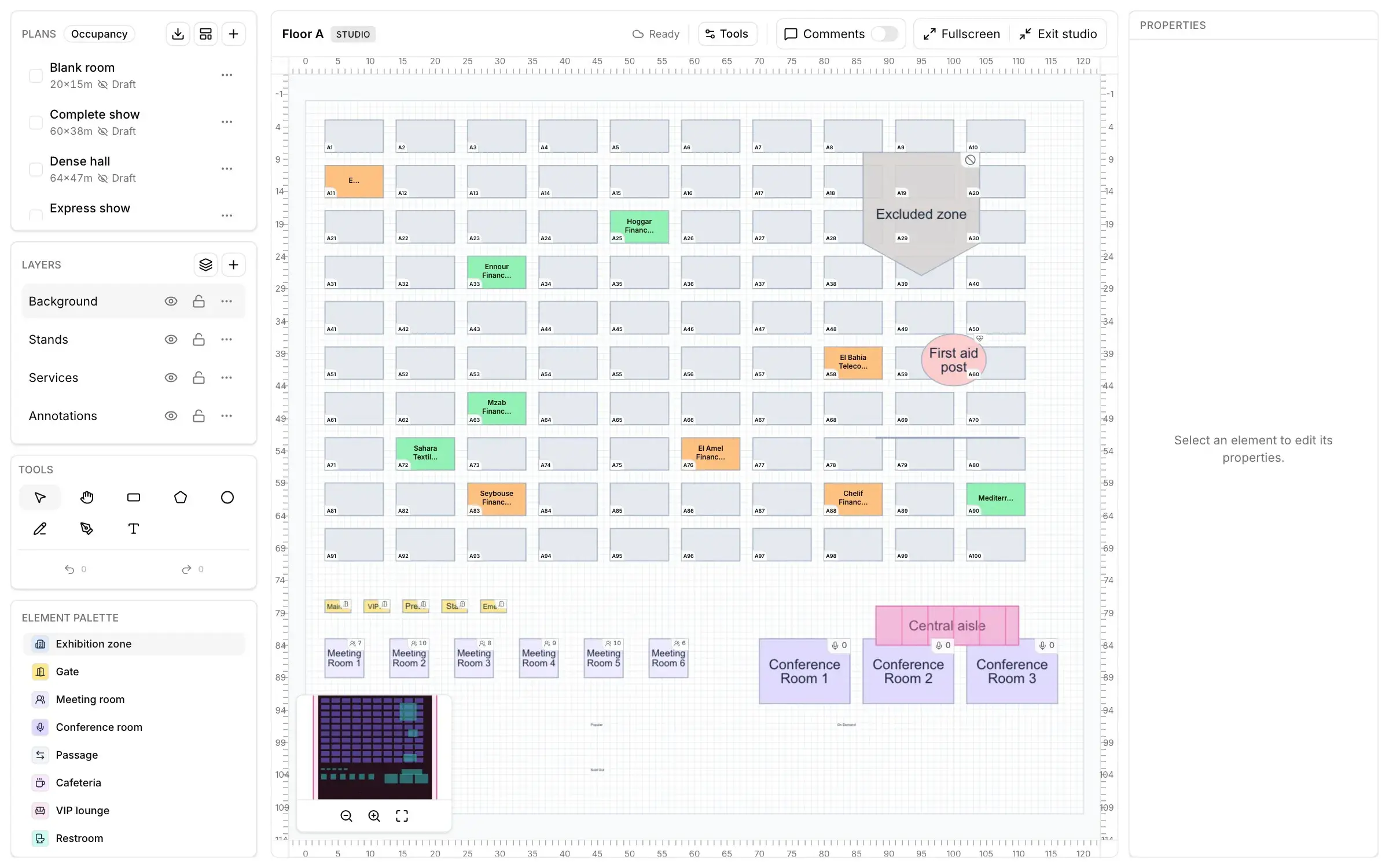
It is also the time to start the administrative procedures and draw a first floor plan, even a rough one.
Day -150 to -90: sell the stands
Sales is the longest phase, and the one where most money is lost when information is scattered.
Start with last edition’s exhibitors: they know the show and decide quickly. Offer to renew their location before sales open to everyone else. Only then, open prospecting for new exhibitors.
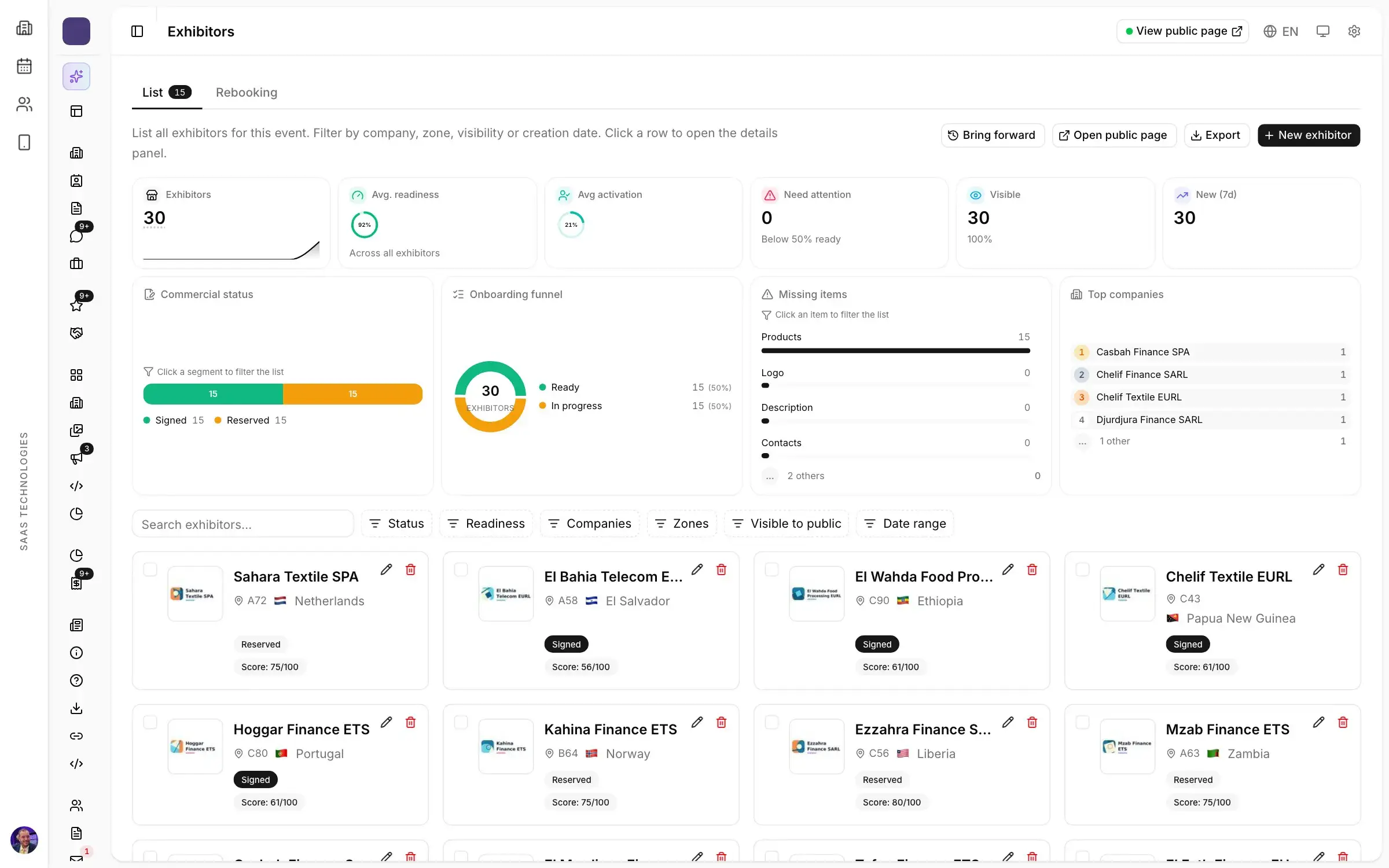
Two rules prevent most disputes: one up-to-date plan that the whole sales team reads, and a clear status for every stand (available, on hold, reserved, signed). A stand sold twice is an avoidable crisis. This is exactly what a CRM built for selling stands does: every deal is linked to its stand, on a live floor plan.
Day -90 to -45: get exhibitors ready
Once signed, exhibitors have a lot to provide: logo and description for the catalogue, fascia text, the list of staff to accredit, furniture or power orders, and their stand builder’s details.
Collecting all of this by email and phone takes weeks. An exhibitor portal where each company fills in its own file changes everything: your team sees at a glance what is missing and chases the right people.
For foreign exhibitors, plan ahead for visa invitation letters: consular lead times are counted in weeks.
Day -60 to -15: open visitor registration
Open online registration as soon as the programme is attractive enough to make people want to come. A few principles:
- Forms on your own website, in the show’s colours, rather than a link to an outside tool.
- One registration type per audience: trade visitors, VIPs, press, exhibitors’ guests. Each has its own rules and badge.
- The badge sent by email on registration: visitors arrive with their QR code, which empties the queues on the day.
The Registration and visitors product covers all three, with one record per person to avoid duplicates.
Day -15 to -1: rehearse the welcome
The last two weeks are for testing everything under real conditions:
- set up the kiosks and print a few test badges;
- check that every gate admits the right profiles (exhibitors, VIPs, staff);
- train hosts and seasonal staff, and give them their accreditations;
- plan a help desk for visitors who arrive without registering.
The day before opening, walk through the full visitor journey, from the car park entrance to the stand.
Opening day, and the day after the show
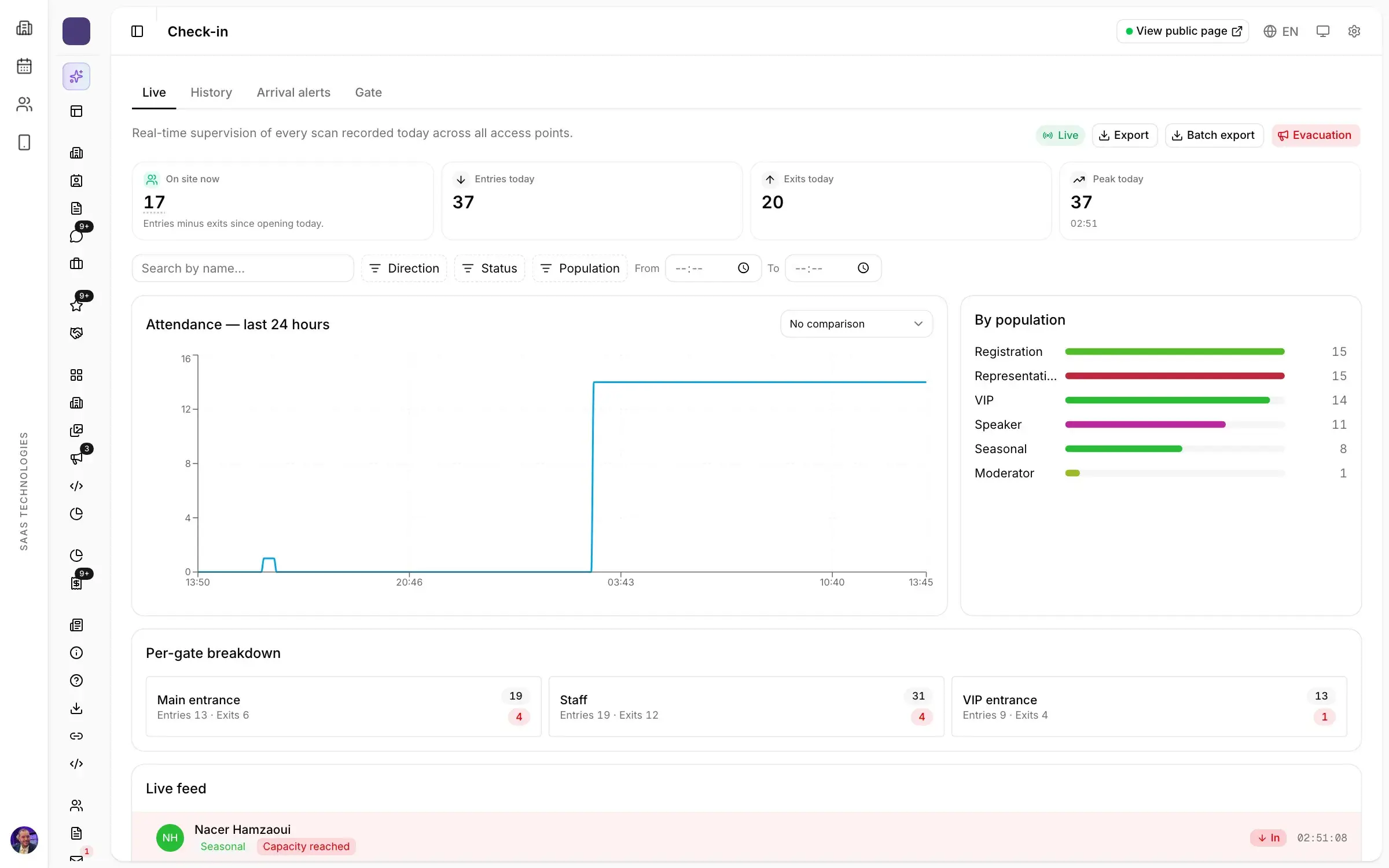
During the show, follow entries live, zone by zone, to react to peaks. The badges, kiosks and access control tools count every pass and keep the scan history.
After closing, two tasks are often forgotten: issuing the certificates of attendance that visitors and exhibitors ask for, and measuring the edition. Attendance by day, satisfied or unhappy exhibitors, unsold stands: these are the sales arguments for the next edition, which, too, starts in six months.