B2B meetings at a trade show: how to run business meetings that lead to deals
B2B meetings are one-to-one meetings scheduled in advance between exhibitors and buyers. Matchmaking, slots, rooms and follow-up: how to run them.
By Moultaka team · Updated
B2B meetings at a trade show are one-to-one business meetings scheduled in advance between two participants who have a reason to talk: an exhibitor and a buyer, a manufacturer and a distributor, a start-up and an investor. Each side knows who they are meeting, when and at which table. They are often why an exhibitor comes back year after year: rarely for the quality of the carpet, almost always for the customers, distributors or partners they would not have met anywhere else. Well run, B2B meetings turn a trade show into a marketplace: they give exhibitors measurable value, and the organiser a strong argument for the next sales campaign.
Why B2B meetings change the value of a show
Without organised meetings, encounters depend on chance in the aisles. A busy buyer walks past twenty stands and stops at three. An exhibitor waits all day for the distributor they hoped to see, unaware that the distributor came the day before.
With a meetings programme, both sides know in advance who they will meet, when and where. The exhibitor leaves with a list of qualified contacts, and you can show them, figures in hand, what the show brought them. If your show also has a conference programme, see why it pays to run both on one exhibition and conference management platform.
Pre-scheduled meetings are not the only format. For first contacts in volume, a speed networking event at a trade show brings together, in one hour, people who would not have picked each other, and many of them then book a proper meeting.
Before the show: open matchmaking
The programme starts a few weeks before opening. Visitors and exhibitors complete their profiles: sector, products sought or offered, company size, objectives. Based on these criteria, each person receives suggestions of who to meet and can request a meeting.
Two rules are worth setting from the start:
- who can request a meeting with whom: visitors to exhibitors, exhibitors among themselves, or both ways;
- competition rules: two direct competitors should not be suggested to each other.
Some shows go further and select their buyers on application. In Algiers, Cosmetica Africa takes applications from importers and distributors to its COSMETICA CONNECT programme, then has them meet exhibitors in a lounge kept for them: the show’s story tells how.
Slots and rooms with no double booking
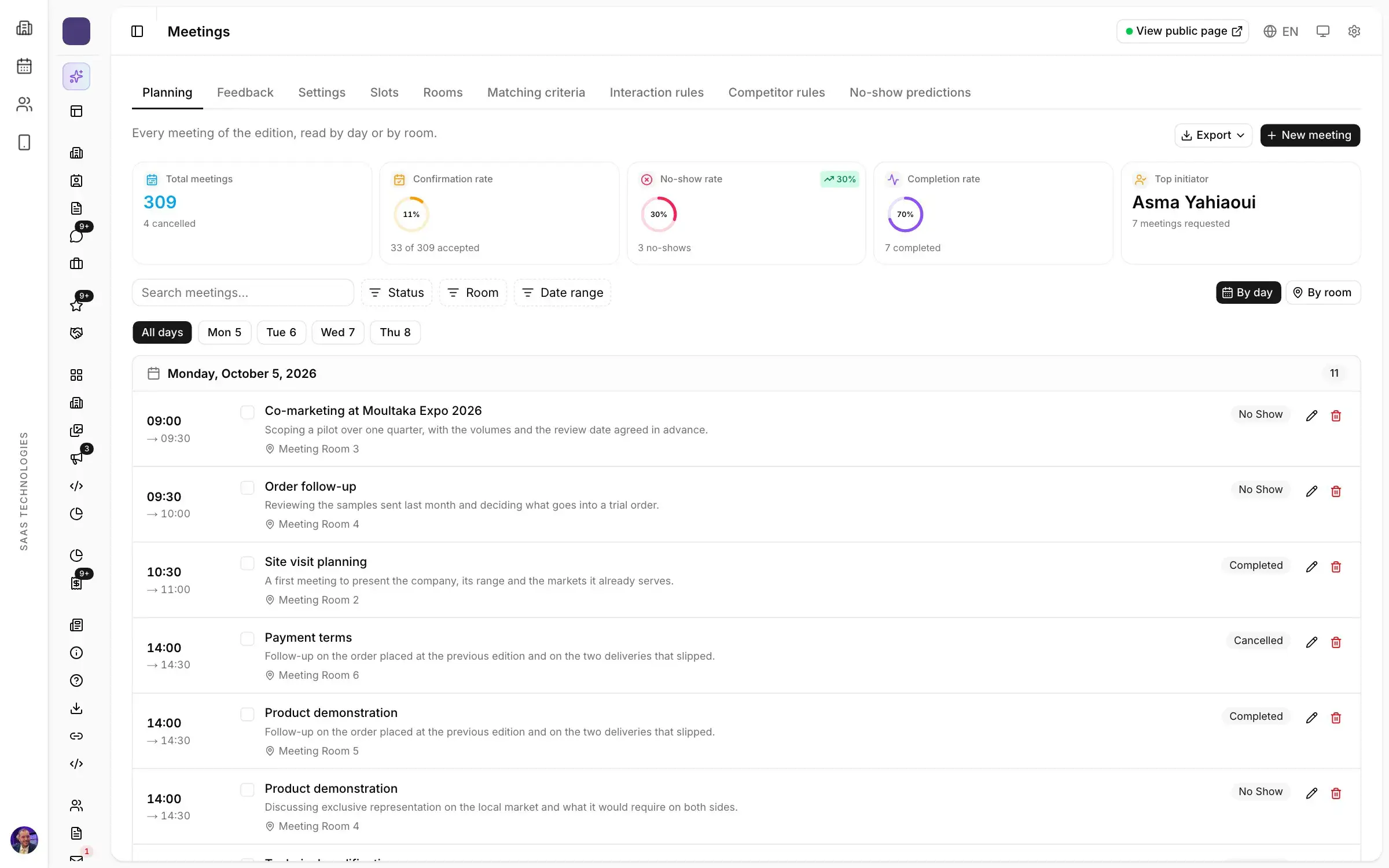
Define opening windows for each day, a meeting length (twenty or thirty minutes is often enough), breaks, and a cap on meetings per person per day. Bookable slots follow automatically.
If meetings take place in a dedicated area rather than on stands, assign a table or room to each meeting. Nothing is more awkward than two meetings planned at the same table at the same time. Plan group meetings too, several people around a room and an agenda, for a visiting delegation or a buyers’ round table, the kind a hosted buyer program brings to the show.
A meeting area can also be sold. A meeting room branded for a sponsor is a benefit you can count and prove, so it belongs in your trade show sponsorship packages.
Fewer missed meetings
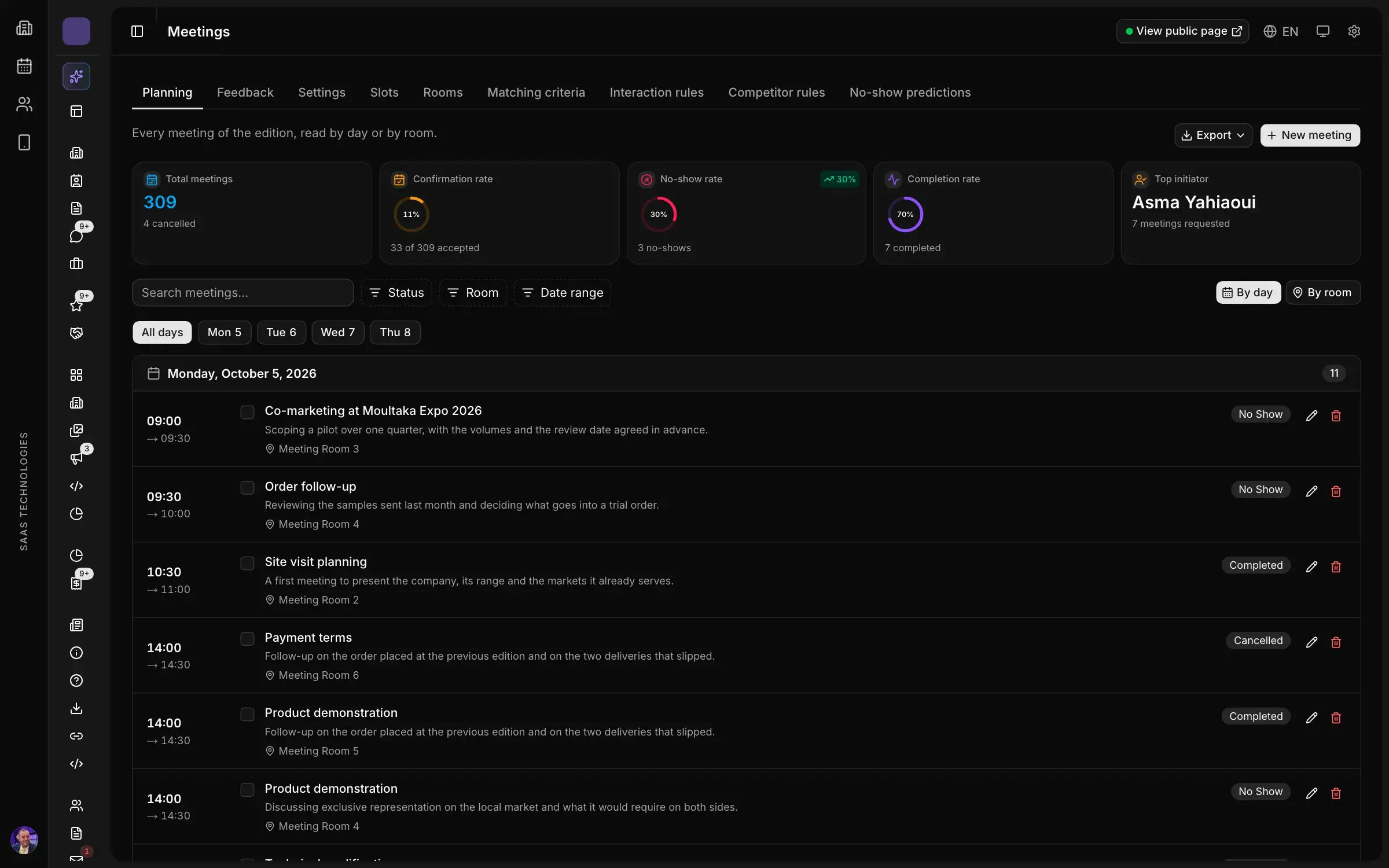
No-shows are the first enemy of a meetings programme: an empty chair means a disappointed exhibitor. Send reminders before each meeting, and keep an eye on participants who have cancelled late or failed to show up in the past. Spotting them ahead of time lets you confirm their meetings or offer the slot to someone else.
The Meetings and networking product computes a risk score for each participant from past no-shows and late cancellations, and sends a reminder above the threshold you set.
On the stand: every scanned badge becomes a lead
Not every useful conversation is planned. A visitor stops, talks, leaves a business card. By scanning their badge, the exhibitor gets their full details, with their consent, and can add notes on the conversation. At the end of the show, they have a usable list of leads rather than a pile of business cards. What a good lead should contain, and what the organiser prepares so exhibitors scan from the first hour, is covered in our guide to lead retrieval at trade shows.
After the show: measure it, and show it
Ask for feedback after each meeting: was it worth it? Meetings checked in on time give the programme’s confirmation, no-show and completion rates. These ratings, together with the number of meetings held and leads captured, make up the exhibitor section of your post-show report, the one your exhibitors expect. Presented at rebooking time, they carry more weight than any brochure.
And throughout the show, the conversation can carry on in the event’s messaging, on the web as well as in the attendee app. What else an event app for trade shows and conferences needs, for visitors and exhibitors alike, fits in six screens.