Opening remarks for a conference or an exhibition: a welcome speech outline and a sample to adapt
Opening remarks for a conference, trade show or seminar: who speaks, for how long, a five-part outline and a sample welcome speech to adapt.
By Moultaka team
Good opening remarks for a conference or an exhibition take three to five minutes when the organizer is the one speaking. Welcome people, thank those who made the event happen, say in one sentence why the audience is here, give two or three practical pointers, then hand over. Everything else, the figures, the history of the event, the plans for next year, belongs in the closing session or the press kit. Below: who speaks and in what order, a five-part outline, a sample welcome speech you can adapt, and what to settle before you step up to the lectern.
Who speaks, and in what order
The organizer’s welcome is rarely the only speech. At a trade show opening you may have the organizer, a government or city representative, an industry association and a headline sponsor. Agree the running order in writing with each of them beforehand:
| Speaker | Role | Reasonable length |
|---|---|---|
| Master of ceremonies | introduces and calls each speaker | a few sentences |
| Organizer | welcome, thanks, practical pointers | 3 to 5 minutes |
| Partners and sponsors | their commitment, one idea each | 2 to 3 minutes each |
| Guest of honour | declares the event open | their own pace |
Protocol usually has the most senior official speak last and declare the event open. When an official delegation is coming, plan the whole moment with your VIP protocol for official delegations: arrival, seating, ribbon, the walk through the halls.
A five-part outline for opening remarks
1. Welcome. One sentence with the event’s name and venue. Acknowledge the officials present by title, in order of precedence. Check that list with the front desk on the morning itself.
2. Thanks. Exhibitors, speakers, partners, your own team. Thank groups rather than reading out a long list of names: whoever you leave out will notice.
3. Why we are here. One idea: the theme, or the question this edition puts to the industry. It is the line the press will quote, so write it first.
4. Practical pointers. Where to find the agenda, when and where the first session starts, where the business meetings take place, how to ask a question in the room. Two or three, no more.
5. Hand-over. Announce the next speaker or the first session and give the floor back to the master of ceremonies.
A seminar or workshop follows the same outline, shorter still. The room is small and has come to work: welcome, the day’s objective, the running order, and start. Our guide on how to organize a seminar covers the rest of the day.
Sample welcome speech for an exhibition or conference
Your Excellency, distinguished guests, dear exhibitors, speakers and visitors,
Welcome to the [number] edition of [event name], here at [venue].
First, thank you to the [number] exhibitors who have spent weeks preparing their stands, to the speakers who are giving us their time, and to our partners, without whom this edition would not look the way it does.
This year we wanted to [one sentence: the theme, the question this edition asks].
A few pointers: the conference agenda is on [the website, the app, the printed guide]; the first session starts at [time] in [room]; business meetings take place in [location].
I wish you good meetings, and I now give the floor to [name and title].
Read at a calm pace, that is under three minutes. That is the point: at an opening, people are standing, often near the entrance, waiting for the guest of honour or the tour of the stands.
Opening remarks for a conference day
Inside a conference room, the welcome launches a day of sessions, and it can go a little deeper: the thread of the day, the questions it will tackle, how the audience can take part. Say clearly how and when to ask questions, especially if they come in through a screen rather than a roaming microphone.
The first session’s moderator takes over from you with an introduction of their own; yours should not repeat it. For their side of the job, see how to moderate a panel discussion. The day itself is built with the conference agenda template, which gives the opening a realistic slot.
What to settle before you step up
- The slot. Budget the real length of every speech in the agenda, plus a margin for the guest of honour’s arrival. A programme that starts forty minutes late stays late all day.
- Microphone and lectern. A sound check the day before, a spare microphone, light on the lectern.
- The list of dignitaries. Checked that morning, with exact names and titles.
- Languages. In multilingual events, decide in advance who speaks in which language. Avoid sentence-by-sentence interpreting from the stage: it doubles the length.
- A printed copy. Large type, numbered pages, a second copy with the master of ceremonies.
- What comes next. The tour of the stands, the first session or a coffee break: everyone should know where to go once the applause ends.
Mistakes that drag an opening out
- Reading last year’s results, figure by figure.
- Thanking a list of twenty names.
- Repeating what the previous speaker has just said.
- Starting before the officials are seated, or keeping them waiting at the lectern.
- Forgetting to say where the agenda is.
After the speech: keep the opening alive
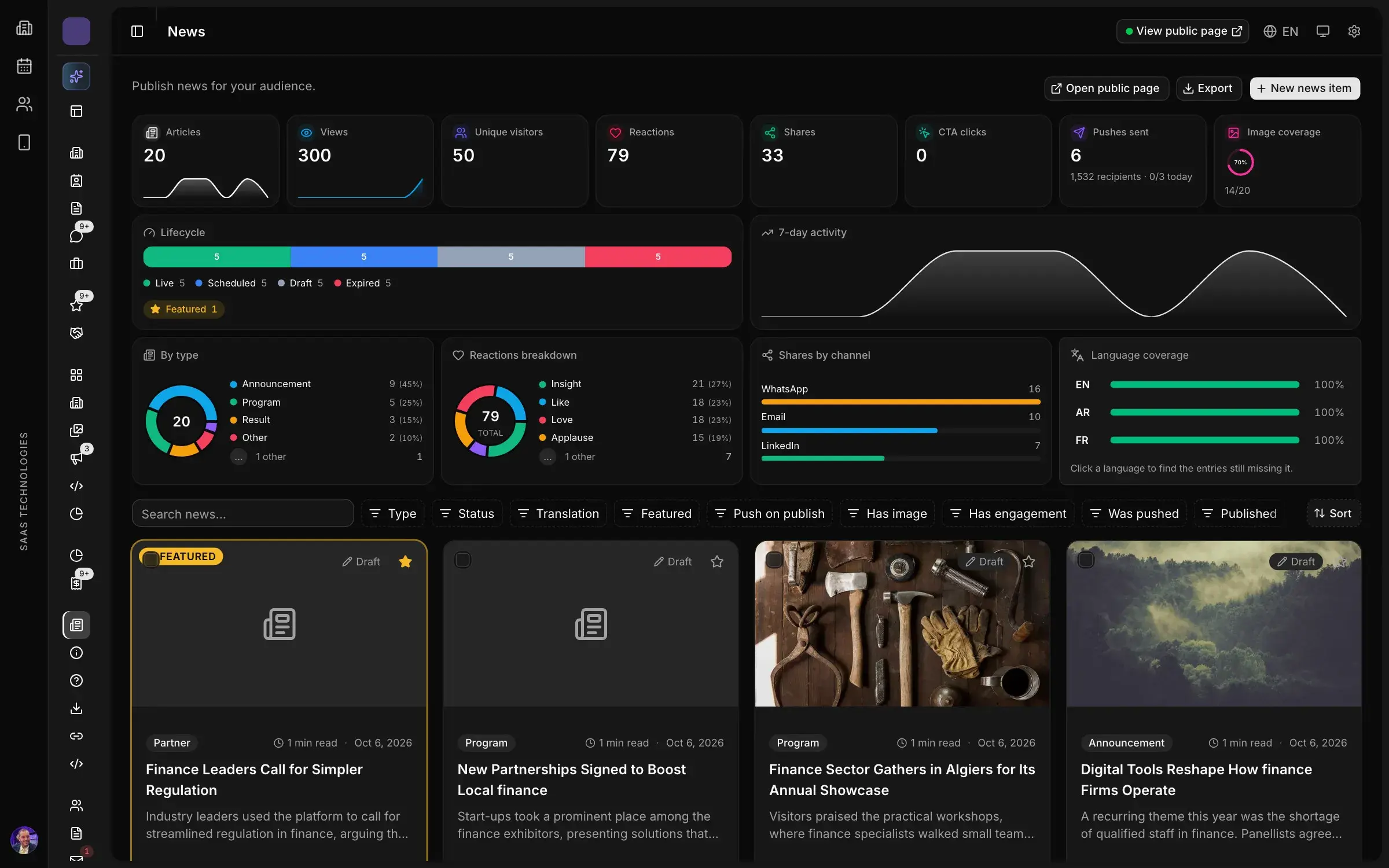
The opening is often the most photographed moment of the event. Post a news item the same day with the photos and the key line of the speech, for those who were not in the room, and keep the text for your closing trade show press release.
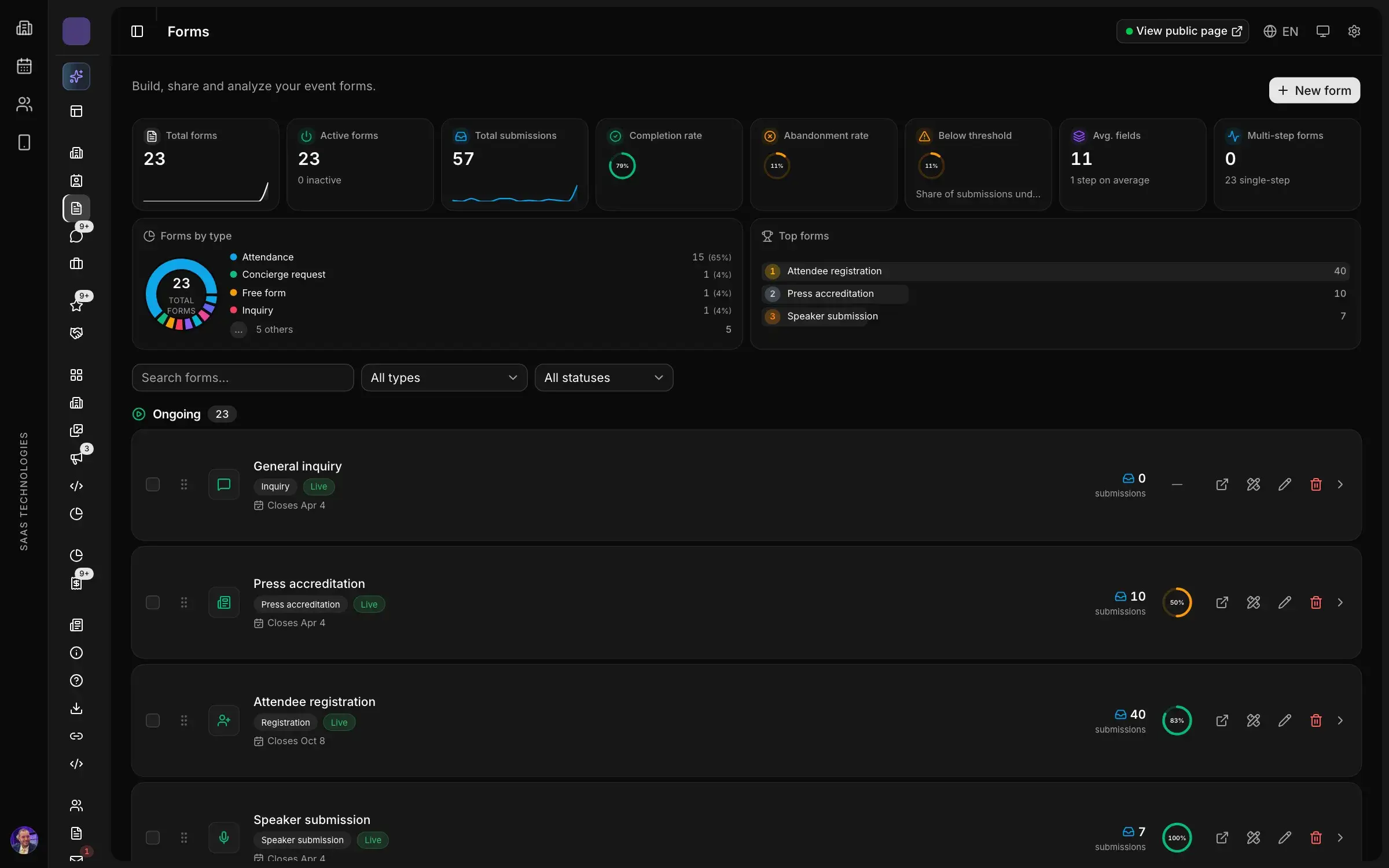
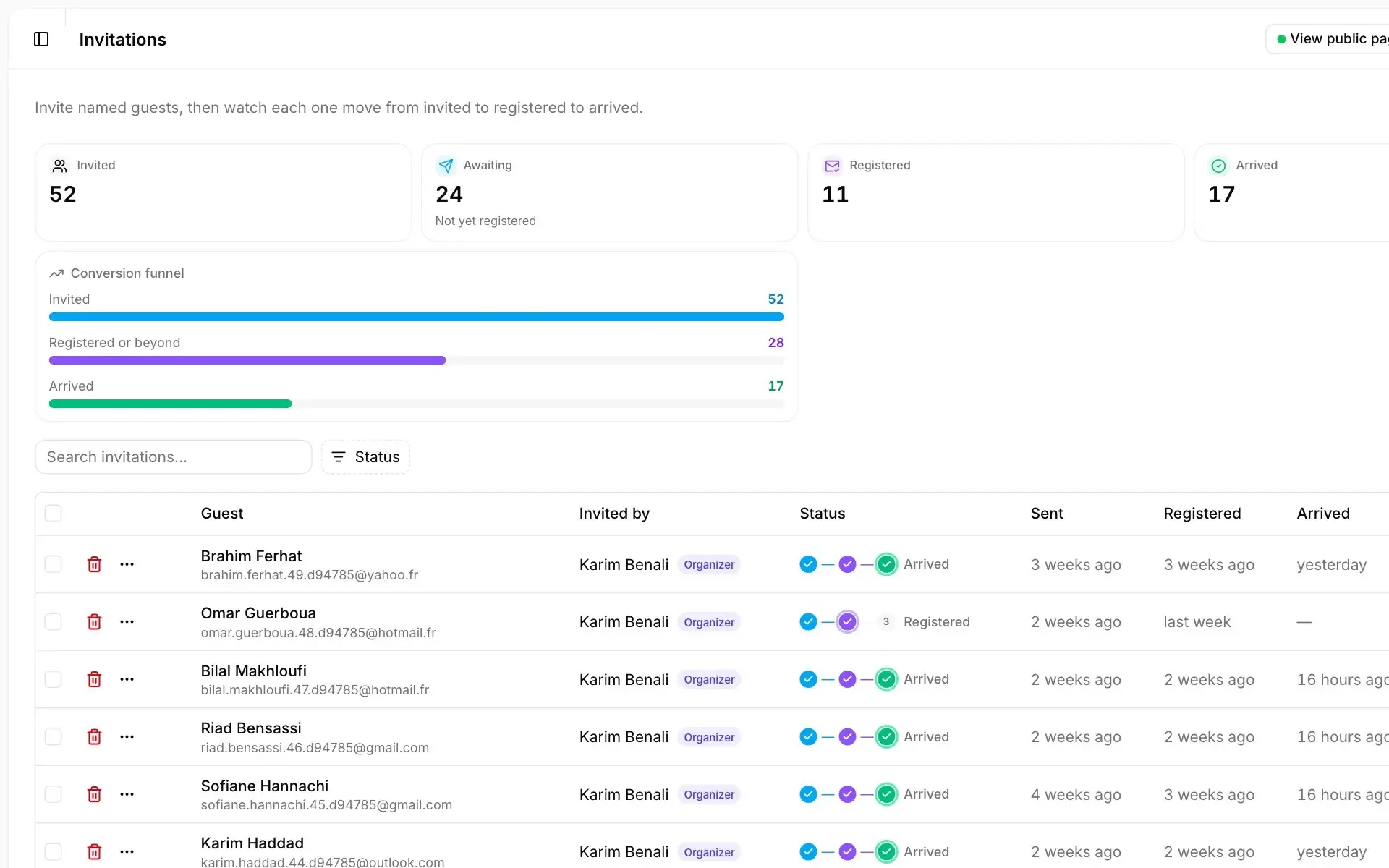
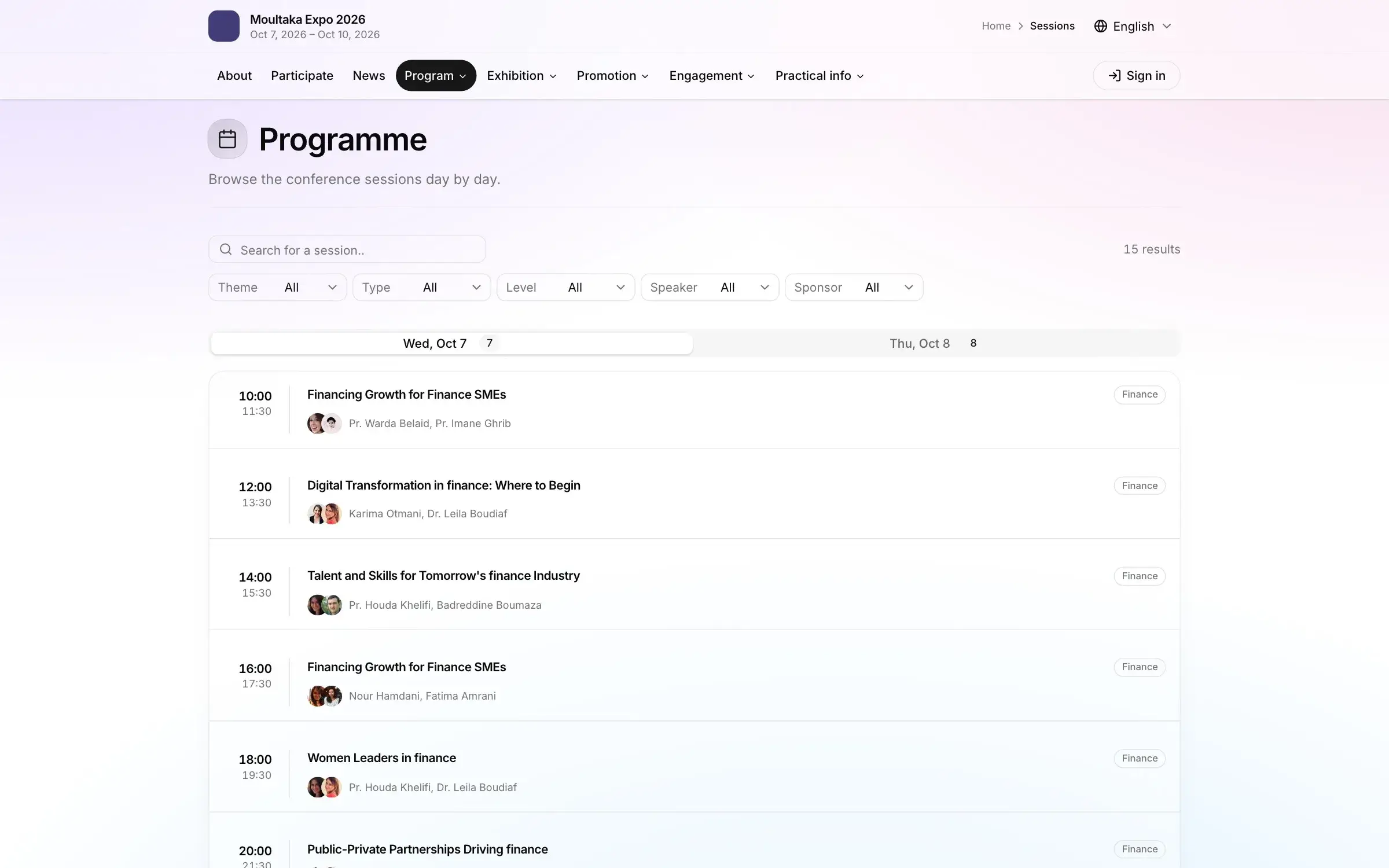
In Moultaka, sessions, speakers and moderators are planned in one place, so the opening slot and its speakers sit in the agenda like any other session. In the room, the audience asks questions and votes in live polls, and you can project the results on the room screen as votes come in. The Conferences module shows how it all comes together; to see it on a real programme, book a demo.