How to get exhibitors for an event: the prospectus, the contract and the follow-up
How to get exhibitors for an event: where to find them, what an exhibitor prospectus must say, the contract to send, and a follow-up calendar that works.
By Moultaka team
To get exhibitors for an event, start with the companies most likely to say yes: last edition’s exhibitors, the suppliers your visitors already buy from, and the companies showing at neighbouring events. Send each one a short exhibitor prospectus that answers what it really wants to know, who will walk the floor and what a stand costs, then call. Exhibitors rarely sign from a mass email. They sign when a named person follows up with a floor plan showing which stands are still free.
Where to find exhibitors for an event
Build one list and rank it, in this order:
- Last edition’s exhibitors. Your cheapest sales. Re-sign them during the show, not six months after it.
- Those who asked and did not sign. Old inquiries, and companies that visited last time and asked about exhibiting.
- Exhibitors at neighbouring shows. Exhibitor lists are public on most show websites and catalogues. A company that paid for a stand elsewhere has a budget for this.
- Trade bodies and chambers. Associations, federations and export agencies can bring several members at once, sometimes as a national or group pavilion.
- Your visitors’ suppliers. Ask your best visitors whom they would like to meet. That sentence is your best sales argument.
Give each company on the list one owner on your team. Two salespeople calling the same exhibitor with two prices costs you more than losing the sale.
The exhibitor prospectus: what to put in it
An exhibitor prospectus is the sales document of your show, usually a PDF of a few pages. It must answer an exhibitor’s questions in the order they ask them:
- The show in one sentence: its sector, dates, venue and edition number.
- Who visits: job titles, sectors and countries, measured at the last edition. For a first edition, say who you are inviting and how. An invented figure is found out on opening day.
- Who already exhibits, if those companies agree to be named.
- The floor plan: halls, zones and stand types, with sizes.
- What a stand costs and what it includes: walls, carpet, sign, power, badges, a listing in the directory. “Starting from” with no list of what is included only delays the question.
- Sponsorship, in one page: the sponsorship packages on offer.
- The key dates: early rates, the file deadline, build-up.
- One named contact, with a direct phone number.
Keep it to what fits in a few pages, in the languages of your exhibitors. The exhibitor manual comes after the signature, and the two should not be confused: the prospectus sells the stand, the manual prepares the exhibitor.
The exhibitor contract: clear before it is long
An exhibitor contract protects both sides, and it is what the exhibitor’s finance team reads. Have a lawyer review your template once; it should at least state:
- the two parties, the show, its dates and venue;
- the stand number, surface and price, and what the price includes;
- the payment schedule, and what happens if a payment is late;
- cancellation by the exhibitor, and by the organizer;
- whether a stand can be shared or sublet;
- build-up and tear-down rules, insurance, and the show’s regulations.
Send the contract with the stand already held in the exhibitor’s name, with an expiry date on the option. That date is often what finally gets the signature.
Sell from a floor plan that is up to date
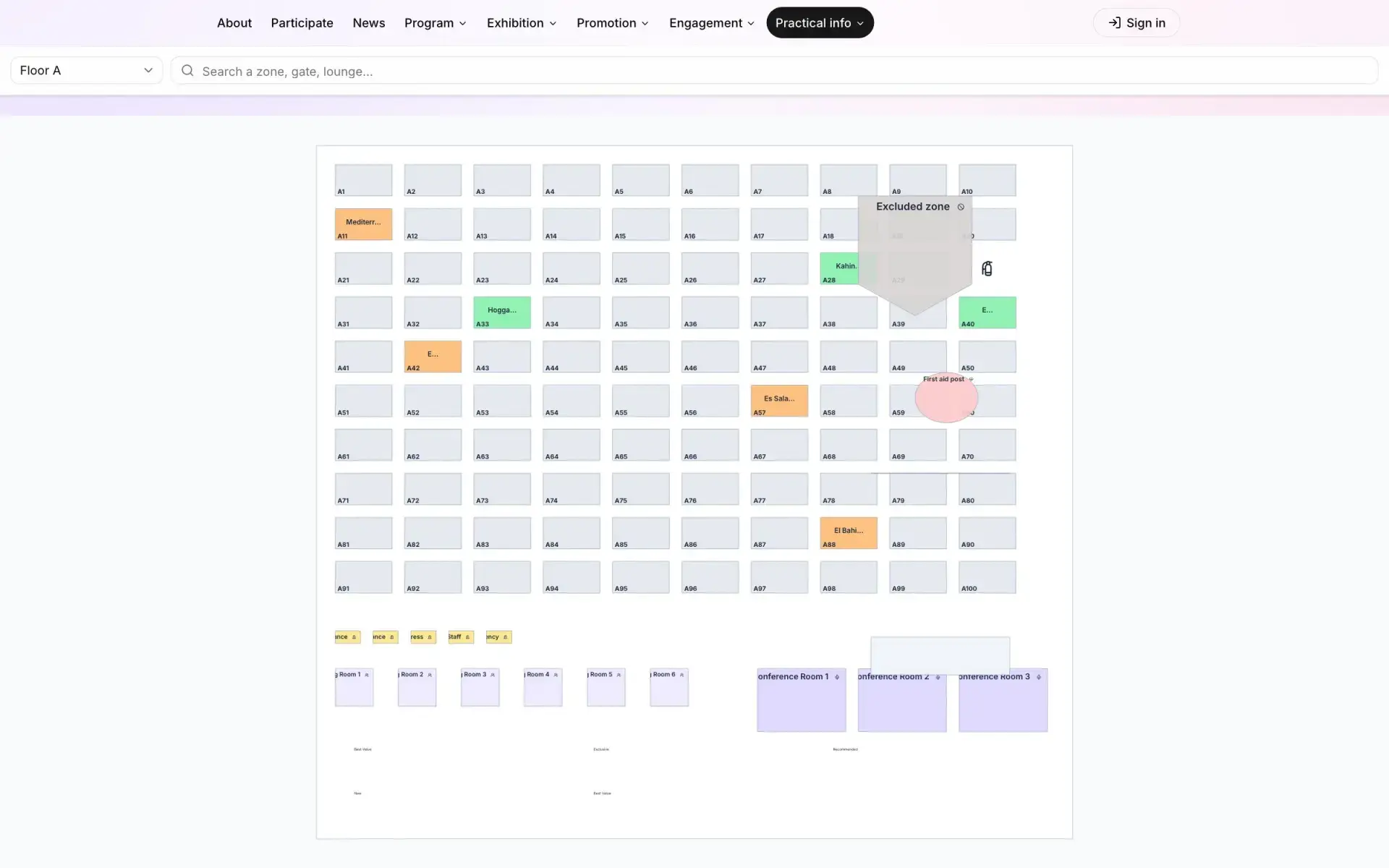
The worst call of the season is the one where you offer a stand a colleague sold yesterday. Keep one live plan: free, on option or sold, with size and price per stand. A floor plan also sells by itself: an exhibitor who can see competitors around an empty corner decides faster than one reading a price list. For the mechanics, read how to sell exhibition space. A piece of trade show floor plan software does this job when the show outgrows the spreadsheet.
A follow-up calendar that works
Exact timing depends on your sector, but the sequence holds:
- During the current edition: re-sign exhibitors on their stands, with the next plan in hand.
- Just after closing: send them their post-show report and the next edition’s offer.
- 9 to 12 months out: the prospectus and first calls to the new companies on your list.
- 6 months out: end of early rates, a real deadline for the undecided.
- 3 months out: named follow-ups, with the updated plan, on your remaining zones.
- The last weeks: fill the gaps, without undercutting those who signed early.
Plot this against the rest of your planning timeline. And note why each company said no: “wrong dates”, “no budget this year” and “we don’t sell in this market” call for three different next calls.
What makes an exhibitor come back
The prospectus brings an exhibitor once. What it found on site brings it back: visitors from the sector you promised, a badge scan that gave it real lead retrieval, a team that answered its orders on time. Ask every exhibitor one question at closing: would you come back, and what would need to change? Then show them next year what you changed.
In short
- Start with last year’s exhibitors, those who asked, and those exhibiting next door.
- A prospectus of a few pages: who visits, the plan, the price and what it includes, the dates, a named contact.
- A clear contract, with a stand on option and an expiry date.
- One live floor plan, one owner per company, a calendar of follow-ups.
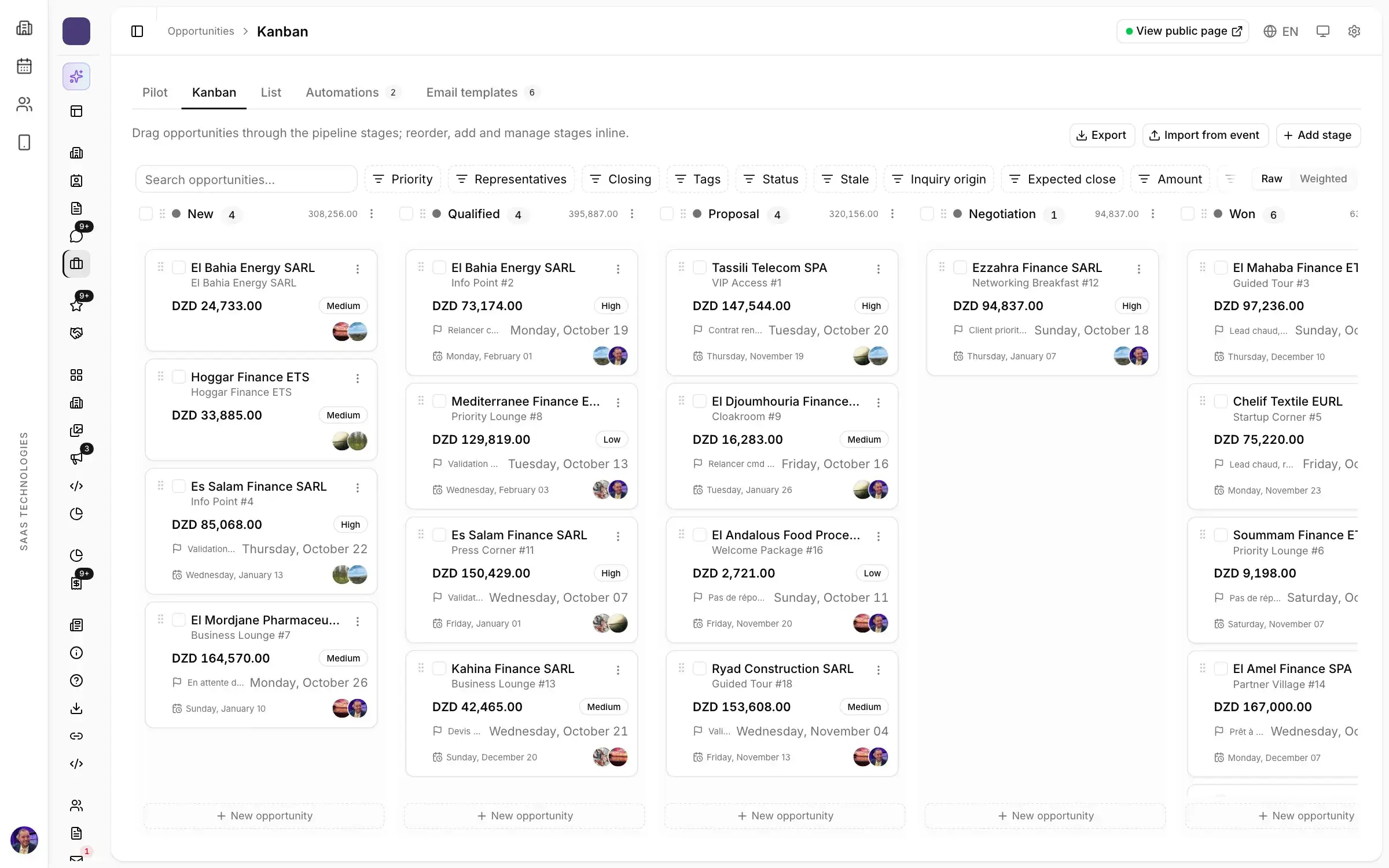
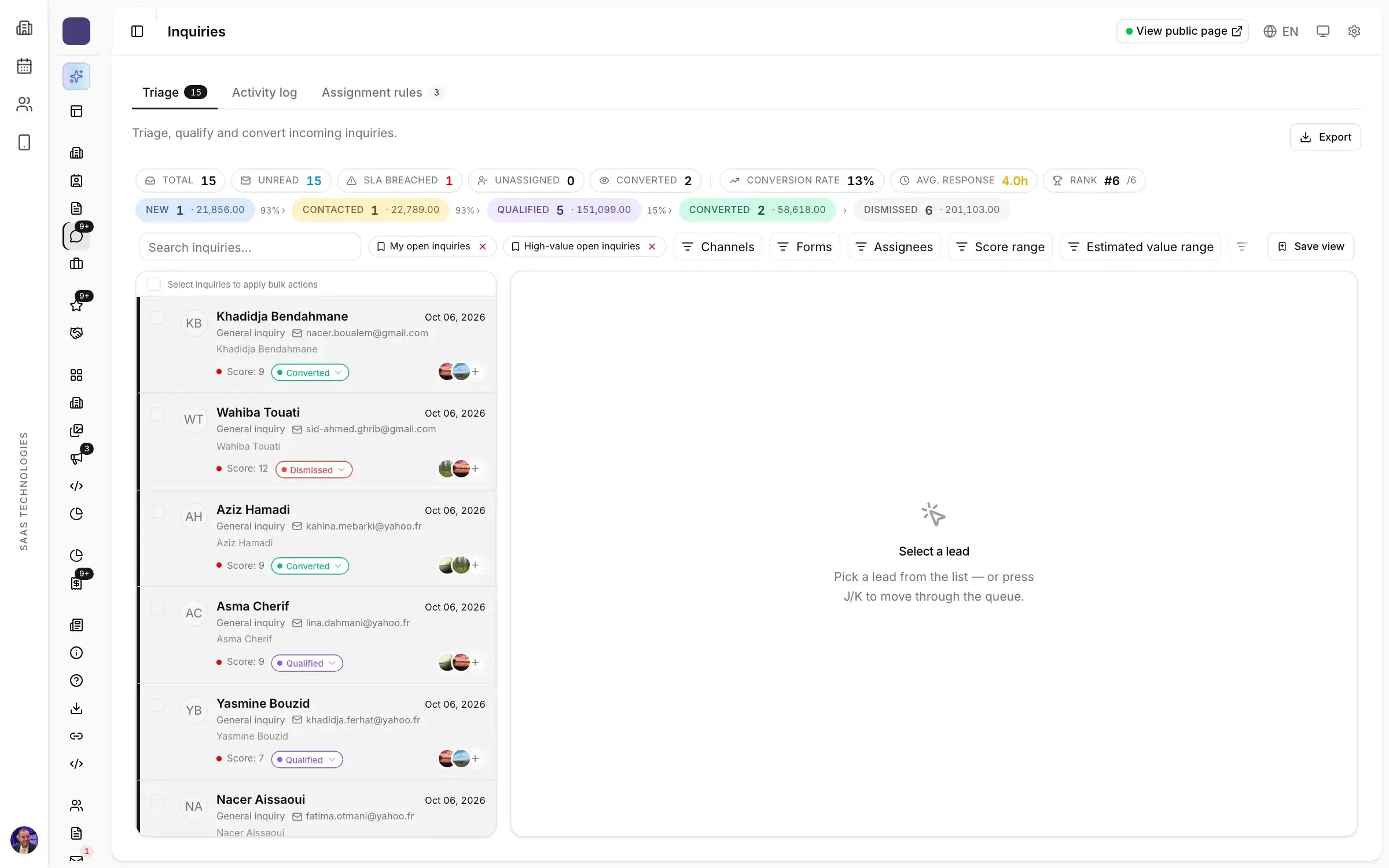
In Moultaka, inquiries from your site, forms and campaigns land in one queue, scored and assigned, and each deal stays tied to its stand on a live plan showing what is free, on option or sold. That is the stand sales and exhibition CRM module, and each company’s record keeps its loyalty from one edition to the next. To see it on your own show, ask for a demo.