Closing remarks for a conference, with examples
Closing remarks for a conference, an event or a meeting: who speaks last, a five-part closing speech, sample closing remarks and a one-minute version.
By Moultaka team
Closing remarks for a conference, an exhibition or an event take two to five minutes when the organizer is the one speaking. Signal that the event is ending, say in two or three checked facts what happened, thank the people who made it possible, tell the audience what comes next (slides, certificates, the survey, next year’s dates if they are confirmed), then close the event or hand over to the guest who will. Below: who speaks at the closing session and in what order, a five-part outline, a sample closing speech you can adapt, short closing remarks for a meeting, and which figures are safe to announce from the stage.
Who speaks at the closing session
The closing mirrors the opening. If you prepared an opening remarks speech with a running order, reuse it here, with one difference: the room is smaller, more tired, and part of the audience is watching the clock for a train or a flight.
| Speaker | Role | Reasonable length |
|---|---|---|
| The MC or host | announces the closing session, calls each speaker | a few lines |
| The rapporteur or program chair (academic conferences) | summary of the sessions, recommendations | 5 to 10 minutes |
| The organizer | two or three facts, thanks, what comes next | 3 to 5 minutes |
| A sponsor or partner, if agreed | one idea about their commitment | 2 minutes |
| The guest of honour | officially closes the event | at their own pace |
At a trade show there is often no rapporteur: the organizer speaks, a partner or a ministry representative closes, and an awards ceremony may come first. In the Gulf and at many government-backed events, the closing ceremony follows a fixed protocol, with the patron’s representative speaking last. Settle the order in writing, with each speaker, days before, as part of the conference organizing committee’s roles.
A five-part outline for closing remarks
1. The signal. One sentence that says the event is coming to an end, with its name. Acknowledge the officials present by their titles; the guests of the afternoon are not always those of the morning, so check the list with the front desk around 3 pm.
2. What happened. Two or three facts, no more: a figure you can source, a session that stood out, a moment people will remember. This is the line attendees will repeat on social media.
3. The thanks. Speakers, exhibitors and sponsors, partners, then the people everyone forgets: registration staff, AV technicians, volunteers, security. Thank groups rather than reading twenty names.
4. What comes next. What attendees will receive and when: slides or proceedings, certificates, the feedback survey, and next year’s dates if they are confirmed with the venue. Never announce a date the venue has not signed.
5. The close. “I now declare this conference closed” if it is yours to say; otherwise hand back to the MC, who introduces the guest of honour.
Sample closing speech for a conference or event
Distinguished guests, speakers, exhibitors, ladies and gentlemen,
We have reached the end of [event name], [edition].
Over [number] days, [one sentence on what happened: sessions held, speakers, countries represented, if those figures are checked]. What I will remember most is [one moment: a session, a debate, a meeting].
Thank you to our speakers, who spent weeks preparing; to the program committee, who reviewed every submission; to our sponsors and partners; and to the registration, AV and operations teams you passed in the corridors without always seeing them.
Slides will be available [where, when]; your certificates [how to get them]; a short survey will reach you [when], and your answers will shape the next edition.
[If the dates are confirmed: We look forward to seeing you on (date), in (city).]
Thank you all, and safe travels home.
Read at a calm pace, this runs under three minutes. At an academic conference it follows the rapporteur’s summary: do not repeat the recommendations, point to the conference report that will publish them.
Closing remarks at a trade show
At an exhibition, the closing usually happens late on the last afternoon, while visitors leave and exhibitors start packing. It speaks mostly to exhibitors, who decide then whether they will rebook. Three differences from a conference:
- It is shorter. Two minutes at the main stage, often as part of the awards.
- It talks business. B2B meetings held, buyer delegations received, countries represented: what an exhibitor cares about more than raw attendance.
- It gives the exit instructions. Closing time for the public, the start of breakdown, vehicle access times for move-out.
Place the closing slot in your run of show, with the exact time the doors close to the public: a closing speech in front of empty aisles helps nobody.
Short closing remarks for a meeting
For a workshop, a team meeting or a training day, one minute is enough:
Thank you all for staying to the end. Today we [two or three concrete outcomes]. Thank you to [the speaker, the facilitator, the team]. You will receive [the slides, the certificate, the notes] by [date], along with a short survey. Have a good evening.
The vote of thanks
In the United Kingdom, India, the Gulf and much of the Commonwealth, the closing often includes a separate vote of thanks, given by someone other than the organizer. It is short, two minutes, and only thanks: the guest of honour, the speakers, the sponsors, the organizing team, the audience. If your event has one, agree beforehand who thanks whom, so the organizer’s closing remarks do not read the same list a second time.
Which figures to announce, and which to keep for the report
A figure spoken from the stage is quoted as is by the press and by sponsors. Announce only what you can source at closing time:
| Figure | Where it comes from | Announce at the closing? |
|---|---|---|
| Attendees or visitors who came in | check-in at the entrance | yes, if read the same day |
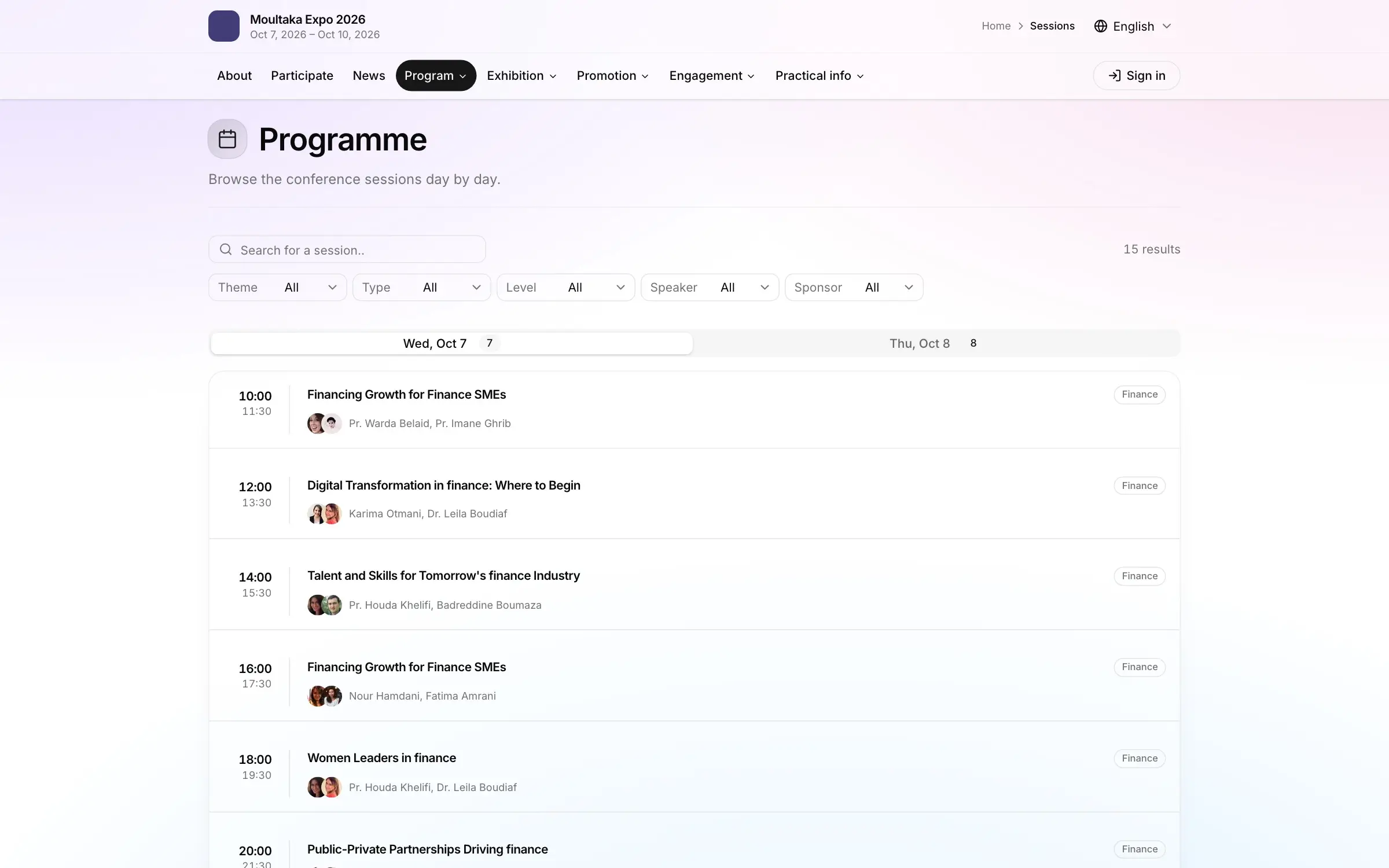
| Sessions and speakers | the programme as it actually ran | yes |
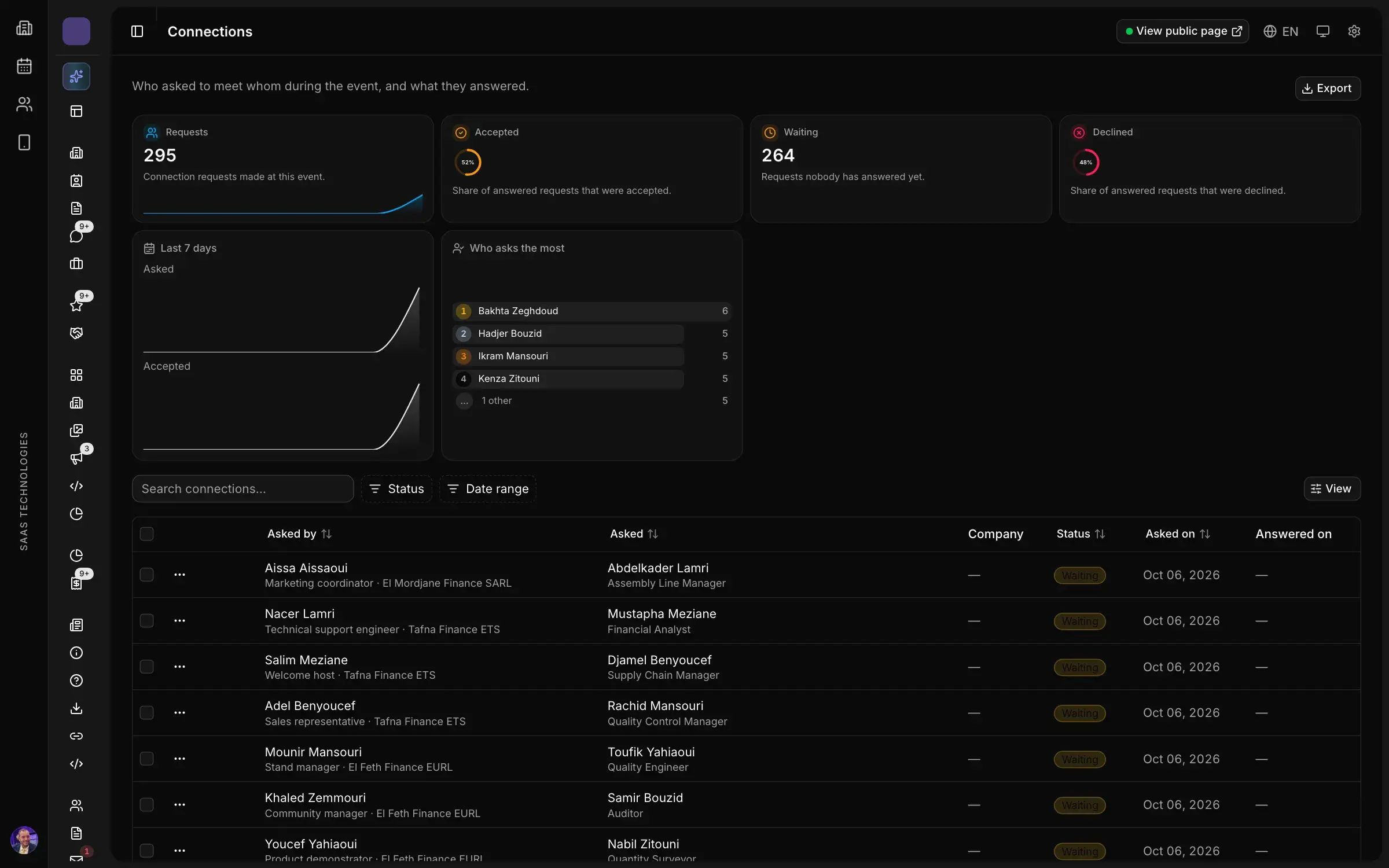
| B2B meetings held | the meetings schedule | yes, at a trade show |
| Countries represented | registrations | yes, if checked |
| Satisfaction, media coverage, deals signed | the survey, the press, exhibitors | no: that is the report |
Ask your team for the figures sheet around 4 pm, on paper, and never round up. The rest goes into the post-show report and the closing press release.
What to prepare before the closing
- The slot. Before the first departures, not at the very end. Announce it the day before, in the programme and in the app.
- The list of officials and thanks. Checked the same afternoon.
- Certificates. Ready before the session if you hand them out; otherwise say how they will arrive. See the certificate of attendance template.
- The survey. A QR code on screen during the closing brings in more answers than an email three days later. The questions are in post-event survey questions.
- The photo. The group or awards photo is taken during the closing, not after: after, the room is empty.
Mistakes that spoil a closing
- Reading back the programme, session by session.
- Announcing a rounded or estimated figure the report will have to correct.
- Forgetting the floor teams in the thanks.
- Announcing next year’s dates before the venue has confirmed them.
- Scheduling the closing so late that half the room has already gone.
After the closing
That evening or the next morning, post a news item with the photos and the key line of the speech, then send the thank-you email after the show, one message per audience.
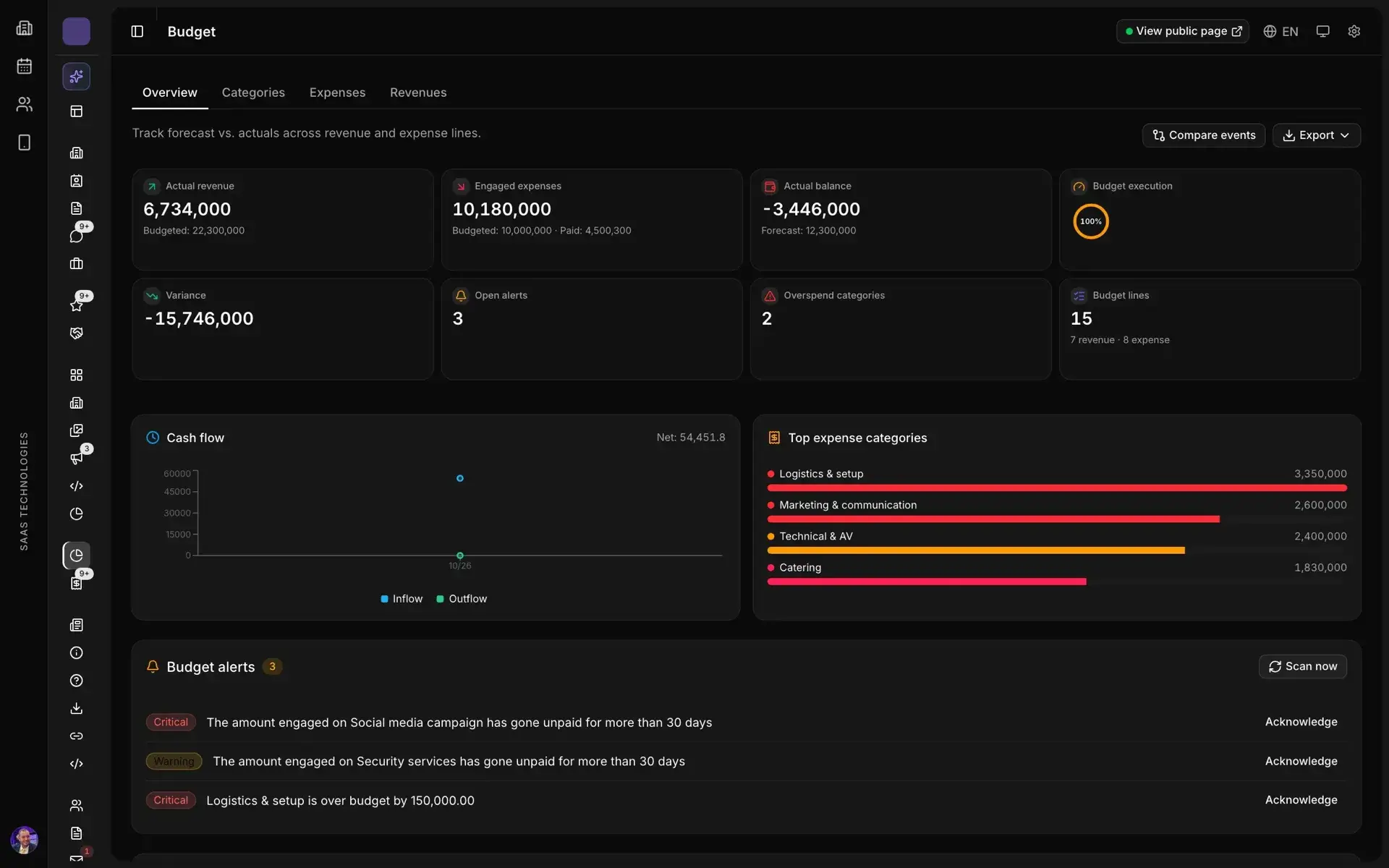
In Moultaka, every module opens on its own live indicators: check-in entries, meetings checked in on time, the sessions of the programme, so the figures sheet is there without rebuilding it by hand. News posts publish announcements and results to the public page and the app, with push notifications, and each participant gets a certificate generated from their attendance, shared by link. The Conferences and Analytics modules show how it comes together; to see it on a real edition, book a demo.