Post-event survey questions for a trade show: what to ask exhibitors and visitors
Post-event survey questions for a trade show: ten for exhibitors, eight for visitors, when to send them and how to turn the answers into decisions.
By Moultaka team
The right post-event survey questions for a trade show come in two sets: one for exhibitors, one for visitors. Ten questions at most for the first, eight for the second, sent the day after the doors close. A good survey only asks what your data cannot tell you. Entries, session attendance and meetings can be counted; whether people will come back, whether exhibitors met the right buyers and what was missing have to be asked. Below are both surveys, question by question, followed by how to turn the answers into decisions for next year’s edition.
What a post-show survey should not ask
The temptation is to ask everything: “How many visitors came to your stand?”, “What time did you arrive?”, “How many sessions did you attend?”. You already have those answers, and better ones than a tired exhibitor will give from memory three days later.
Entries per gate and per hour, attendance in each room, meetings held, badges scanned per stand: all of this is measured during the show. That is what trade show KPIs for organizers are for. The survey covers what no counter sees: judgement, intention, and what was missing.
So every question has to pass one test: if the answer is bad, who does what? A question that triggers nothing makes the survey longer and lowers the number of people who finish it.
Exhibitor survey questions: ten that matter
The exhibitor is your customer. Their answers prepare next year’s sales campaign, and this is often the one moment in the year when they tell you plainly what they think.
| # | Question | Format | What it decides |
|---|---|---|---|
| 1 | Overall, how satisfied are you with your participation? | 1 to 5 | the trend from one edition to the next |
| 2 | How likely are you to recommend this show to a company in your industry? | 0 to 10 | the Net Promoter Score |
| 3 | Did the visitors you met match your target audience? | mostly, partly, rarely | visitor marketing |
| 4 | Did you get the meetings you expected? | yes, partly, no | the meetings programme |
| 5 | How would you rate the preparation: manual, forms, orders, build-up? | one rating per step | what to simplify before build-up |
| 6 | Did your stand location work for you? | yes or no, and why | next year’s floor plan |
| 7 | How would you rate on-site organisation and support? | 1 to 5 | staff and contractors |
| 8 | Do you plan to exhibit at the next edition? | yes, probably, no, not sure | the rebooking list |
| 9 | If not a yes, what would bring you back? | open text | the sales team’s pitch |
| 10 | What is the one thing we should change first? | open text | the first decision of the debrief |
Only ask question 4 if your show runs B2B meetings. Split question 5 into one rating per step: an exhibitor may have found the forms clear and the furniture delivery late, and two different people on your team need to know. If you send an exhibitor manual, ask outright whether it was read.
Questions 8 and 9 are worth more than all the others. An exhibitor who says “probably” in November signs in February, if someone calls them. A “no” with a reason gives your sales team something to fix, or at least to understand.
Visitor survey questions: eight, on a phone
Visitors paid little or nothing, and they owe you even less time. Their survey must work on a phone and take three minutes.
- Overall, how useful was your visit? 1 to 5.
- How likely are you to recommend this show to a colleague? 0 to 10.
- Did you find the exhibitors you were looking for? Yes, partly, no; if not yes, which ones were missing.
- How long did you wait at the entrance? Under five minutes, five to fifteen, over fifteen.
- How useful were the conference sessions? 1 to 5, or “I did not attend”.
- How did you hear about the show? A short list of the channels you actually used.
- Will you come back next year? Yes, probably, no.
- One thing we could improve? Open text.
Do not ask again what your registration form already knows: industry, job title, company size. Use it to read the answers by profile. A show can delight students and disappoint buyers, and the average will never show it.
Question 3 is the sales team’s favourite: the exhibitors visitors could not find are next year’s prospect list. Question 4 checks what your entry system promises. If many answer “over fifteen minutes”, read how to get rid of the queue at a trade show entrance.
When and how to send it
The next working day. Memories are fresh and exhibitors have not gone back to their routine yet. Mind the calendar of the countries your exhibitors come from: weekends do not fall on the same days in Europe, Algeria, Saudi Arabia or the Emirates, and a survey sent on someone’s day off sinks under Monday’s mail.
One reminder, not two. Three or four days after the first send, one reminder to those who have not answered. Close the survey after ten days: later answers say little, and the post-show report is waiting.
State the length. “Three minutes, eight questions” in the message. Then keep that promise.
Rate sessions in the room. Asking a week later what people thought of the day-two panel gets you nothing. A session is rated at the end of the session, on the attendee’s phone, while the speaker leaves the stage.
Call your largest exhibitors. For your top twenty exhibitors by space, a ten-minute call beats a form. Ask the same ten questions, record the answers in the same sheet, and you will also hear what they would never put in writing.
How to raise the response rate
Benchmarks for trade show survey response rates vary widely from one source to another, and we have found none we would stand behind. Measure your own rate and compare it edition to edition rather than with a figure from someone else’s market.
Four levers make the difference:
- A sender with a name. The show director, not a “noreply” address.
- Proof that answers are used. Open with what changed thanks to last year’s survey: “You told us build-up was too short: it now lasts two days.”
- A link that opens anywhere. By email, by WhatsApp for attendees who opted in, and as a QR code at the exits on the last day.
- No unnecessary required fields. Ratings are required; open text never is.
From answers to decisions
Start with the Net Promoter Score: the percentage of 9s and 10s minus the percentage of 0 to 6. On its own it says little; tracked from edition to edition, and kept separate for exhibitors and visitors, it tells you whether the show is improving.
Then build three lists, not a report:
- Exhibitors who scored 0 to 6: each gets a phone call before next year’s sales campaign starts, not an email.
- The “probably” and “not sure” answers to question 8: your sales team’s priority rebooking list.
- The three comments that come up most in the open answers: each one becomes a decision, with an owner and a date.
Finally, cross the answers with the numbers. An exhibitor unhappy with visitors who scanned two hundred badges does not have a volume problem; they have a targeting problem. A satisfied exhibitor who had no meetings is telling you the programme can do much better. These findings belong in your post-show report, and the changes they lead to belong in next year’s invitation.
What Moultaka already measures, and what is left to ask
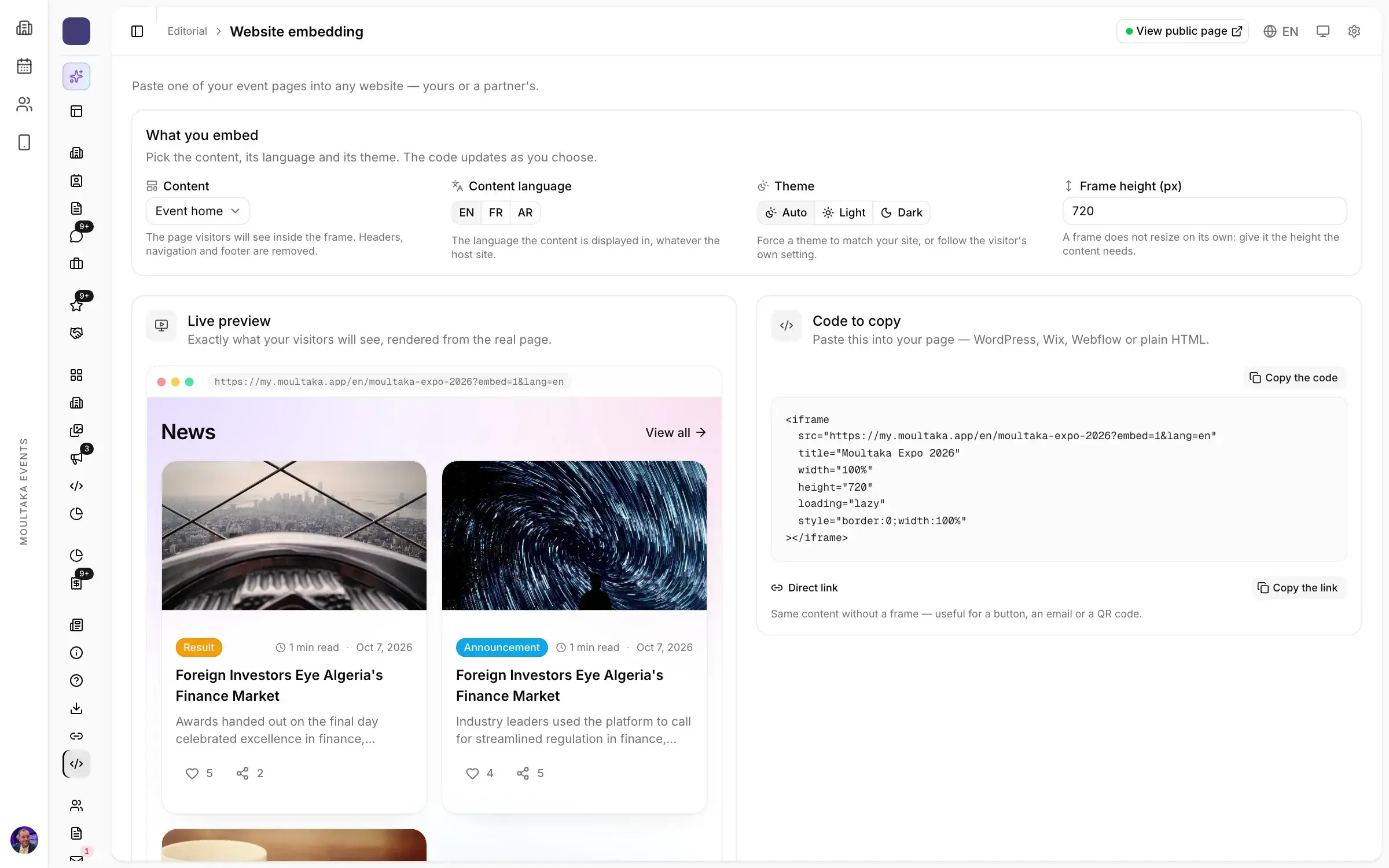
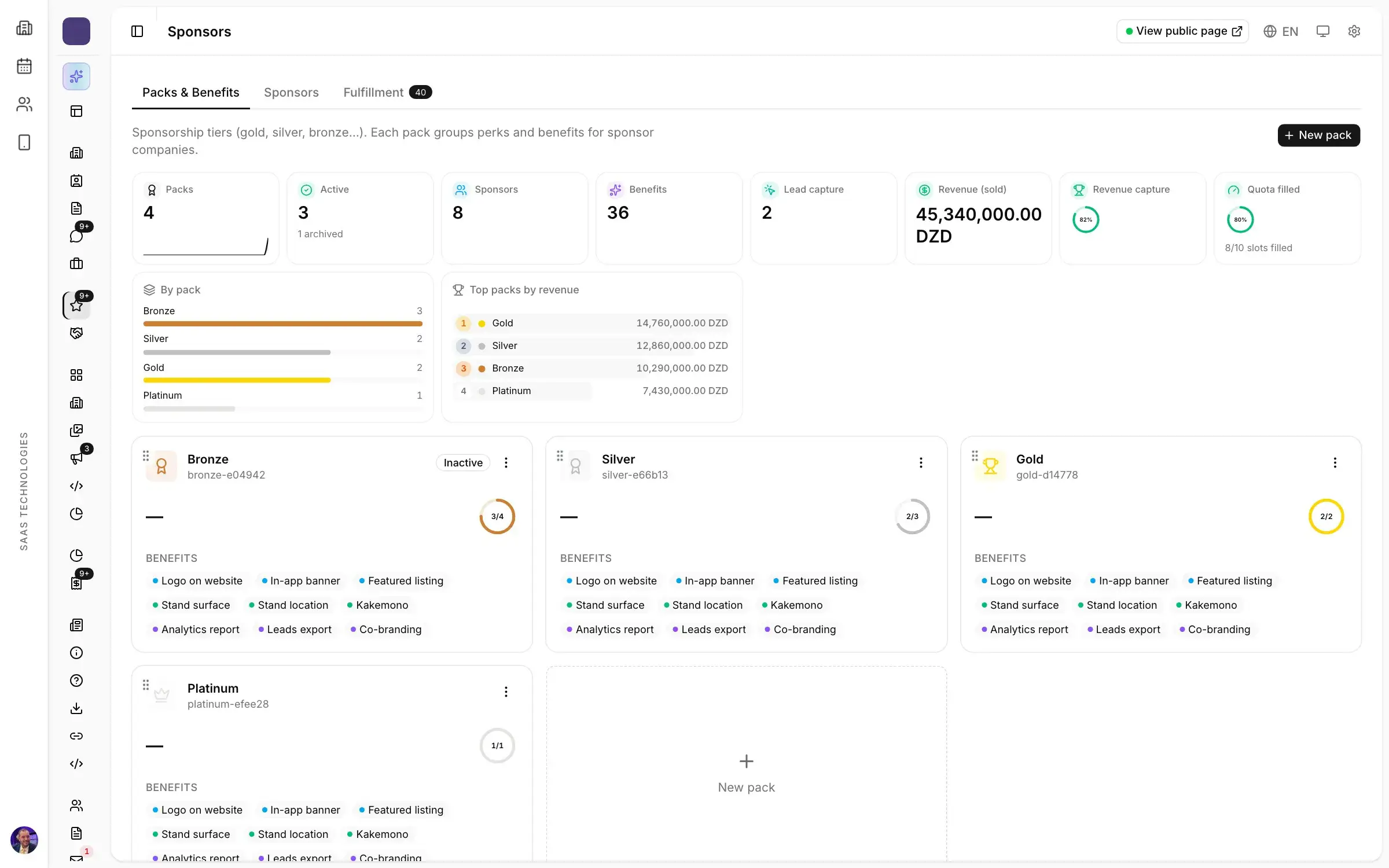
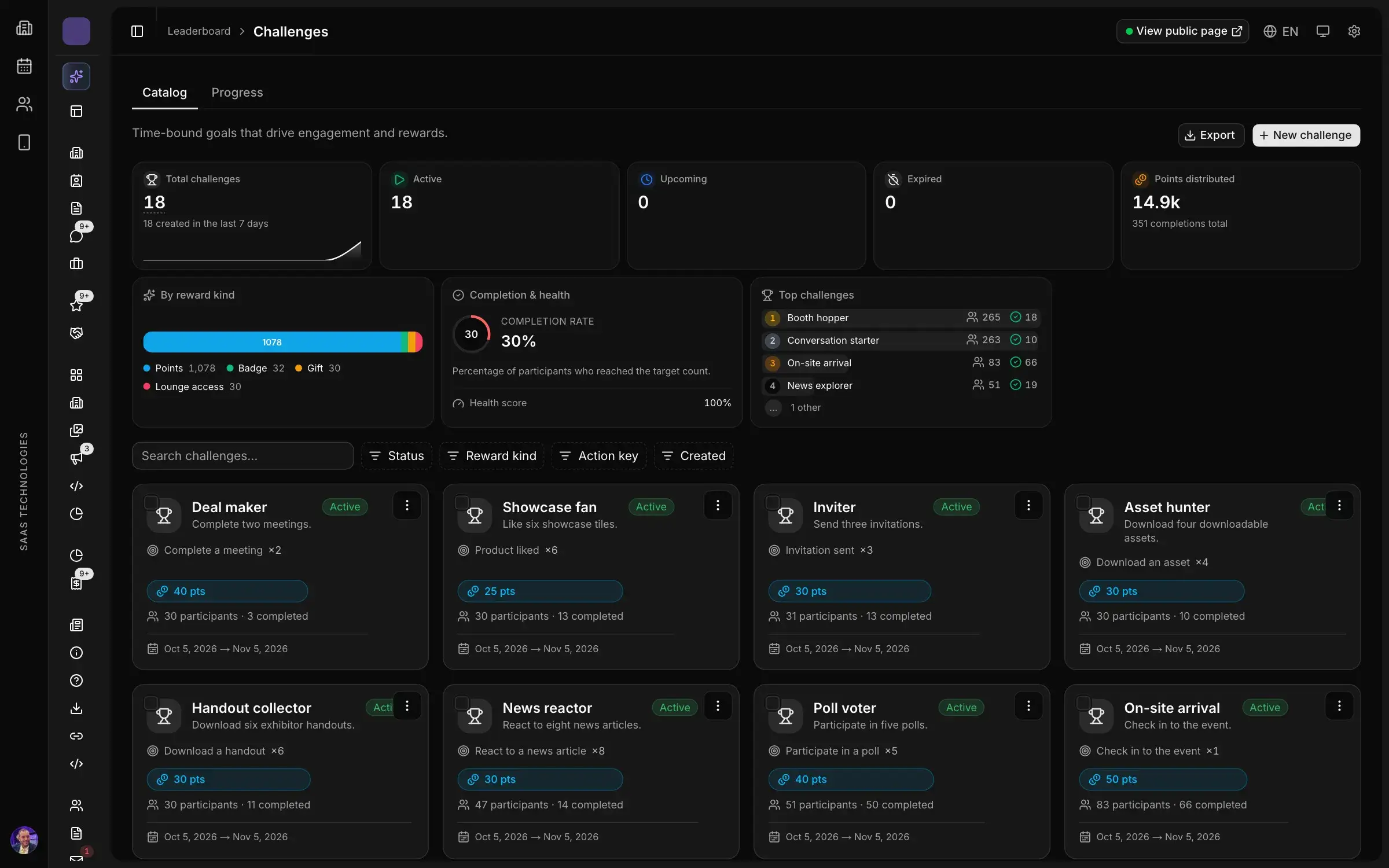
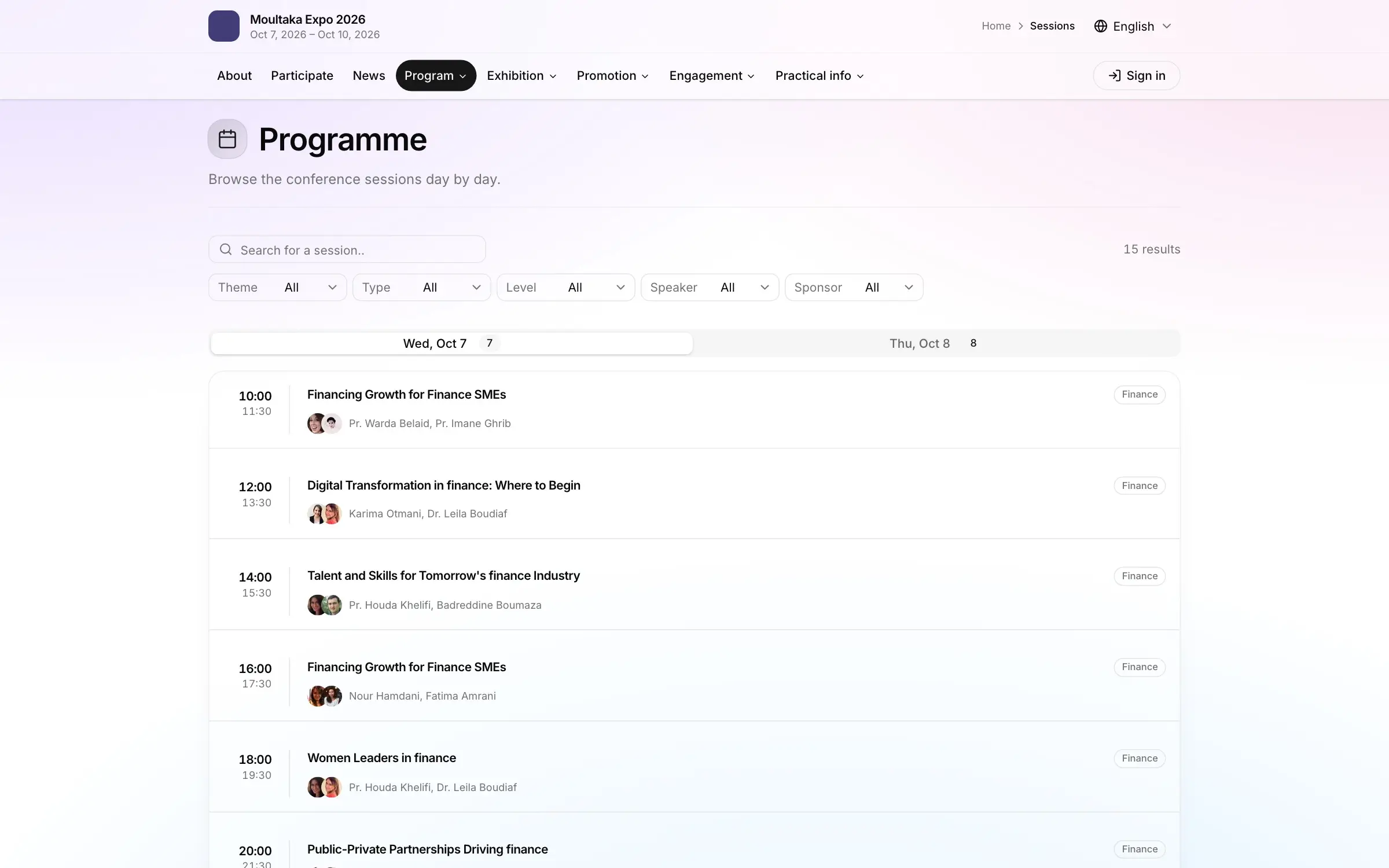
In Moultaka, much of what a survey usually asks is already measured. Attendance is read gate by gate, by profile and by hour. Presence is tracked session by session, and every session gets its ratings, satisfaction and comments. In the room, polls are prepared in advance for each session, including a Net Promoter Score question.
Campaign sequences send the thank-you message the day after the show on their own, and it can carry your survey link; tracked links and their QR codes show clicks by source. Every list, scan and answer exports to a spreadsheet, to be read next to your survey results. The indicators come together in analytics, and session feedback in conferences.
What is left to ask is only what no number can tell you. To see how this data looks on a real show, book a demo.