How to start a trade show business: from the first show to a series
How to start a trade show business: who pays and for what, your first show, permits, the smallest team, the tools, and turning one show into a series.
By Moultaka team
To start a trade show business, begin with one question rather than with the company papers: which companies will pay for a booth, and whom do they want to meet? A trade show company sells space and visibility to exhibitors looking for customers, and brings them visitors from the same industry, in the same place, on the same dates. When that meeting is worth it for both sides, exhibitors come back the next year and the show becomes a series. When it is not, no venue will save it.
This guide is for anyone setting up an exhibition company, whether in Europe, North Africa, the Middle East or the Gulf: how the business makes money, how to pick your first show, what permits to check, the smallest team that works, and the tools you need from day one.
How a trade show business makes money
Before any spreadsheet, look at where the money comes from and where it goes. Amounts vary by industry and city; the lines are the same at every business-to-business show.
| Revenue | Costs |
|---|---|
| Booth sales, per square metre or as shell-scheme packages | Venue or hall rental |
| Sponsorship packages: logo placement, a speaking slot, named areas | Booth build, aisles, power |
| Visibility in the catalogue, on the website, in the mailings | The campaign that brings visitors |
| B2B meetings programmes or conference passes, when they are paid | Badges, printing, registration desks |
| Security, cleaning, temporary staff |
What catches most first-time organisers: nearly all costs fall before the doors open, while revenue arrives in instalments as contracts are signed. Put the payment schedule in the exhibitor contract, and build your trade show budget template line by line before you sign the venue.
Choosing your industry and your first show
The shows that last are usually started by someone who knows the industry: its companies, its buyers, the moments it gathers. Before choosing, answer in writing:
- Does this industry need to meet in person? Machines to demonstrate, products to handle, partners to sit down with. If every deal closes remotely, booths will be hard to sell.
- Which visitors will exhibitors pay to meet? Describe three profiles precisely: buyers, distributors, public bodies, professionals of a given trade.
- Is there already a show in that industry at that time of year? Check the venues’ calendars, the industry associations and, for North Africa, our list of trade shows in Algeria in 2027.
- Who can back you? A chamber of commerce, an industry association, a ministry granting its patronage. One recognised partner opens many doors in year one.
Start small and focused. A specialised show with a few dozen well-chosen exhibitors beats a half-empty general fair. Judge your first edition by the share of exhibitors who want to come back, not by the square metres sold.
Permits, registration and the venue
Rules differ by country, and none of this is legal advice.
- Saudi Arabia: the General Authority for Exhibitions and Conferences issues the licences non-governmental organisers need to hold exhibitions and conferences; a commercial registration alone is not enough. Read the current procedure on its official website before selling a single booth.
- Algeria: executive decree 07-217 asks for a trade register entry covering the activity, prior authorisation from the municipality and a specifications document filed with it, without naming the trade-only show. We summarised it in how to organise a trade fair in Algeria: permits and registration.
- Everywhere else: check with your local authority and your venue whether an event licence, a public-safety approval or insurance certificates are required, and how long they take.
- With every venue: get in writing what it provides and what is yours: power, security, fire safety, parking, build-up and breakdown hours.
Put these steps at the top of your trade show planning timeline. Moving the date after exhibitors have signed costs far more than opening sales a few weeks later.
The smallest team that works
You do not need a large team at the start, but every task needs one owner. In year one, one person can hold two of these roles:
| Role | Owns |
|---|---|
| Sales | The target list, offers, contracts, booths on the floor plan |
| Exhibitor services | Files, documents, orders, badges, the exhibitor manual |
| Marketing and visitors | The campaign, invitations, registration, press |
| Operations | The venue, suppliers, show days, security, incidents |
| Finance | Invoices, deposits, reminders, the budget |
Temporary staff (hosts, gate agents, build crews) come in for the show days only. They should find their instructions written down, not in one person’s head.
The tools you need from day one
Many new exhibition companies run their first show from a spreadsheet and a shared inbox. That holds for a handful of exhibitors, then breaks at the first booth sold twice or the first visitor who cannot find their badge. Start at least from a well-built event planning spreadsheet template, and know when to move to a platform.
What your tools should cover from the first edition:
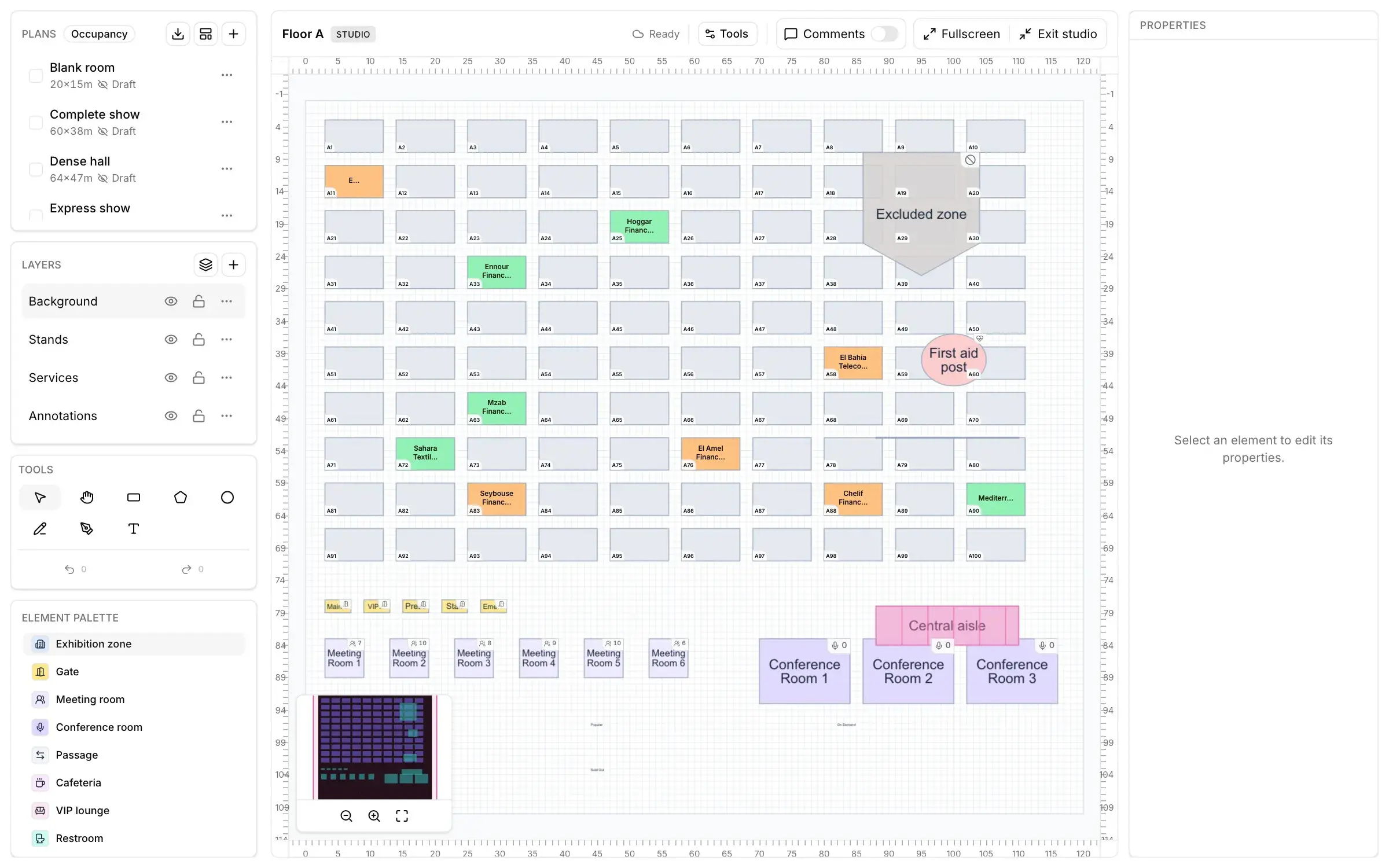
- Booth sales on the floor plan: every booth with its status (available, on hold, sold) and its exhibitor, so two salespeople never promise the same one. See how to sell exhibition space and Moultaka Sales.
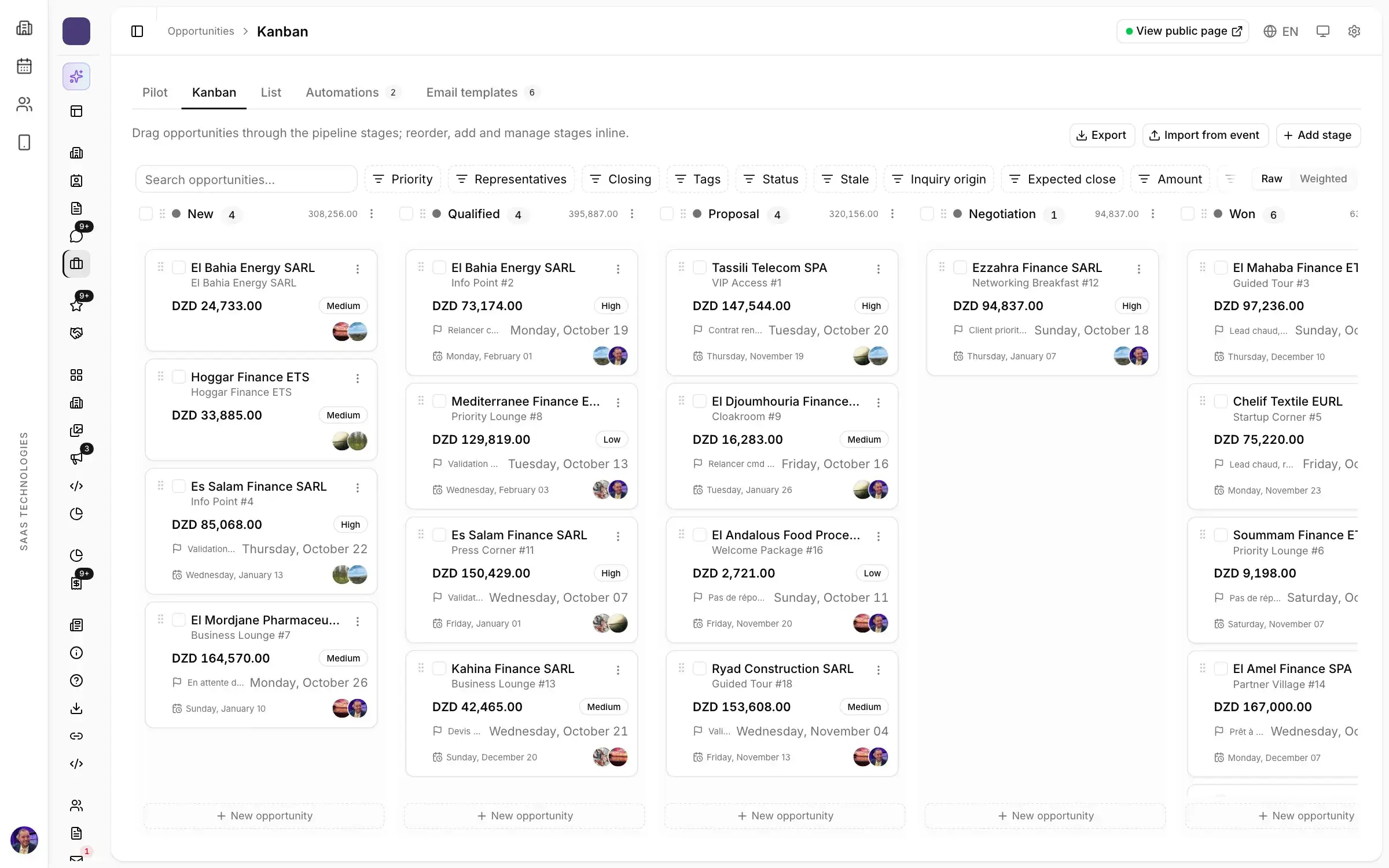
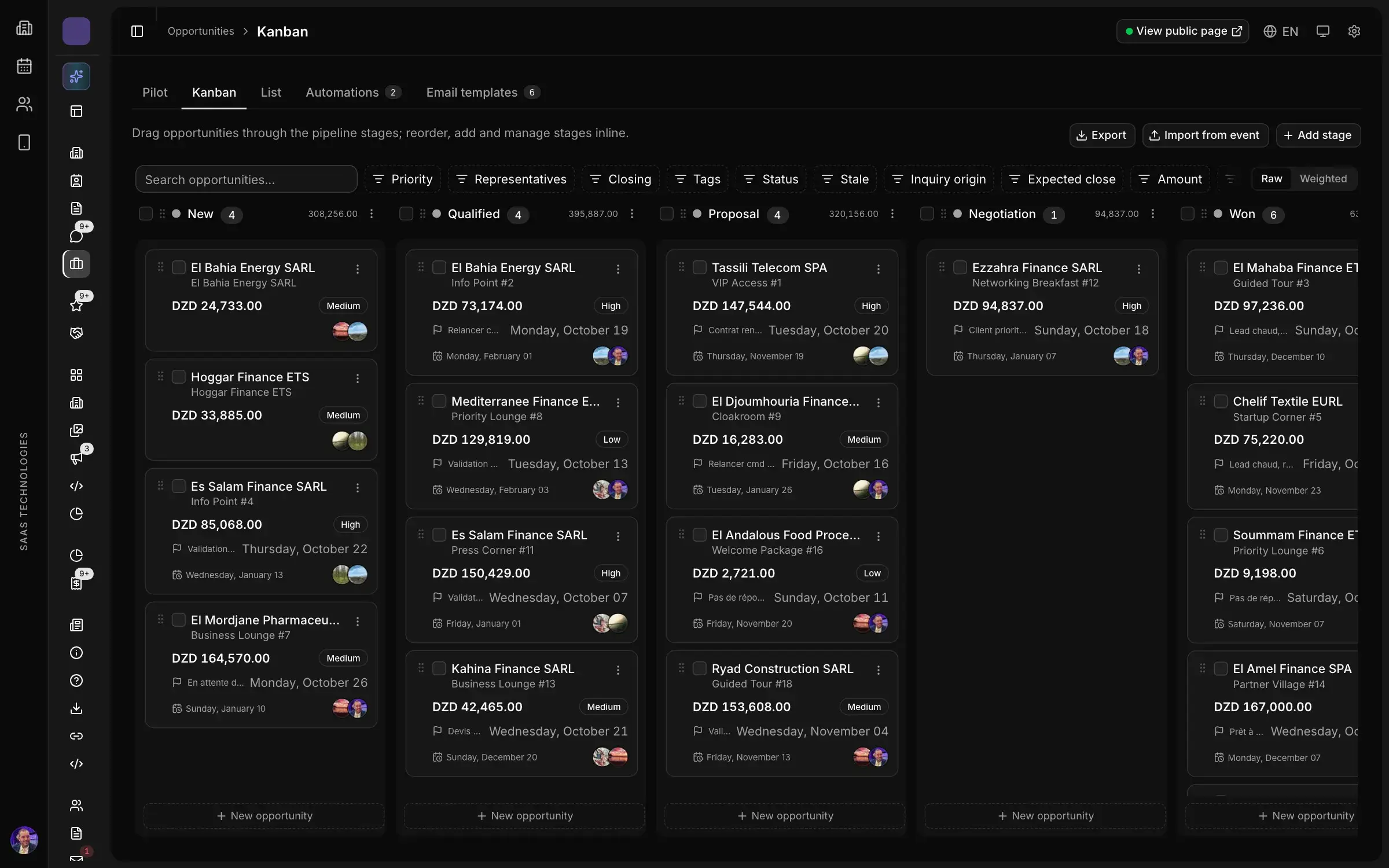
- Exhibitor files: contract, logo, team and orders in one place, with what each file is still missing (Exhibitors).
- Registration and badges: a form per profile, a badge sent by email, entry without a queue (Registration, Badges, kiosks & access).
- The post-show report: the figures that bring exhibitors back and convince new ones.
From one show to a series
The second edition is sold on the last day of the first. Before breakdown:
- Ask every exhibitor whether they are coming back, with how much space, and what they missed. Record it in the file you will work from next year.
- Announce the next date as early as you can, and keep it: a fixed yearly date is what builds a show’s name.
- Write the post-show report with real figures: exhibitors, visitors by profile, meetings, satisfaction on both sides (trade show KPIs for organisers).
That report becomes your exhibition company profile, the document you send to every new exhibitor and partner: who you are, your industries, the editions you ran with their real figures and photos, your partners, your team, how to reach you. Leave out any number you cannot prove: a new exhibitor will ask the ones who were there.
Common mistakes when starting an exhibition company
- Booking the venue before choosing the industry: a large hall first, then a search for who will fill it.
- Promising visitors without a plan to bring them: the campaign is half the work and starts with sales. See the trade show marketing plan.
- An exhibitor contract without clear payment dates: the last payments land after opening day, the costs before it.
- Everything in the founder’s head: one week away and everything stops.
- Forgetting exhibitors after the show: no thanks, no figures, no question about next year. See how to get exhibitors for an event.
In short
- A trade show business sells a useful meeting between exhibitors and visitors from the same industry.
- An industry you know, a small focused first show, a date that does not clash with another one.
- Permits before sales: a licence in Saudi Arabia, registration and municipal authorisation in Algeria, the venue’s commitments in writing everywhere.
- One owner per task, and tools that stop the same booth being sold twice.
- The second edition is sold before the first is taken down, and the real report becomes your company profile.