Event management RFP template for a trade show: what to include, section by section
An event management RFP template for trade shows: objectives, scope, exhibitors, visitors, technology and data, timeline and how proposals are scored.
By Moultaka team
An event management RFP for a trade show tells bidders what you expect, what you are handing over and how you will choose. A workable RFP template has ten sections: background and objectives, scope of services, venue and dates, exhibitor sales, visitors and access, programme, marketing and press, logistics, technology and data, and finally the timeline, deliverables and scoring criteria. It does two jobs. The body that owns the show, a trade association, a government agency, a chamber of commerce or a company, uses it to make sure nothing is forgotten. The organiser or agency that answers it reads the same template to know exactly what it will be judged on. Here is each section, what goes in it, and the ones most RFPs leave out.
Who writes an event management RFP, and who answers it
Most often, a show owner hands the organisation of its trade show to a professional organiser or an event agency, and the RFP becomes the rulebook. Anything it does not mention gets negotiated later, usually at the worst moment: the week before opening.
The second case is less visible. An organiser writes its own RFP to choose suppliers: the stand builder, the printer, security, or its event software. The structure is the same; only the scope changes.
Either way, describe outcomes rather than methods. “No visitor waits more than five minutes at the entrance at peak time” can be checked. “Provide a modern check-in solution” cannot.
The event management RFP template: ten sections
| # | Section | What it should contain |
|---|---|---|
| 1 | Background and objectives | the show’s history, its audience, the edition’s goals, with numbers where possible |
| 2 | Scope of services | what is handed over, what the owner keeps, and the lots if there are several |
| 3 | Venue, dates and space | the venue, halls, floor space, build-up and breakdown days |
| 4 | Exhibitor sales | who sells stands, at what rates, how exhibitor files are followed up |
| 5 | Visitors and access | expected profiles, registration, invitations, badges, entrance control |
| 6 | Programme | conferences, B2B meetings, delegations, opening ceremony |
| 7 | Marketing and press | the marketing plan, invitations, media accreditation |
| 8 | Logistics and safety | fit-out, power, security, first aid, cleaning, permits |
| 9 | Technology and data | website, forms, badges, exhibitor portal, reporting, data ownership |
| 10 | Timeline, deliverables and scoring | milestones, documents to hand in, the post-show report, budget and evaluation criteria |
Background and objectives. Give last edition’s figures if there was one: exhibitors, visitors, space sold. Then say what this edition should change: more international exhibitors, better-qualified visitors, a hosted buyer or meetings programme. An objective with no number can never be confirmed in the final report.
Scope of services. This section prevents more disputes than any other. Who collects stand payments? Who contracts with the venue? Who pays for badge printing? If you split the work into lots, say organisation in one and fit-out in another, name who coordinates between them.
Venue, dates and space. Beyond opening days, give build-up and breakdown days, access hours and the venue’s constraints. For the layout itself, ask for a trade show floor plan among the deliverables.
Exhibitor sales. State the number of stands you are aiming for, the space, the rate card if it is set, and how sales progress will be reported to you and how often. Ask for an exhibitor manual too.
Visitors and access. List the profiles (trade visitors, VIPs, press, delegations, students if you want them) and what each may do. Say how visitors register, how they receive their badge, and what you expect at the door.
The sections most RFPs leave out
Four topics are missing from most RFPs, and all of them come back during the show.
Who owns the data. Exhibitor and visitor records belong to the show owner, not the supplier. Write it down, and require them in an open format, a spreadsheet for instance, on set dates and at the end of the contract. Without that sentence you start from scratch at the next edition, as described in switching event software between editions.
Figures during the show, not only after. Ask to see attendance and sales as they happen, not in a report delivered three weeks later. The indicators worth requiring are listed in trade show KPIs for organizers.
Languages. A show with international exhibitors needs forms, a website and badges in more than one language. Say which, because it affects translation and printing.
Access for your own team. Who on the owner’s side needs to see registrations or sales, and with what rights? Planning it keeps everything from travelling by email attachment.
The technology and data section: what to require
This section is usually written in one line: “the supplier will provide a registration platform”. It deserves a page, because it decides how the first morning goes. Write requirements that can be checked:
- registration forms sit on the show’s own website, without sending visitors elsewhere;
- one record per person, with duplicates caught at registration;
- a QR code badge sent to every registrant, printed on site without a queue;
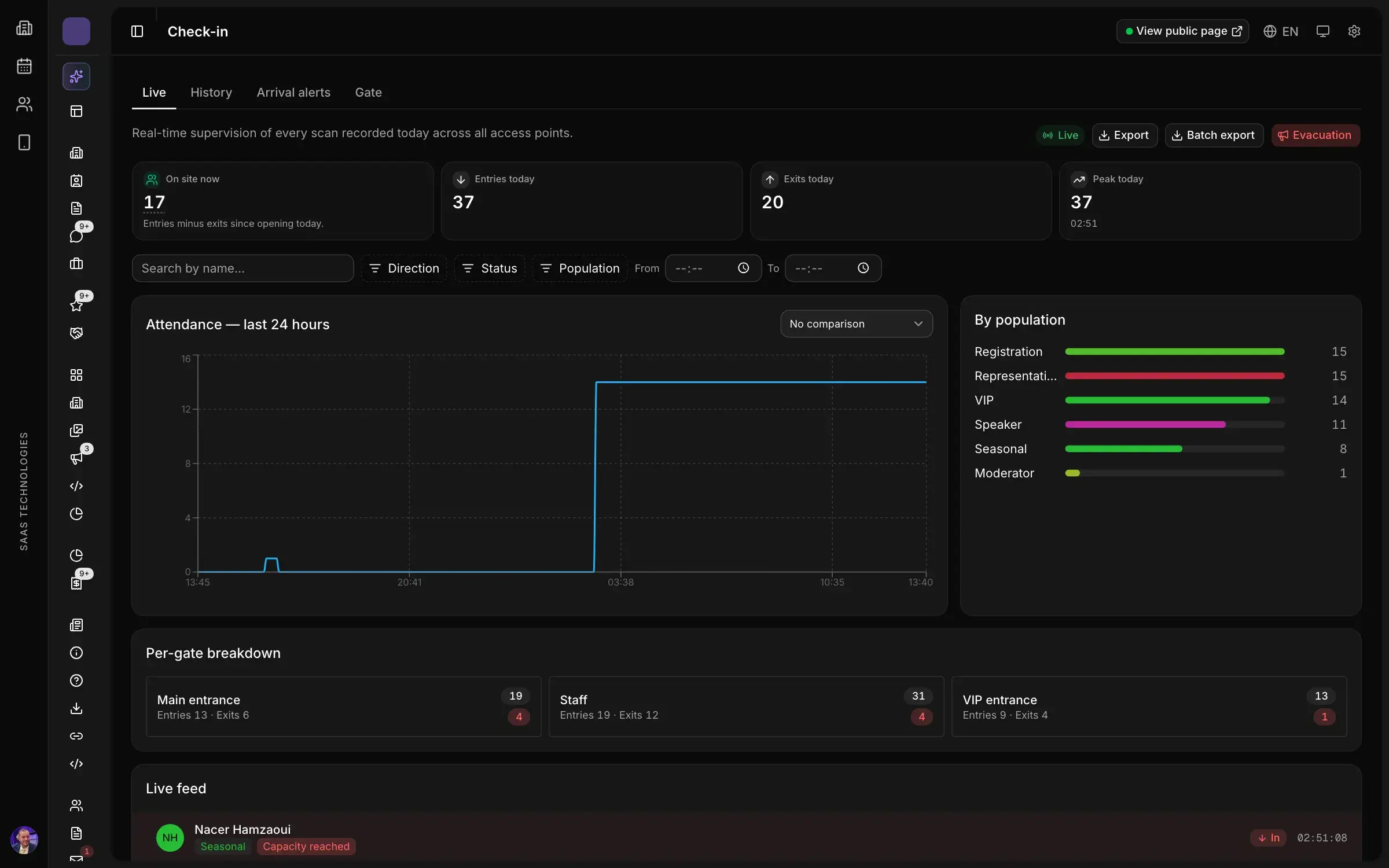
- entrance control by profile, with counts by gate and by hour;
- a portal for each exhibitor that shows what is still missing from their file;
- stand sales status available at any time;
- every list exportable to a spreadsheet, at any time;
- the show’s data isolated from the supplier’s other clients.
Then ask for a demo built on your real cases rather than a feature checklist: a VIP invited by a sponsor, an exhibitor who changes stand, a foreign delegation arriving without badges. The questions worth asking are in questions to ask before a trade show software demo, and what the form itself should ask in our event registration form template.
Timeline, deliverables and how proposals are scored
The timeline sets milestones: proposal deadline, supplier selection, start of stand sales, registration opening, build-up, opening, final report. Our trade show planning timeline gives lead times that work.
Deliverables are the documents the supplier hands over: floor plan, exhibitor manual, marketing plan, exhibitor and registrant lists, final report. Ask for a post-show report with an outline agreed in advance, so editions can be compared.
Scoring criteria are published with their weights: technical approach, price, timing, experience. When the show owner is a public body, the format, the lots and the criteria follow its public procurement rules: its procurement office sets that frame, and this article does not replace it.
Budget. You do not have to publish it, but a range avoids proposals that cannot be compared. Our trade show budget template shows how the lines break down.
If you are the organiser answering the RFP
Answer the ten sections in the RFP’s own order, every one of them, even briefly: evaluators score against a grid, and a skipped section scores zero. For each numbered objective, say how you will measure it and when the owner will see it. Attach a dated timeline and a line-by-line budget.
In the technology section, show rather than describe: a screenshot of the exhibitor portal, a badge, a sample report. And say plainly what you do not do; it makes everything else believable.
What Moultaka covers in the technology section
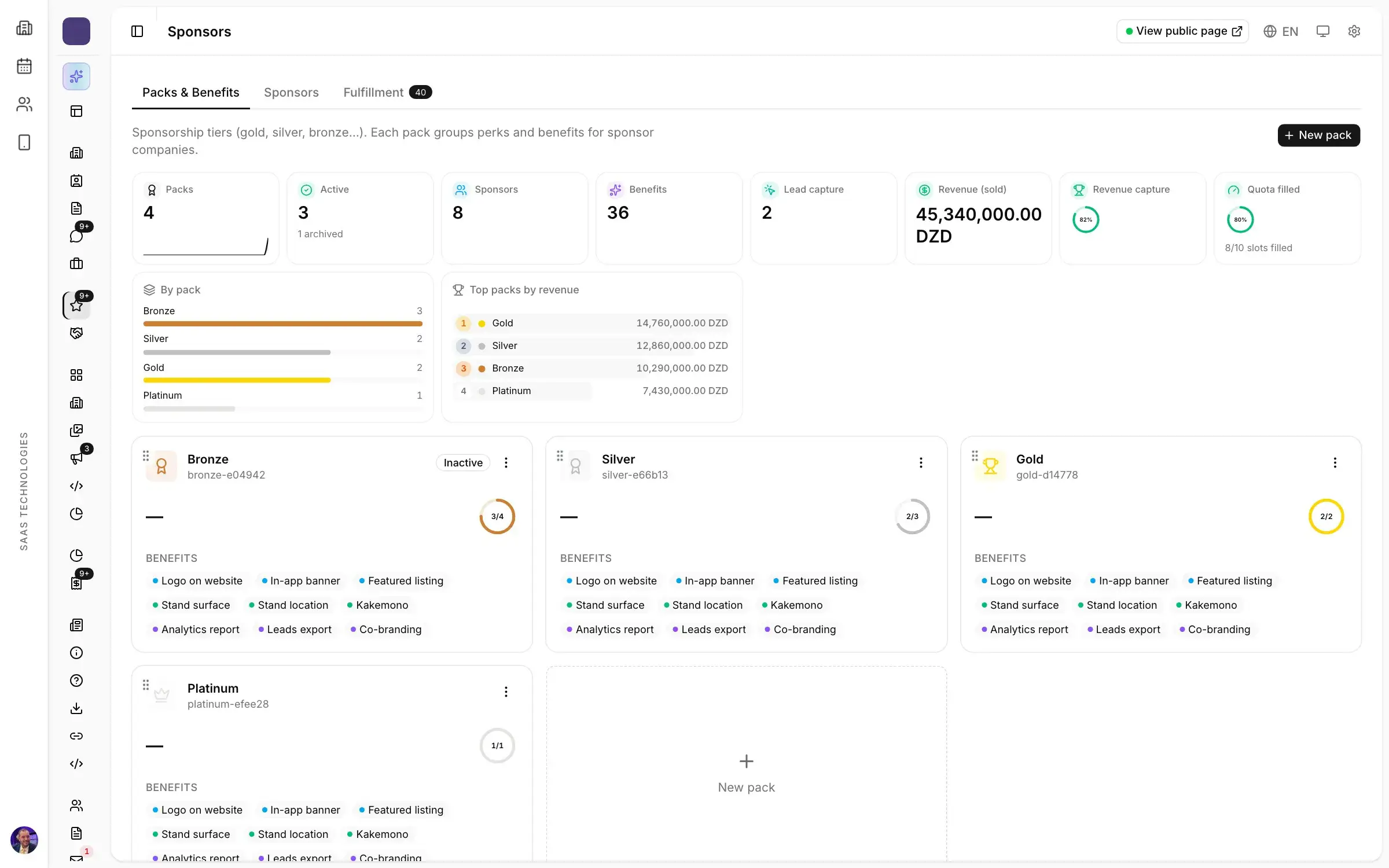
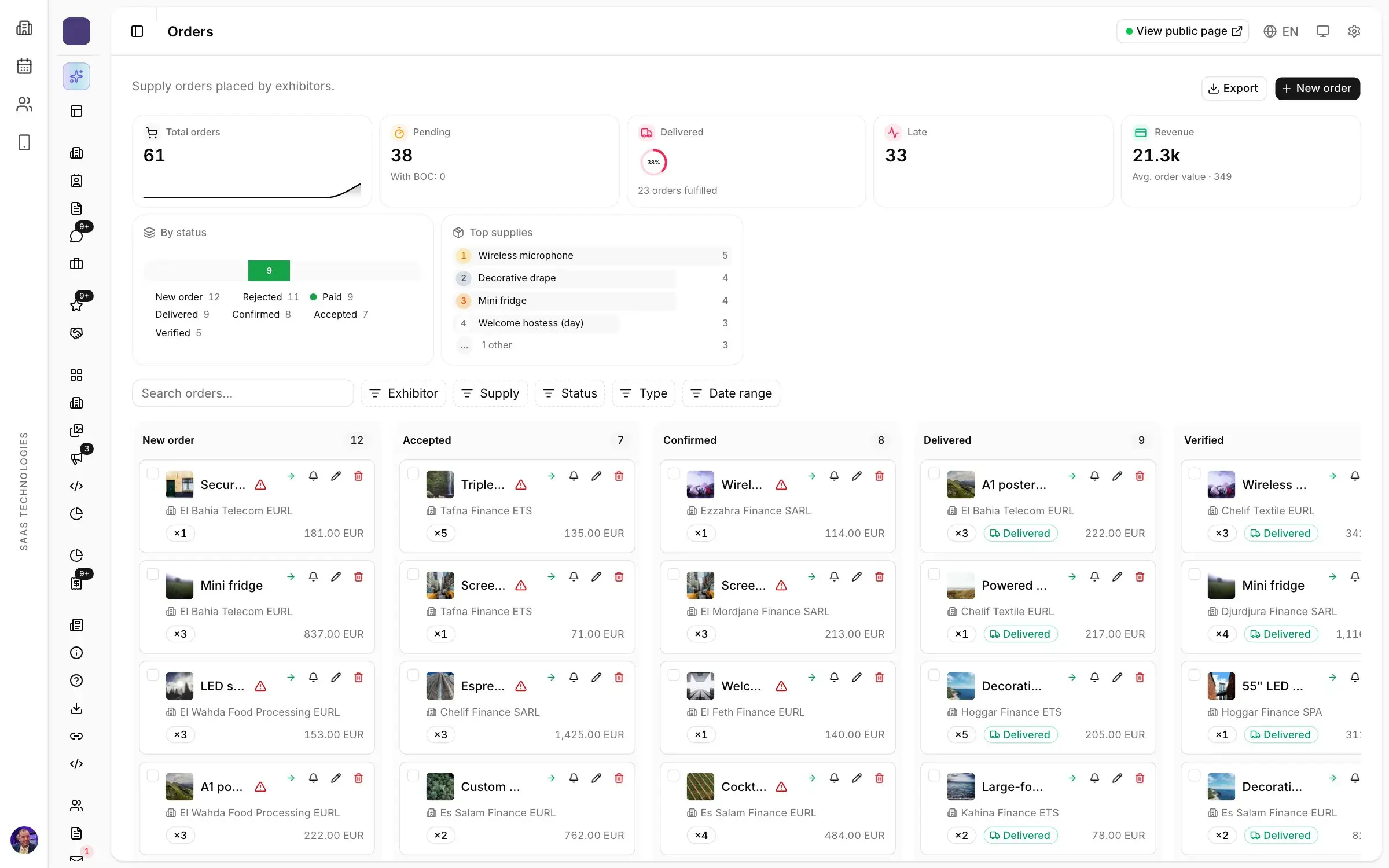
In Moultaka, the technology section of an RFP fits in one workspace. Registration forms sit on the website you already have, with one record per person and duplicates caught when the person registers. The visitor scans the QR code received by email and the kiosk prints the badge; every gate checks the badge against the visitor’s profile and counts entries and exits, zone by zone. Each exhibitor completes a portal and orders services, and the completion of their file is measured. Stands are sold from the floor plan itself.
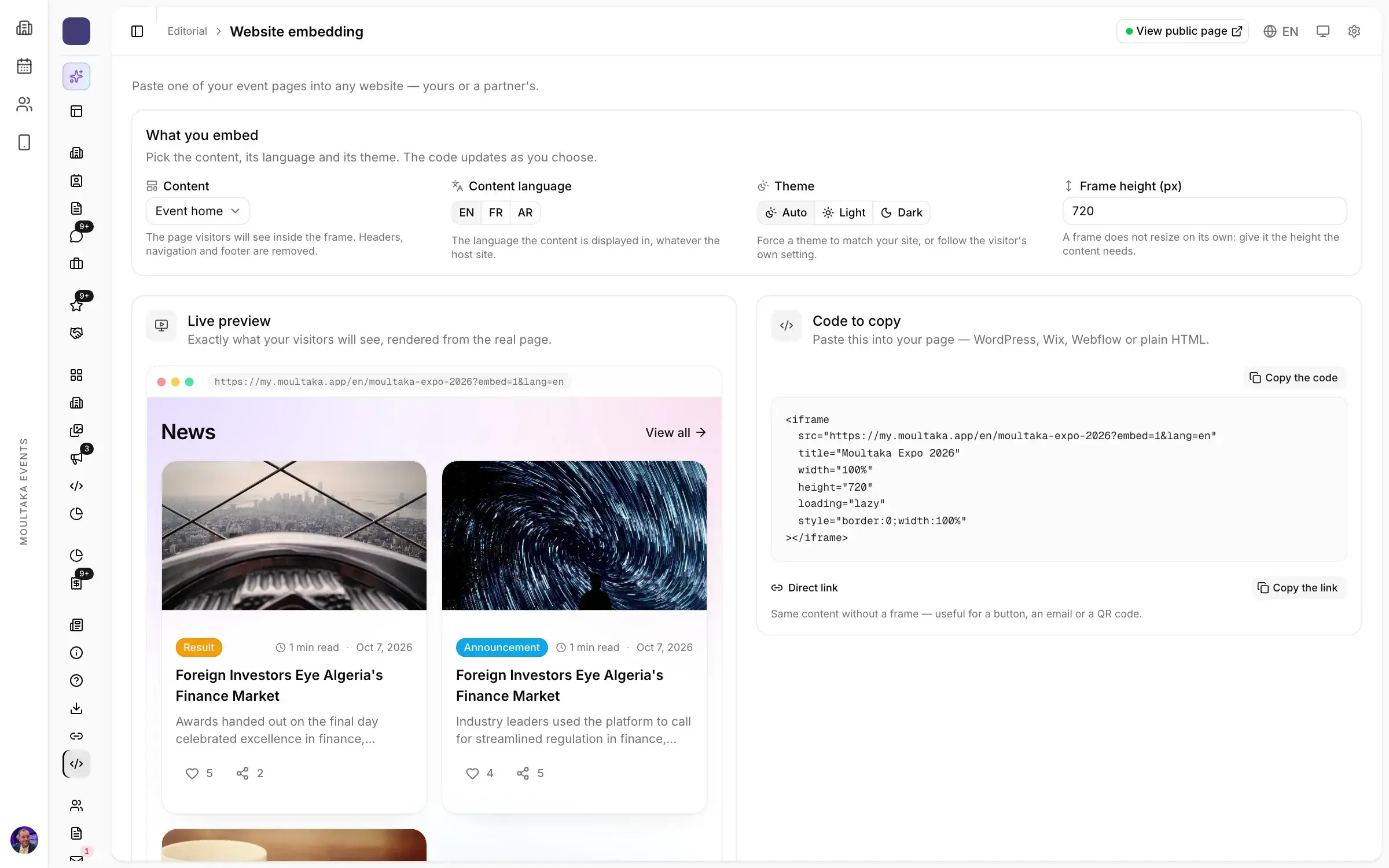
Lists, reports and figures export to Excel at any time, and each organizer’s data and files are isolated from every other account. See the event website, registration, badges and access, exhibitors, stand sales and analytics, then book a demo built on your own RFP.