Welcome speech by the conference chairman
A welcome speech by the organizing chairman or the conference chair: what it covers, a six-part outline, an example and the written message from the chair.
By Moultaka team
A welcome speech by the conference chairman is not a second set of opening remarks. The organizer or the organizing chairman welcomes the room, thanks the people who made the event possible and gives the practical information. The conference chair, or the chair of the scientific or program committee, speaks about the content: why this theme matters now, what the call for papers produced, how the sessions fit together and what will be published. Keep the chair’s opening speech to five to seven minutes, and the organizing chairman’s welcome to three to five. When one person holds both roles, as often happens at university conferences, merge the two into a single speech of seven minutes at most. Below: who speaks and in what order, an outline for each speech, an example to adapt, and the written message from the conference chair that opens the proceedings.
Who speaks at the opening ceremony, and in what order
At most conferences several speeches follow one another before the first session. If each speaker repeats the thanks, the audience hears them three times. Agree on the roles in writing, well before the day:
| Speaker | What they cover | Reasonable length |
|---|---|---|
| Master of ceremonies | announces the programme and introduces each speaker | a few sentences |
| Organizing chairman (local organizing committee) | welcome, thanks, practical information | 3 to 5 minutes |
| Conference chair or program chair | the theme, the call for papers, the tracks, publication | 5 to 7 minutes |
| Host institution (president, dean, CEO) | why the institution hosts the event | 3 to 5 minutes |
| Guest of honour | officially opens the conference | at their own pace |
How the committees split the work, from the general chair to the program committee, is covered in conference organizing committee roles and responsibilities. For a trade show or a corporate event with a single host, the shorter opening remarks speech is the right model.
Welcome speech by the organizing chairman: the outline
- Greet the room. Acknowledge the guests of honour by title, in protocol order, then the delegates. Check the list with the registration desk the same morning.
- Thank by group. The host institution, sponsors and funders, keynote speakers who travelled, the volunteers. Name groups rather than a long list of people: whoever you forget will notice.
- One sentence on why everyone is here. The substance belongs to the conference chair, who speaks next.
- Practical information. Where to find the programme and the book of abstracts, coffee breaks and lunch, the rooms for parallel sessions, how to ask questions, when certificates arrive.
- Hand over. Introduce the next speaker by name and title.
The conference chair’s opening speech, in six parts
- A short greeting. Whatever was said before you does not need saying again.
- The theme. Why this subject, now, here. Write this sentence first: it is the line the press will quote and the rapporteur will come back to at the closing.
- What the call for papers produced. Abstracts received, papers accepted, institutions and countries represented. Real numbers only, checked with the committee secretariat that morning and never rounded up. If a figure is not confirmed, say “more than” followed by the number you know for sure.
- Tracks and sessions. The tracks as published in the call for papers, and the thread that links the sessions. Do not read the programme aloud.
- The reviewers. Their work is invisible: thank the program committee as a whole.
- What lies ahead. Recommendations read at the closing, proceedings or a special issue, certificates. Then hand over.
Example: welcome speech by the conference chairman
[Title and name of the guest of honour], [head of the host institution], distinguished speakers, dear colleagues,
On behalf of the program committee, it is my pleasure to open [conference name].
We chose this theme because [one sentence: the question the conference asks, and why now].
The committee received [number] abstracts from [number] institutions in [number] countries. After double-blind review, [number] papers were accepted, organised in [number] tracks: [track one], [track two], [track three].
My thanks go to the members of the program committee, who read every submission and returned their reviews on time.
The recommendations of the conference will be presented at the closing session, and the reviewed papers will appear in [the proceedings, a special issue of a journal].
I wish us all two productive days, and I now invite [name and title] to take the floor.
Read at a calm pace, this takes under five minutes. Add a line introducing the keynote if there is one, nothing more. For the organizing chairman, keep the same shape and replace the call-for-papers paragraph with the practical information.
The written message from the conference chair
Many conferences open the book of abstracts, the proceedings or the event website with a written message from the chair. It is not the speech copied out: 150 to 250 words, read long after the event.
- One sentence on the theme and why it matters to the field;
- what the call for papers produced, with the final figures;
- thanks to the committees, the reviewers and the sponsors;
- an invitation to read on.
Sign it with the chair’s name and title, and place it after the committee page, before the programme. The rest of the book is in the conference abstract template and book of abstracts guide.
What to settle before anyone goes on stage
- The numbers, confirmed with the committee secretariat the same morning.
- Each speaker’s time, given in writing, with a signal agreed with the master of ceremonies when it runs over.
- Language. At an international conference, decide who speaks in which language, and provide slides or a summary in English if the speech is in another one; no sentence-by-sentence interpretation from the stage.
- The text for the press. Give journalists a copy, and put the key sentence in the press release.
- Official guests. If a minister or an ambassador attends, the order of speeches follows the VIP protocol for official delegations.
Mistakes that spoil the chair’s speech
- Repeating the welcome and the thanks given two minutes earlier.
- Reading the whole programme, session by session.
- Announcing an approximate number of papers that the printed book of abstracts contradicts.
- Promising publication in a journal before the journal has agreed.
- Running over, which delays the guest of honour and every session after.
At the end of the conference the same chair often returns with the outcomes and the vote of thanks: the outline for that moment is in closing remarks for a conference or event.
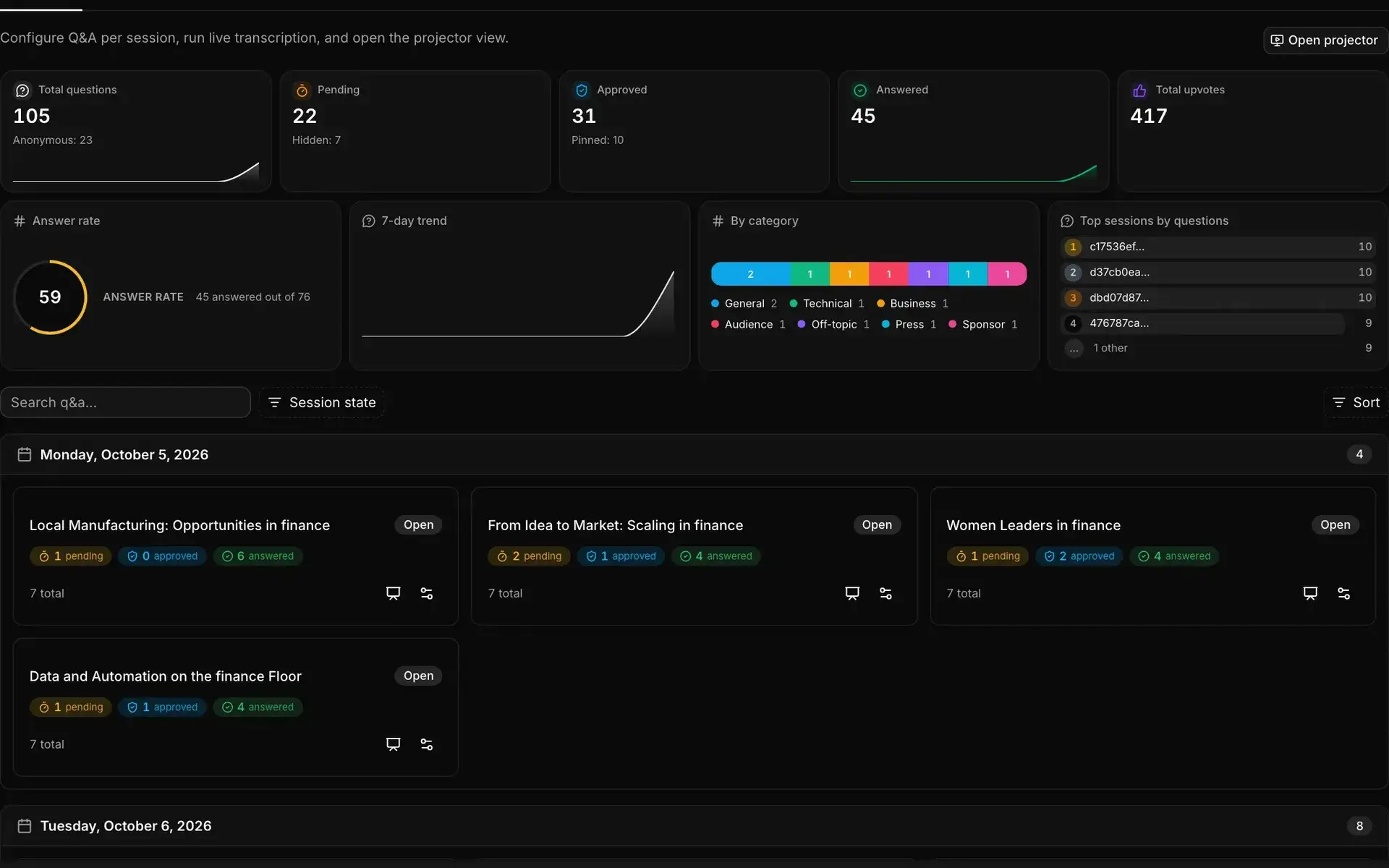
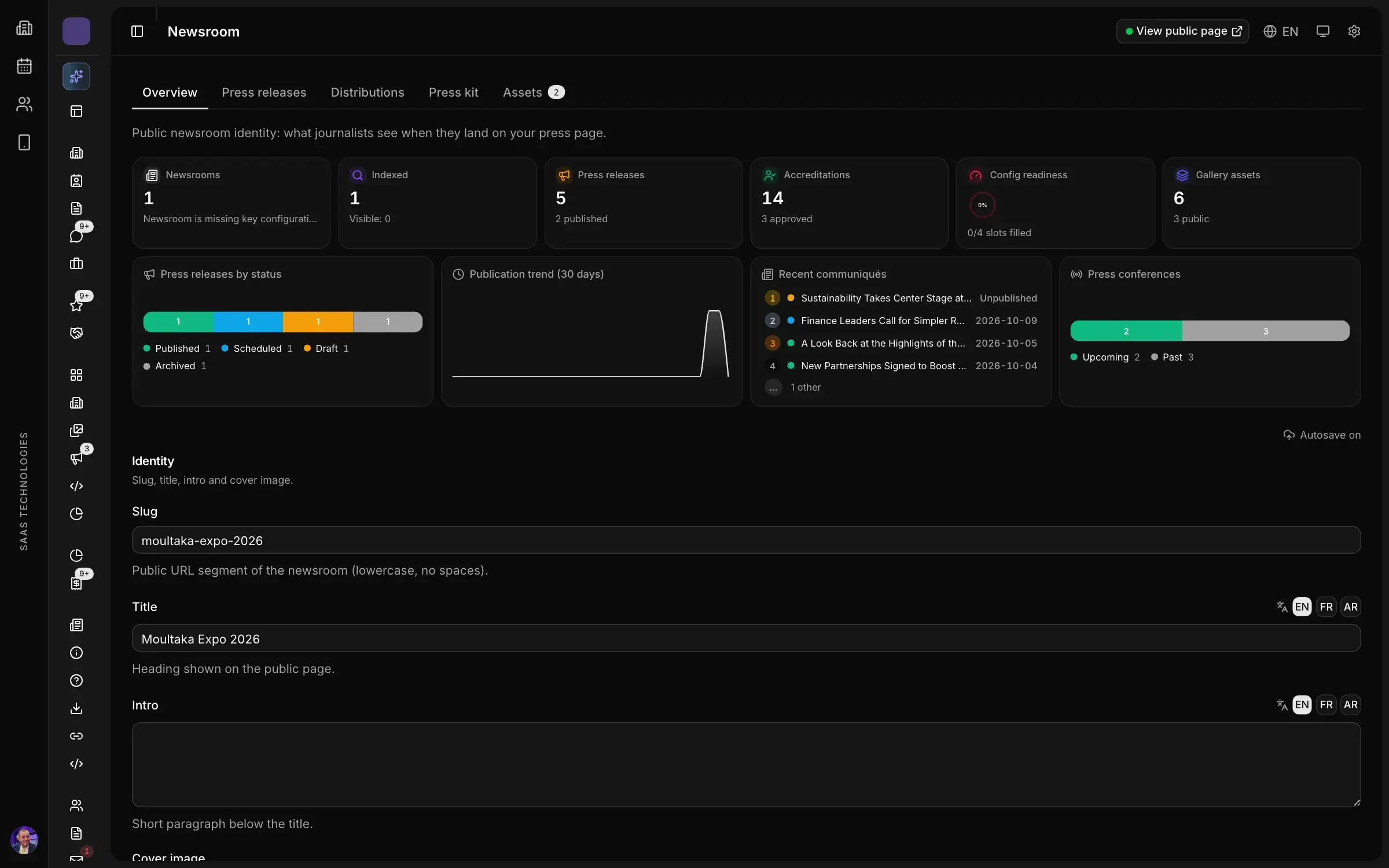
In Moultaka, sessions, rooms, speakers and formats sit in one schedule, published to the website and the app as soon as you save, with attendance per session. The public newsroom brings together press releases, scheduled or under embargo, a press kit generated as PDF and a photo gallery, on a page journalists can bookmark. See the Conferences and Press modules, or book a demo to see them on a real edition.