How to plan a medical conference: committees, abstracts, registration fees, exhibitors and certificates
How to plan a medical or scientific conference: timeline, committees, call for abstracts, registration categories, exhibition, sponsors and certificates.
By Moultaka team
How do you plan a medical conference? Book the venue twelve to eighteen months out, set up a scientific committee and an organising committee, open a call for abstracts, build the programme room by room, open registration with a fee per category, sell the exhibition and sponsorship packages, badge and welcome attendees, then issue attendance certificates and report back to sponsors. A medical or scientific congress is not simply a bigger seminar. It runs two to four days, brings together hundreds of clinicians, keeps several rooms going at once, and pays for itself largely through its exhibition hall and its industry partners. That mix of science and commerce is what makes it heavy to plan. Here is each stage in order, and what can go wrong at each one.
Medical conference, symposium, seminar: what changes
The words get used loosely. What actually separates them is scale and who pays:
| Seminar or workshop | Symposium | Medical congress | |
|---|---|---|---|
| Audience | A chosen group | Researchers and practitioners in one field | Members of a specialty or society, often several hundred |
| Length | Half a day to two days | One to three days | Two to four days, usually yearly |
| Speakers | Invited | Selected from a call for papers | Invited keynotes plus oral and poster presentations selected from abstracts |
| Rooms | One | One or two | Plenary hall, parallel sessions, workshops, poster area |
| Funding | Organiser’s budget | Grants, registration fees | Registration fees, exhibition, sponsorship |
| Lead time | Six to ten weeks | Four to twelve months | Twelve to eighteen months |
If your event is smaller and has no exhibition, our guides on how to organize a conference and how to organize a seminar fit better.
The medical conference planning timeline
A working timeline for a national two- or three-day congress. Add three to six months for an international one:
| When | What gets done |
|---|---|
| Month -12 | Venue, dates and room capacity locked; committees named; draft budget |
| Month -10 | Themes and tracks published; sponsorship prospectus and exhibition floor plan ready |
| Month -9 | Call for abstracts opens; booth and package sales start |
| Month -6 | Abstract deadline; review by the scientific committee |
| Month -5 | Decisions sent to authors; keynotes confirmed; registration opens with an early-bird rate |
| Month -3 | Programme published; visa invitation letters; hotel blocks and transfers booked |
| Month -1 | Exhibitor manual sent; speaker slides requested; badges prepared |
| Show days | Registration desk, rooms, posters, exhibition, audience questions |
| Day +1 to +30 | Certificates, session ratings, abstract book or proceedings, sponsor reports |
Large medical congresses compete for the same convention centres and hotels as trade shows, and the spring and autumn dates go first. Lock the date before anything else, and check it against religious holidays, national exams and the big international meetings of your specialty.
Two committees, two jobs
A congress has two heads, and they should not blur:
- the scientific committee owns what is said: themes, invited speakers, the abstract scoring grid, oral versus poster, session chairs;
- the organising committee owns how it runs: venue, budget, registration, exhibition, sponsors, logistics, the welcome desk.
Give each one a named lead and a deadline for every decision. Most congress delays come from a question stuck between the two: a programme the scientific side will not freeze, and sponsors who cannot tell which session their name goes on.
The call for abstracts and peer review
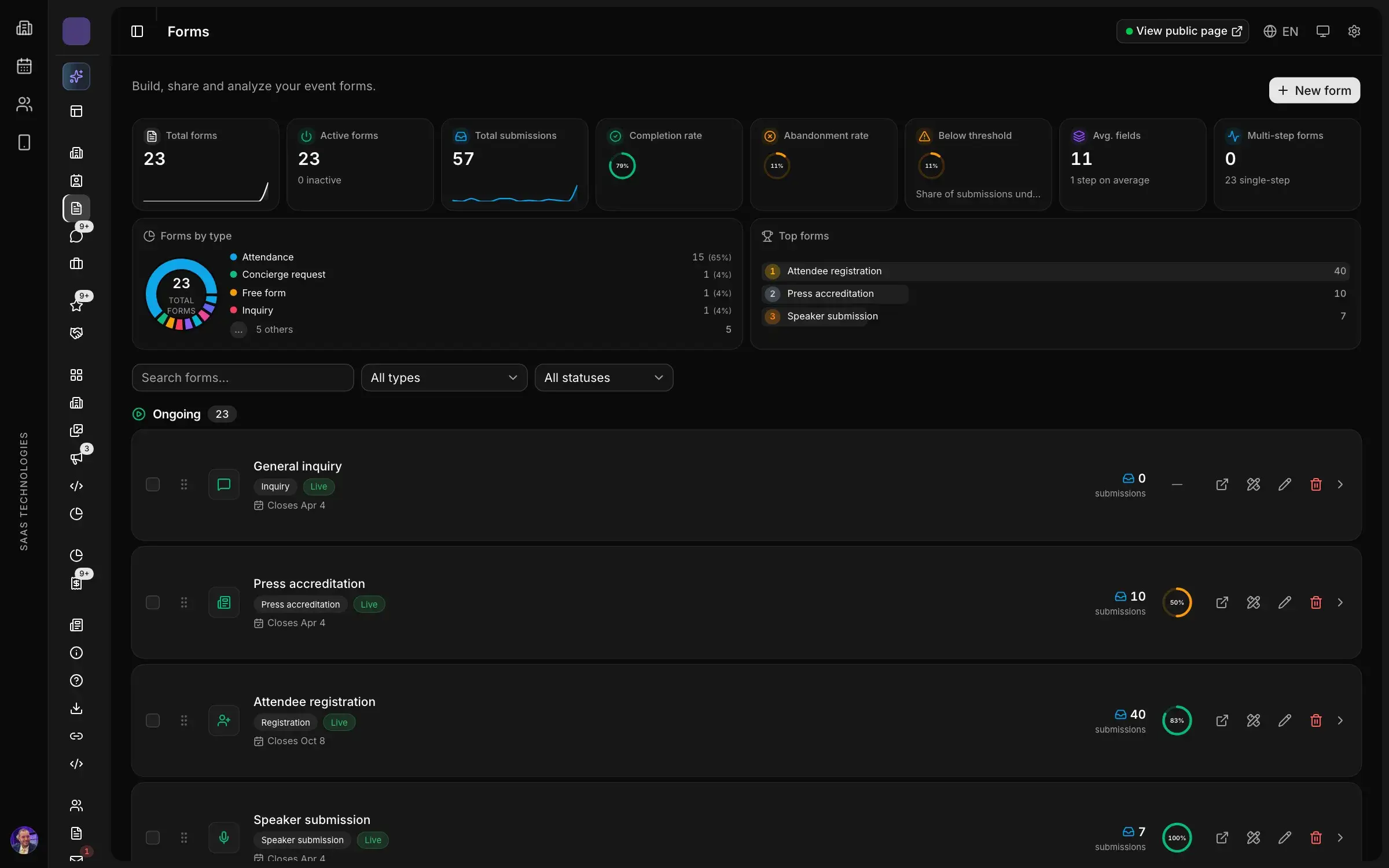
The call for abstracts sets the scientific rules: tracks, word limit, the expected structure (background, methods, results, conclusion), language, oral or poster preference, the deadline and the date authors hear back. Our call for papers template gives a full model.
Collect abstracts through an online form rather than by email. Every submission arrives with the same fields, the author knows it was received, and the committee can assign reviewers without retyping anything. Plan two reviewers per abstract with a scored grid, and three outcomes: accepted as oral, accepted as poster, declined. Once the programme is set, the conference agenda template works for a congress too, with one column per room.
Registration categories and fees
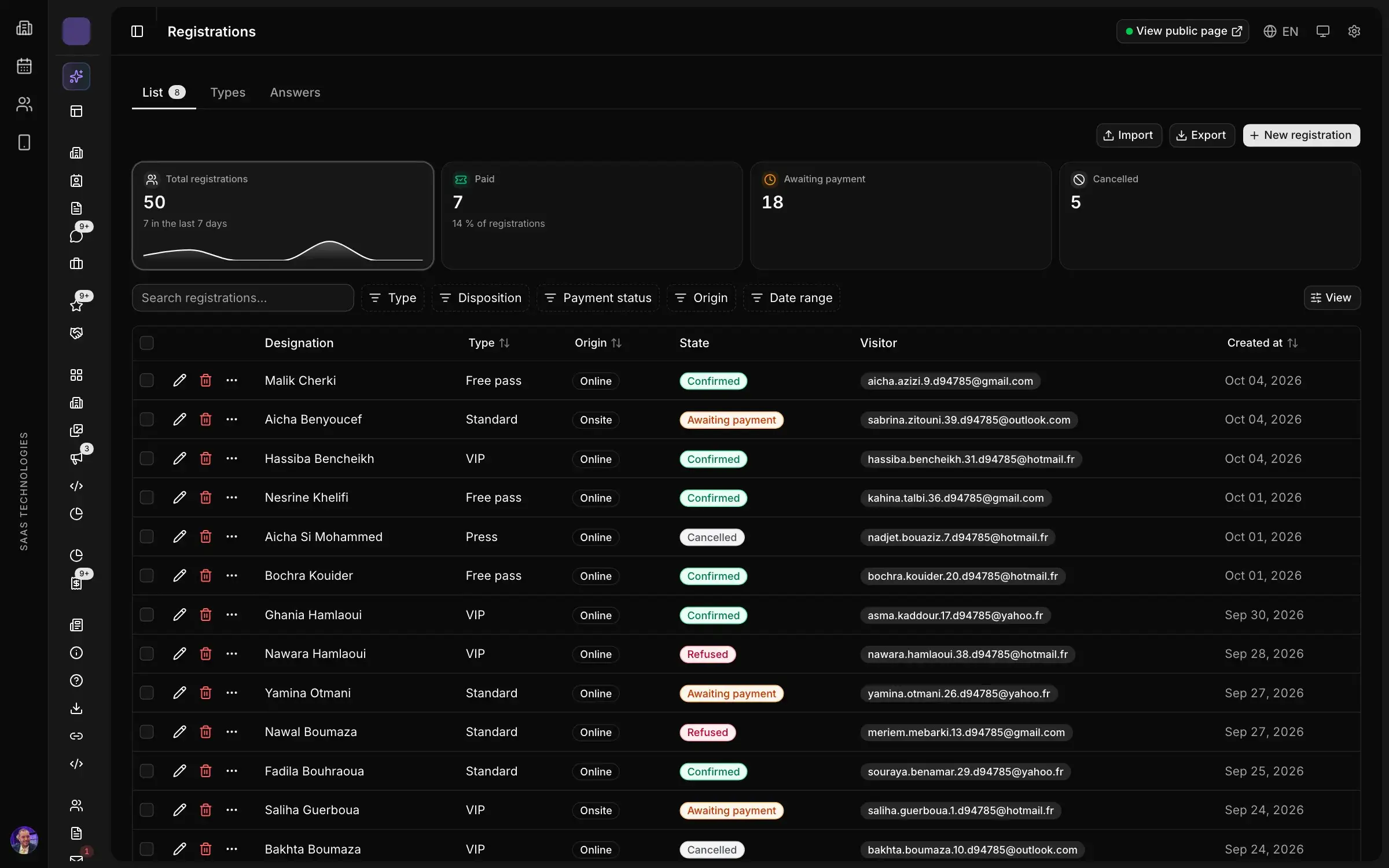
A medical congress lives on registration fees as much as on its partners. Typical categories:
- physicians and consultants, full rate;
- residents, trainees and students, reduced rate, often with proof of status;
- society members, preferential rate;
- speakers, keynotes and committee members, complimentary;
- exhibitor and industry staff, registered by their company and badged separately;
- press, accredited.
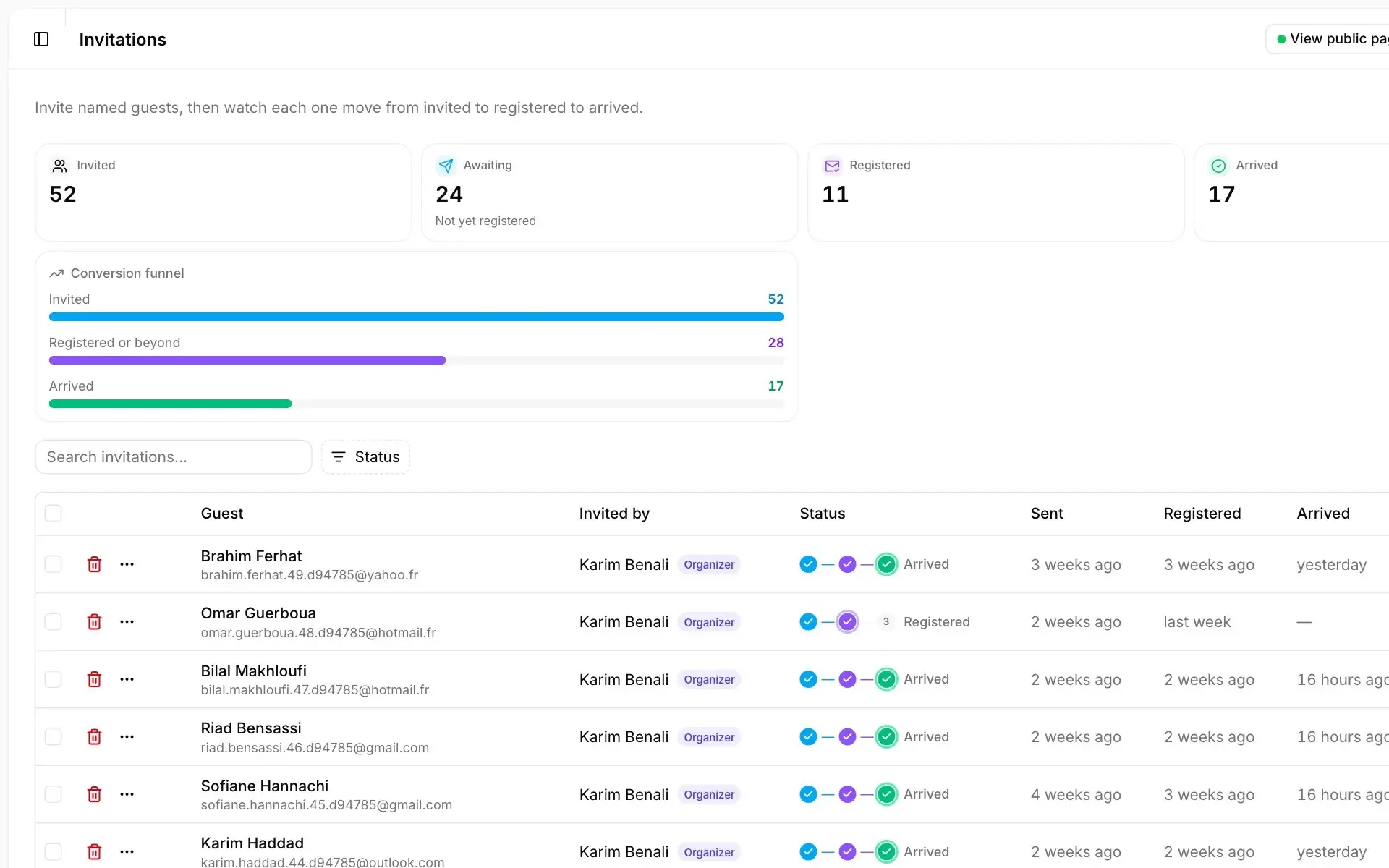
Each category has its own price, confirmation mode and badge. An early-bird rate with a deadline announced on day one brings registrations forward and tells you early how full the rooms will be. And keep one record per person: a clinician registered by a pharmaceutical company who then registers again on their own should not end up with two badges.
The exhibition and sponsorship
This is what separates a congress from an academic symposium: the hall where pharmaceutical companies, device makers and distributors take a booth, and the partners who fund part of the programme. Three things to prepare early:
- an exhibition floor plan on the path attendees cannot avoid, between the session rooms and the coffee break, or the booths stay empty during sessions;
- clear sponsorship packages: gold, silver, bronze or your own tiers, each with its benefits (logo, satellite symposium, coffee break, delegate bag, poster area) and a fixed number of slots;
- tracking every promised benefit until it is delivered, then a report sent to each sponsor after the congress, which is what brings them back next year. Our guide to sponsorship fulfilment covers the method.
Healthcare congresses also sit under rules on industry promotion to healthcare professionals, which differ by country and by industry code. Check the ones that apply to you, and keep a clear line between the scientific programme, decided by the committee, and what partners pay for.
Attendees travelling in
A congress brings in international speakers and clinicians from other cities. Settle three things by month -3 at the latest:
- visas: one invitation letter per foreign attendee, in their name, with dates and venue; the approach is the same as in our piece on hosted buyer programmes and invitation letters;
- accommodation: one or two partner hotels, a negotiated rate, a booking deadline;
- transfers: airport shuttles, and interpreters if sessions run in more than one language.
Opening morning: badges, access and rooms
The first morning concentrates everything: hundreds of attendees between 8 and 9 a.m., the opening plenary, officials, exhibitors finishing their booths. What keeps the queue short:
- badges emailed before the congress and printed on site in seconds, with one template per category (speaker, delegate, exhibitor, press, staff); see conference badge size;
- access by zone: the plenary hall, workshops with their own registration and capacity, the exhibition;
- attendance recorded per session rather than on a sheet passed around the room, because it drives certificates and the final report. If you keep paper, our sign-in sheet template helps.
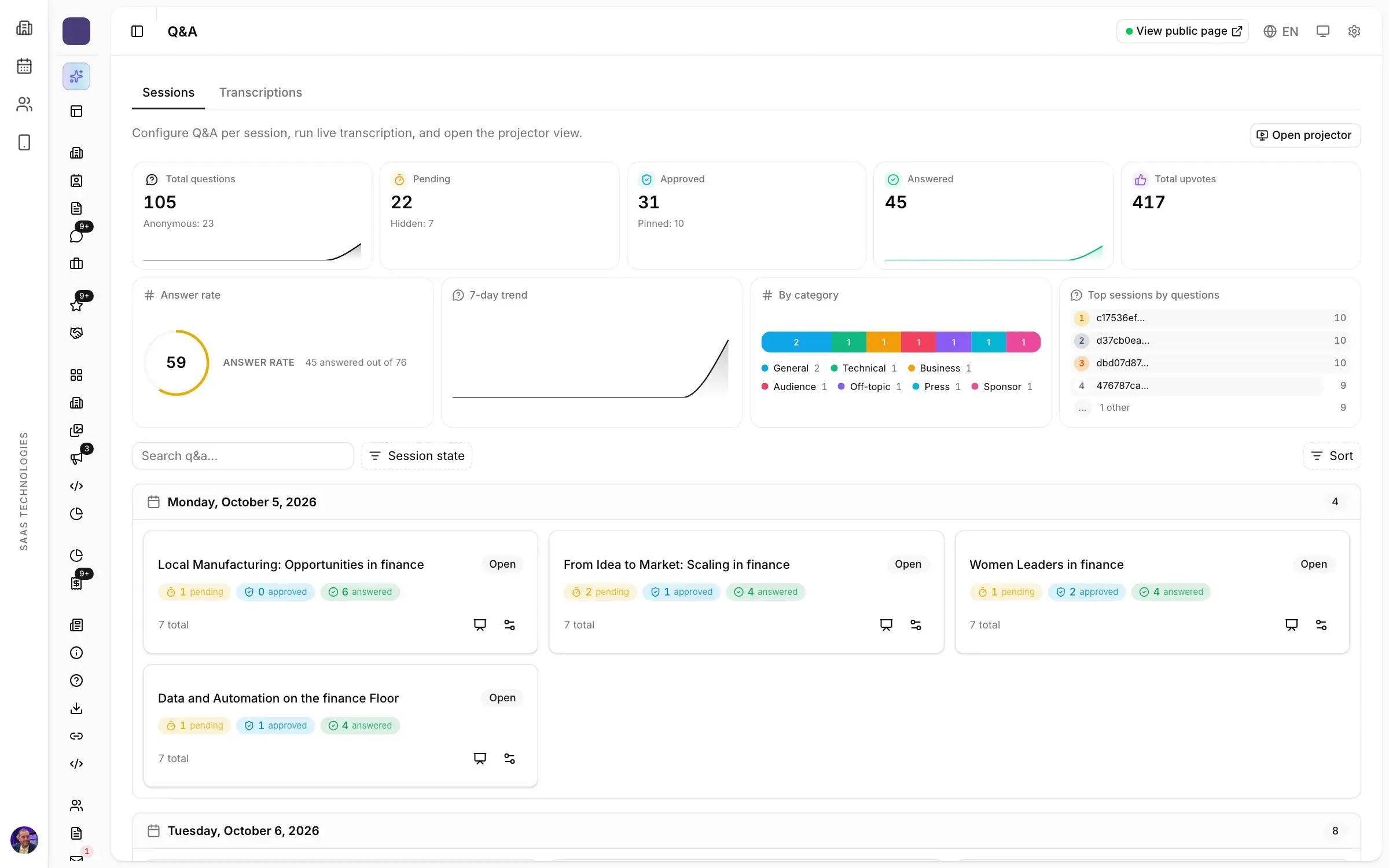
In each room, a chair keeps time and handles questions; our guide on how to moderate a panel discussion applies session by session. Questions sent from phones and sorted by the moderator give a voice to a 300-seat room where nobody stands up for the microphone.
After the congress: certificates, ratings and reports
- Attendance certificates, generated from actual attendance and sent within the week. Clinicians need them for their continuing education records. If your congress carries CME or CPD credits, the accrediting body sets the rules: read them before you design the certificate.
- Session ratings and a general survey on day +1; see our post-event survey questions.
- The abstract book or proceedings, published as the call promised.
- Reports to sponsors and exhibitors: what was delivered, attendance, the contacts collected. Our post-show report gives the structure.
Medical conference planning checklist
| Step | Done |
|---|---|
| Venue, dates and rooms locked at month -12 | ☐ |
| Scientific and organising committees named, one lead each | ☐ |
| Themes published, call for abstracts open with its dates | ☐ |
| Sponsorship prospectus and floor plan sent | ☐ |
| Abstracts scored by two reviewers, decisions sent | ☐ |
| Registration open by category, early-bird deadline announced | ☐ |
| Programme published, room by room | ☐ |
| Visa letters, hotel blocks and transfers handled | ☐ |
| Exhibitor manual sent, sponsor benefits scheduled | ☐ |
| Badges by category, access by zone, attendance per session | ☐ |
| Session chairs briefed, audience questions set up | ☐ |
| Certificates sent to attendees within the week | ☐ |
| Ratings read, reports sent to sponsors and exhibitors | ☐ |
Common mistakes
- Freezing the programme too late: sponsors cannot place themselves, delegates wait to register.
- An exhibition far from the rooms: booths empty out, and the companies do not come back.
- Registration in a spreadsheet: duplicates, payments to reconcile, badges reprinted at the desk.
- Certificates issued from the registration list: no-shows get one, walk-ins do not.
- No sponsor report: next year’s sales start from scratch.
Your medical conference in Moultaka
Programme, speakers, session chairs, audience questions and certificates; registration by category, badges and zone access; sponsorship packages, benefit delivery and the exhibitor portal: all on one database. See Conferences & engagement, Registration & visitors and Sponsors & advertising, and to see your next congress in it, book a demo.