How to plan a workshop event: the steps, a one-page concept note and a one-day agenda
How to plan a workshop event in twelve weeks: the steps, the concept note to write first, a one-day agenda template and the mistakes that cost the debate.
By Moultaka team
To plan a workshop event, settle three things before anything else: a theme narrow enough to fit in one day, a concept note that describes it on two pages, and an agenda of five to eight short talks followed by open discussion. Everything else follows over about twelve weeks: sign-off from your institution, speaker invitations, the room, registration, the welcome desk, then the outcomes report and the certificates. This guide covers the steps in order, the concept note section by section with a template to copy, a one-day workshop agenda, and the mistakes that come up most often. It is written for the one-day, single-theme meeting of specialists that universities, professional bodies, chambers of commerce and public agencies run every year, and that French-speaking institutions call a journée d’étude.
Workshop, seminar or conference: what sets it apart
The word “workshop” covers a lot, from a hands-on training session to a small research meeting. The workshop event this guide deals with has three features:
- one day and one theme, where a conference runs two to four days across several tracks;
- speakers who are mostly invited, sometimes topped up with a short call for contributions, without the full review committee of a conference;
- a discussion that matters as much as the talks, often closing with a short list of recommendations read out at the end.
If your project has an open call for papers and a committee that selects them, it is a conference: see our guide on how to organize a conference. If it is training for a chosen audience, with hands-on sessions, it is closer to a seminar, and our guide on how to organize a seminar compares the formats side by side.
Steps to organize a workshop, from week -12 to the week after
| When | Step | What must be ready |
|---|---|---|
| Week -12 | Theme and date | A title, the question in one paragraph, a date clear of exams, holidays and the other events in your field |
| Week -11 | Concept note | The two pages described below, read by whoever signs off |
| Week -10 | Sign-off | Approval from the dean, the board or the department head, and the room booked |
| Week -10 | Speakers | Invitations sent, with the expected title, the length of the talk and a reply date |
| Week -7 | Agenda | Talk titles received, sessions in order, chairs chosen |
| Week -6 | Registration | The form open, the invitation sent to each audience, the agenda published |
| Week -2 | Logistics | Room, sound, projector, coffee, lunch, badges or a sign-in sheet, delegate packs |
| Week -1 | Reminders | Reminder to registrants, the run of the day sent to speakers and chairs, slides collected |
| The day | Welcome and sessions | Check-in, opening, sessions, discussion, recommendations |
| Week +1 | Follow-up | Thank-you email, certificates, outcomes report, proceedings if you publish them |
Twelve weeks is enough for an internal or regional workshop. Allow four to five months when speakers travel from abroad and need an invitation letter for their visa, or when the day depends on outside funding.
The concept note: the workshop on two pages
The concept note presents the workshop on two pages. It does three jobs: it gets the day approved, it convinces speakers and partners, and it becomes the source for the invitation and the agenda. Most administrations ask for it before they book a room or approve a cost.
| Section | What it holds | The common slip |
|---|---|---|
| Title | The exact name of the workshop, as it will appear on the poster and the certificates | A title that changes from one document to the next |
| Organizer | The institution, lab, department or association, and the person responsible | A person’s name with no organization behind it |
| Partners | Any co-organizers and what each brings | Logos without a written agreement |
| Date and venue | The day, the room, the address | A date set before the room was checked |
| Rationale | The starting point and the question asked, in one or two paragraphs | A general introduction that asks nothing |
| Objectives | What the day must produce: a review, recommendations, a network | Goals that would need a three-day conference |
| Themes | Two to four themes, which become the sessions | Six themes for one day |
| Audience | Who should come, and how many | “Open to all”, which tells you nobody to invite |
| Proposed speakers | Names, roles, expected titles | Speakers listed before anyone has asked them |
| Draft agenda | Times for sessions, breaks and discussion | No break and no discussion time |
| Organizing team | Names and roles: welcome desk, room, communication, speakers | One person doing everything |
| Review committee | If there is one: its members and what it reads | A committee in name only |
| Logistics | Room, sound, projection, interpreting, catering | Interpreting discovered the day before |
| Budget | Costs and who covers them | Lunch forgotten |
| Contact | An address and a phone number someone checks | A personal inbox nobody reads |
A concept note template to copy
Concept note
Title: Workshop on [theme] Organizer: [institution, lab or department], led by [name, role] Partners: [co-organizers and their contribution] Date and venue: [day], [room], [address], [city]
Rationale [The starting point in three or four sentences.] [The question the workshop asks.]
Objectives
- Review the state of [subject];
- Bring [audiences] together around [question];
- Draft recommendations for [recipients].
Themes
- [Theme 1]
- [Theme 2]
- [Theme 3]
Audience: [audiences], about [number] participants. Proposed speakers: [names, roles, expected titles] Draft agenda: see the template below. Organizing team: [names and roles] Logistics: room for [number], sound, projector, [interpreting], coffee, lunch. Budget: [cost lines and who covers them] Contact: [email, phone]
Write the rationale last. It is the section people read most, and it reads better once the themes and speakers are known. If the day runs in two languages, write the note in both from the start; the invitation and the poster will follow.
A one-day workshop agenda template
| Time | Item | What to plan |
|---|---|---|
| 08:30 – 09:00 | Registration and check-in | Badges or a sorted list ready, two people at the desk |
| 09:00 – 09:30 | Opening | Welcome from the head of the institution, the day introduced by its organizer |
| 09:30 – 10:45 | Session 1, theme 1 | Three 20-minute talks, a chair, 15 minutes of questions |
| 10:45 – 11:00 | Coffee break | Outside the room if you can |
| 11:00 – 12:30 | Session 2, theme 2 | Three talks, 30 minutes of discussion |
| 12:30 – 13:45 | Lunch | Its location printed on the agenda |
| 13:45 – 15:15 | Session 3, theme 3, or a panel | Four speakers, a moderator, discussion with the room |
| 15:15 – 16:00 | Wrap-up and recommendations | The rapporteur reads the summary, the room adds to the recommendations |
| 16:00 – 16:30 | Close | Thanks, certificates handed out if they are ready |
Hold every talk to twenty minutes and say so in the invitation. That one rule saves the afternoon discussion more often than any other. For laying out the agenda itself, our conference agenda template works just as well for a single day.
Speakers, invitations and registration
Speakers. Invite them with a letter that gives the theme, the session they speak in, the length of the talk, the date for their title and slides, and what you cover. Our speaker invitation letter template has the sections and the follow-ups. If you add a short call for contributions, the call for speakers template trims down easily for one day.
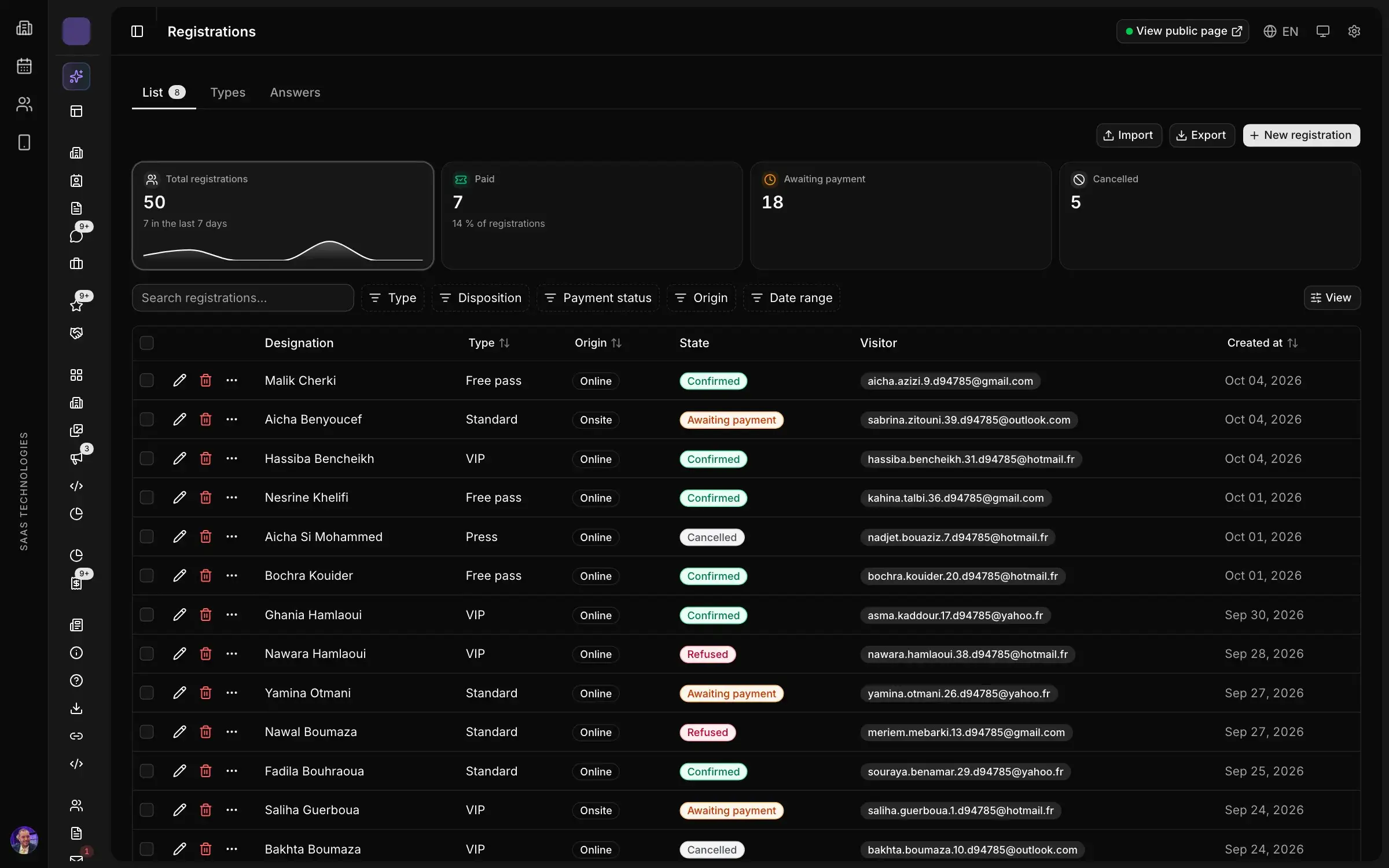
Participants. Ask people to register even when the day is free: it gives you the catering count, the names for the certificates and an address for reminders. Six to eight fields are enough: full name as it should read on the certificate, job title, organization, email, phone, and the role they attend in if you distinguish several. Our event registration form template goes into the detail. These are personal data: ask only for what you use, and say how long you keep them.
The invitation. Send it to each audience about six weeks out, with the agenda or a link to it, then a reminder the week before. Our article on the invitation email gives the structure of a message people read.
On the day: welcome, sessions and discussion
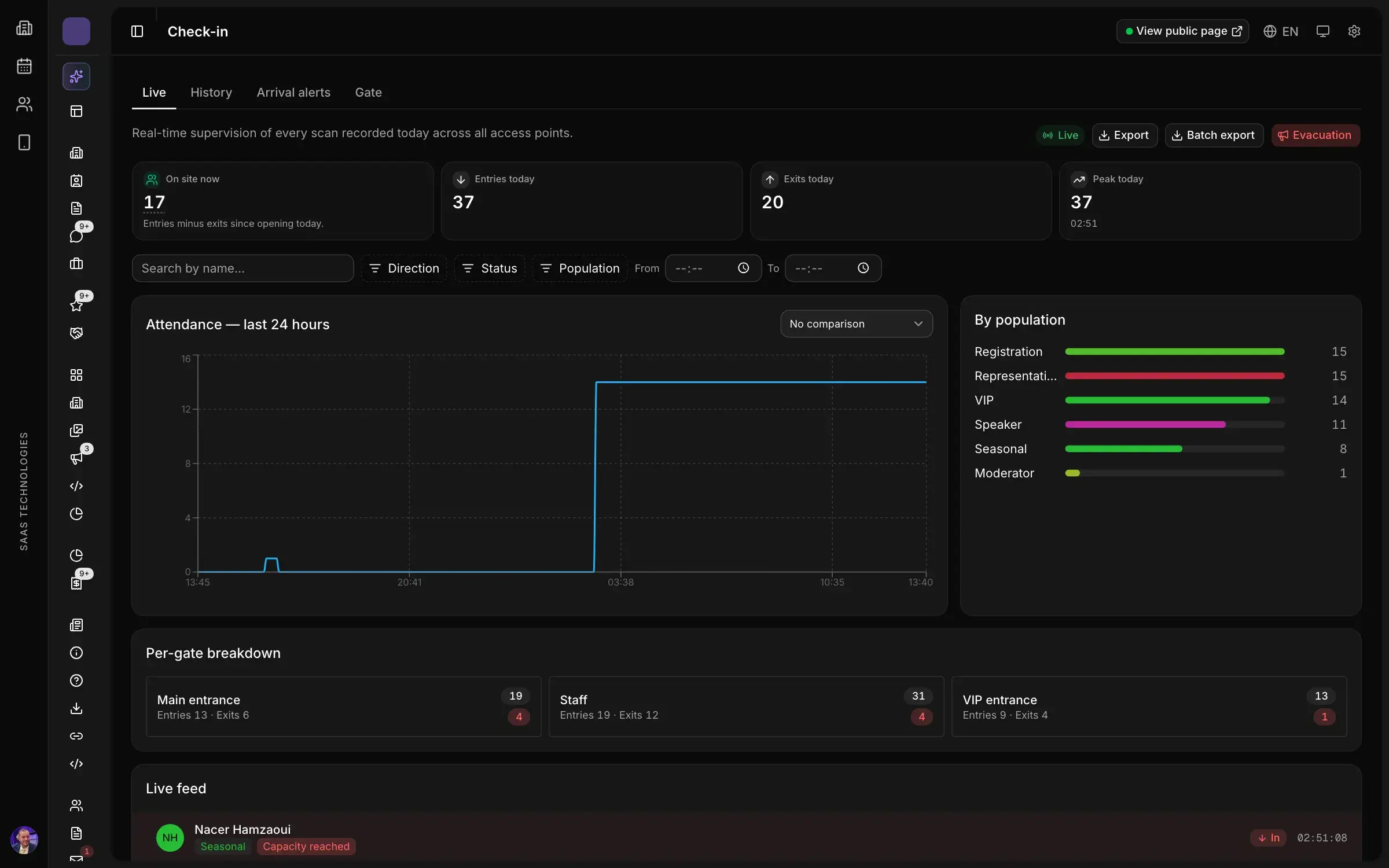
- The welcome desk. Two people, a list sorted by name or badges printed in advance, and a separate spot where walk-ins register without holding up the line. Our sign-in sheet template lists the columns.
- The opening. Short, and in protocol order. Our guide to opening remarks gives the speaking order and a script.
- The sessions. The chair keeps time, introduces each speaker and protects the room’s turn to speak. See how to moderate a panel discussion for the lines that politely stop a talk that runs over.
- The rapporteur. Name one in advance: they take notes all day and read the summary at the end. Without one, the recommendations get written from memory a week later.
After the workshop: outcomes, certificates, proceedings
The recommendations are often what the institution wants out of the day. Send them out within the week, to participants, speakers and the recipients named in the concept note.
Certificates go only to people who attended, with their name spelled as they registered and their role: attendee, speaker, chair. Our certificate of attendance template covers the wording and what to include.
The thank-you email can carry the recommendations, the link to the certificates and a short post-event survey. If you publish proceedings, fix the deadline for papers before the day ends, while the speakers are still in the room.
The most common mistakes
- A theme that is too broad. Six themes and fifteen speakers in one day: no discussion, and a room that leaves before the wrap-up.
- The concept note written afterwards. Approval drags, speakers get different versions of the theme, and the poster carries a different title from the certificates.
- No registration. Nobody knows how much lunch to order or whom to send certificates to.
- Forty-minute talks. The agenda slips in the first session and the discussion disappears.
- No rapporteur. The recommendations everyone was waiting for never get written.
- Certificates made from the registration list. They reach people who never came and miss the walk-ins.
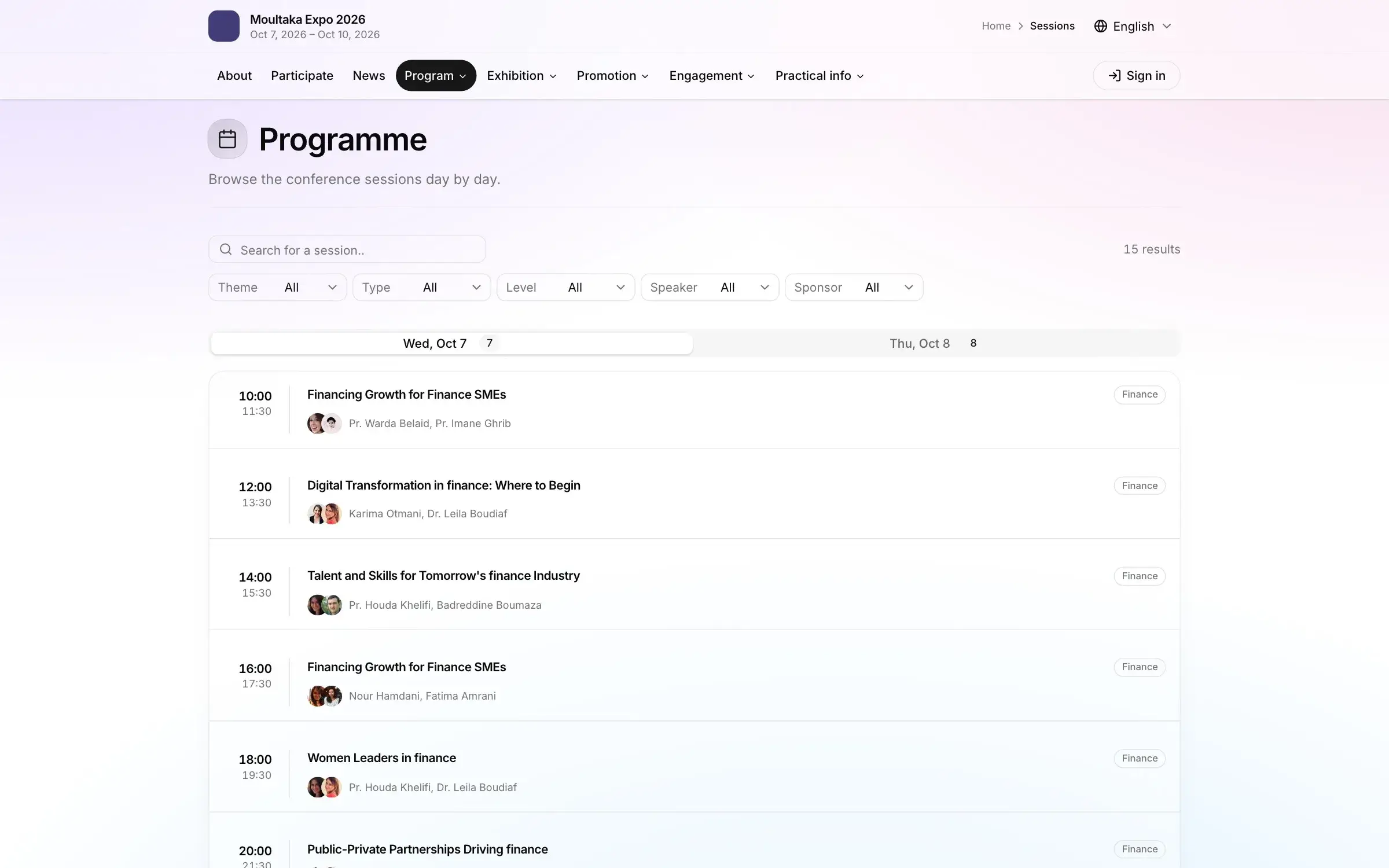
Your workshop in Moultaka
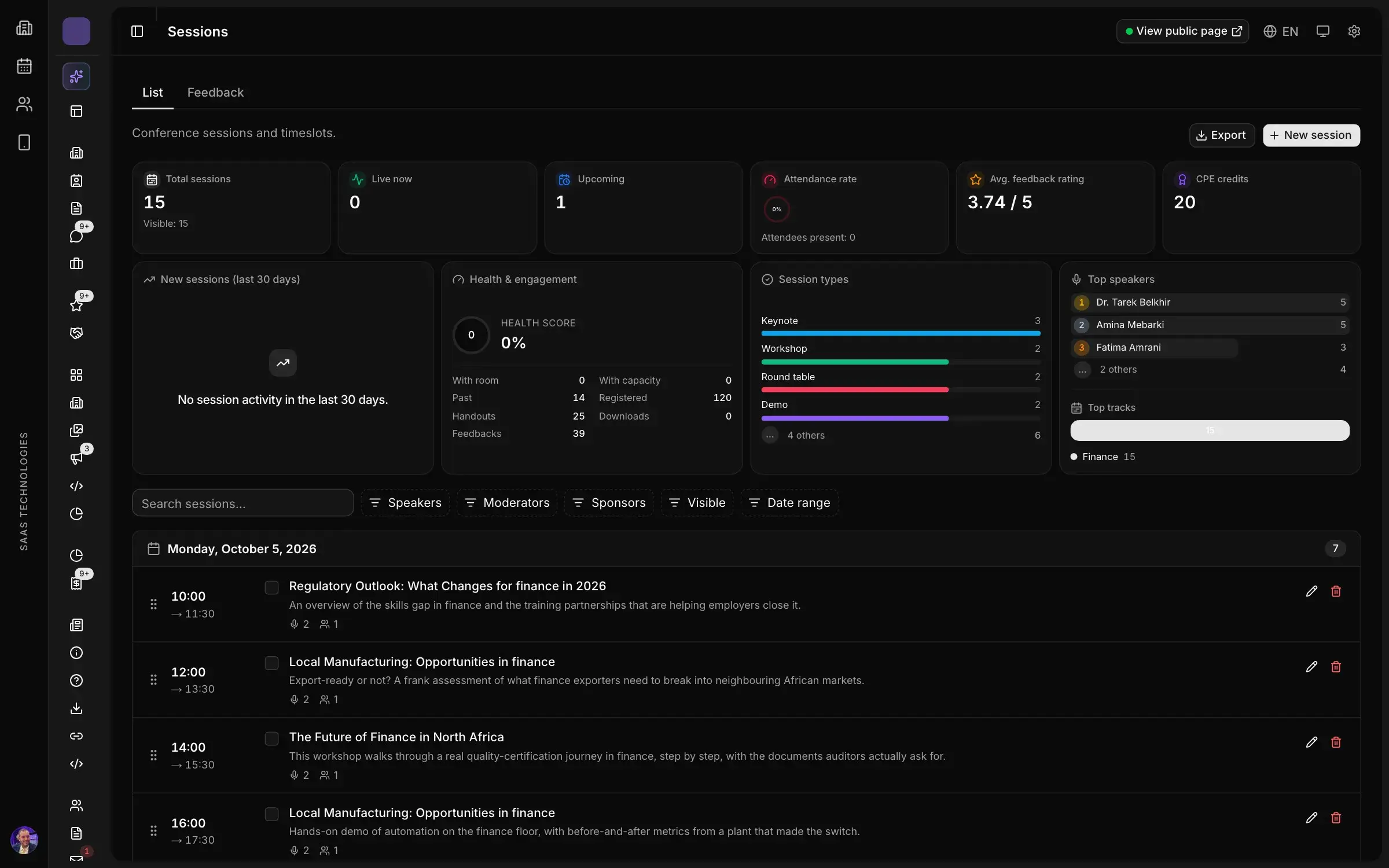
In Moultaka, the Conferences & engagement module keeps sessions, rooms, speakers and formats in one schedule, published to the website and the app as soon as you save, with attendance per session. In the room, the audience asks questions from their phone, moderators approve them and the speaker reads them on screen; every session gets its feedback. The registration form is built without a developer in Registration & visitors, with one record per person and the confirmation and badge sent by email. And Badges, kiosks & access issues one certificate per participant, generated from their attendance and shared by link. To see your next workshop run from one tool, book a demo.